In modern warfare, technological advancements have created missiles that can travel faster than ever before. Supersonic and hypersonic missiles are two of the most discussed weapons in this category, and both bring distinct capabilities to the battlefield.
What Are Supersonic Missiles?
Supersonic missiles are weapons that travel faster than sound but are slower than hypersonic missiles. The speed of sound, known as Mach 1, is around 1,225 km/h at sea level. Between 1.2 and 5 Mach, which means they can go between 1,470 km/h and 6,125 km/h most supersonic weapons can go. These weapons have been around for a long time and have changed significantly.
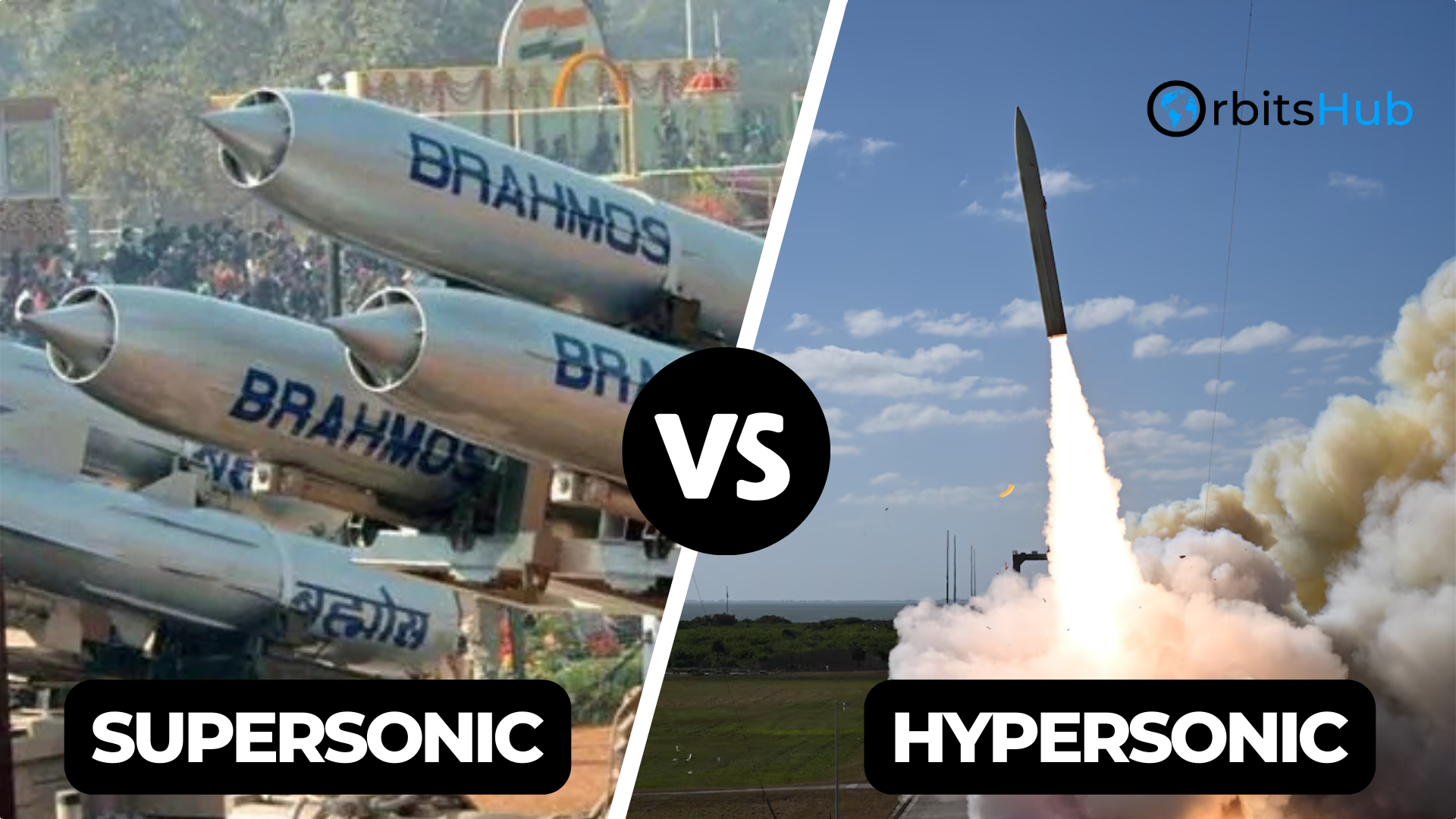
Supersonic missiles are known for their speed, precision, and ability to penetrate advanced air defence systems. They can strike targets with great accuracy and cover large distances in a short amount of time. A well-known example of supersonic missiles is the BrahMos missile, developed by India and Russia, which has a top speed of Mach 2.8.
The Rise of Hypersonic Missiles
While supersonic missiles are powerful, hypersonic missiles are on an entirely different level. Hypersonic missiles are defined as missiles that travel at speeds greater than Mach 5, which means they can reach speeds of over 6,125 km/h. These missiles are not only faster but are also highly manoeuvrable, allowing them to change direction mid-flight t, making them incredibly difficult to intercept.
The development of hypersonic missiles has gained considerable attention due to their potential to change the dynamics of warfare. Countries like the United States, Russia, and China have been investing heavily in hypersonic technology, with successful tests in recent years. Hypersonic missiles can be powered by either a scramjet engine, which works by compressing air at hypersonic speeds, or a rocket that gives the missile an initial boost before it glides at hypersonic speeds.
Speed and Maneuverability: A Key Difference
One of the most significant differences between supersonic and hypersonic missiles lies in their speed and manoeuvrability. Supersonic missiles, while faster than conventional missiles, are still constrained by aerodynamic limitations. They travel in a relatively straight line, making them easier to predict and intercept by modern defence systems.
On the other hand, hyperso ic missiles can change direction in flight, making them highly unpredictable. This unpredictability, combined with their extreme speed, makes it much harder for current air defence systems to track and intercept them. In fact, defences against missiles like the Terminal High Altitude Area Defense (THAAD) and the Aegis Ballistic Missile Defense System aren’t fully prepared to handle threats that travel faster than sound.
Payload and Warhead Options
When it comes to payload, both supersonic and hypersonic missiles are capable of carrying conventional or nuclear warheads. However, the payload of a hypersonic missile can be significantly more destructive, owing to the high speed at which it impacts its target. The kinetic energy generated by a hypersonic missile is much greater than that of a supersonic missile, even with the same size warhead.
Supersonic missiles can carry smaller payloads, making them more suited for precision strikes on specific targets. Hypersonic missiles, on the other hand, can carry larger payloads and have a greater destructive capacity, allowing them to target critical infrastructure or large military installations.
Detection and Countermeasures
A significant advantage of hyperso ic missiles is their ability to evade detection by traditional radar systems. Because these missiles fly at extremely high speeds, they are much harder to detect in time for countermeasures to be activated. It’s also harder to follow a hypersonic missile’s heat signature because it flies at high altitudes and can’t be tracked by regular systems.
In contrast, supersonic missiles, despite their speed, are easier to detect and intercept due to their relatively predictable flight paths. Their reliance on the Earth’s atmosphere for propulsion also makes them more vulnerable to detection by radar.
Strategic Use in Warfare
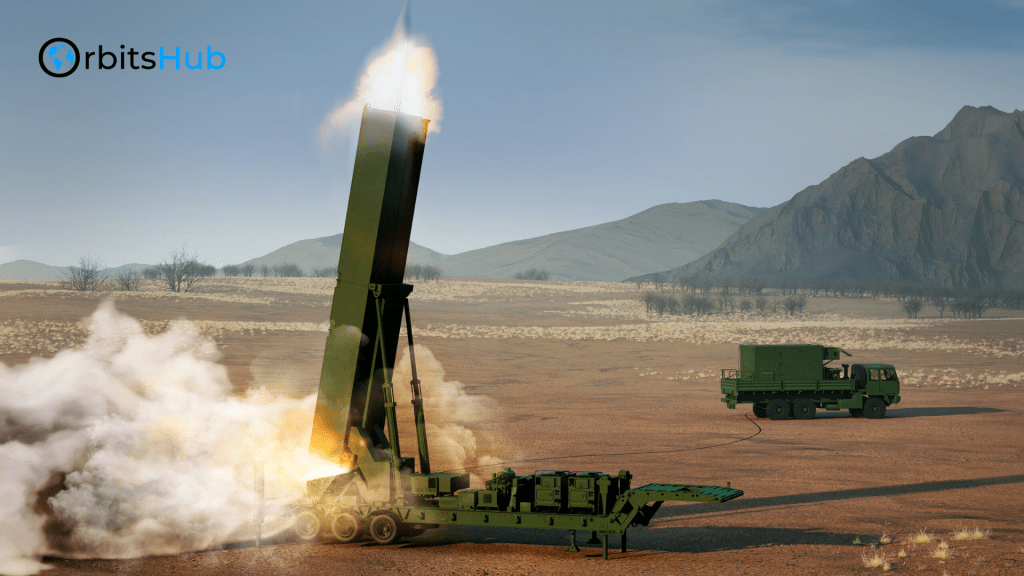
Supersonic weapons have been used for a long time to attack and defend. They are often used in enormous numbers because they are cheaper and easier to find. Most of the time, critical infrastructure, military bases, and high-value assets are targeted by supersonic missiles. These include aircraft carriers and missile defence systems.
Hypersonic missiles, however, are a game-changer in modern warfare. Their extreme speed and unpredictability make them ideal for penetrating enemy defences and striking targets before they can be effectively defended. As such, hypersonic missiles are seen as a new generation of weaponry that could potentially alter the balance of power in warfare. Countries with hypersonic missile capabilities could use them to target high-priority assets in enemy territory. These include command centres and critical military infrastructure, with very little warning.
Statistics and Current Developments
Hypersonic technology is still in its developmental phase, but several nations have already made significant advancements. Russia’s Avangard missile system has achieved speeds of up to Mach 27. It is one of the fastest hypersonic weapons in the world. China has also tested its DF-ZF hypersonic glide vehicle, which is capable of reaching Mach 10, and the United States has made strides with its own Hypersonic Tactical Strike Weapon (HTSW).
As of 2024, more than 15 countries have started testing or developing hypersonic missile technology. Globally, investment in research and development has crossed billions of dollars. These advancements suggest that hypersonic missiles will likely become a common technology in the coming decades. This will significantly change modern warfare.
Supersonic vs Hypersonic: Which Is More Powerful?
When comparing supersonic and hypersonic missiles, the clear distinction lies in speed, manoeuvrability, and the ability to evade countermeasures. Hypersonic missiles, with their extreme speed, unpredictable flight paths, and higher destructive potential, are far more powerful than supersonic missiles. They represent the future of warfare, capable of overwhelming even the most advanced missile defence systems.
However, supersonic missiles still play an essential role in modern military strategies. Their cost-effectiveness and precision make them a valuable tool for targeting specific assets and infrastructure. They are especially useful when used along with other military technologies. While hypersonic missiles are the more powerful option, supersonic missiles remain relevant and widely deployed in many countries’ arsenals.
Frequently Asked Questions
1. How fast do hypersonic missiles travel?
Hypersonic missiles can go faster than Mach 5, which is more than 6,125 km/h. This makes them much faster than supersonic missiles.
2. Are supersonic missiles still in use?
Yes, supersonic missiles are still widely used by many companies due to their speed, accuracy, and cost-effectiveness in modern warfare.