
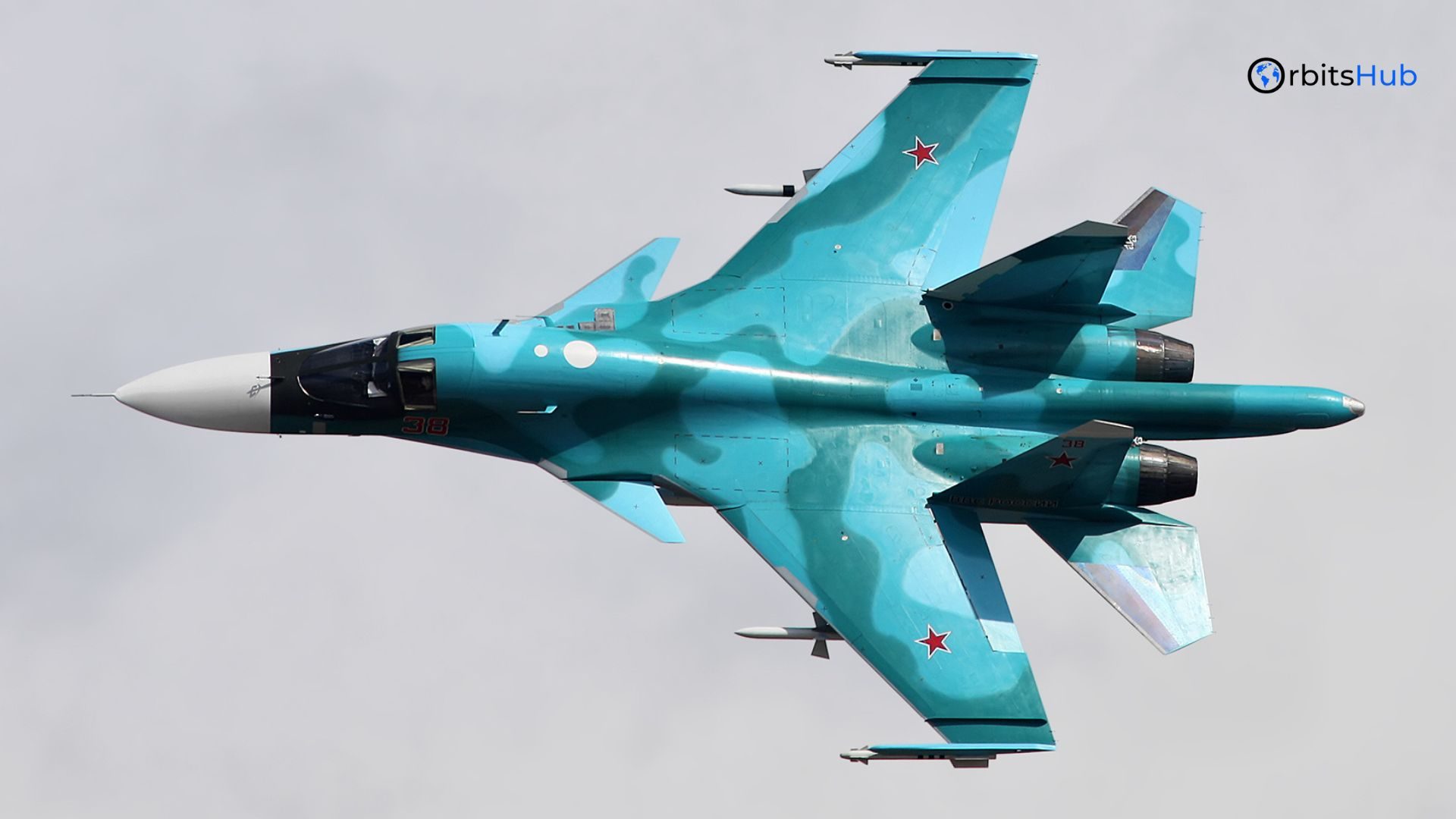
Dominating the Skies: Sukhoi Su-34 Fighter Jet
The Sukhoi Su-34, nicknamed the “Platypus” or “Fullback” by NATO for its distinctive forward-swept wings and elongated nose cone, is a formidable Russian-made supersonic fighter-bomber aircraft. Designed by the Sukhoi Design Bureau and entering service in the mid-2000s, the Su-34 has become a mainstay of the Russian Aerospace Forces, particularly valued for its long-range strike capabilities and all-weather operational prowess. This comprehensive guide delves into the Su-34’s history, design, features, operational history, and prospects, making it an accessible resource for aviation enthusiasts and anyone interested in modern military aircraft.
A Long and Storied Lineage: The Su-34’s Ancestry
The Sukhoi Su-27 Flanker, a fourth-generation jet fighter with powerful engines and manoeuvrability, inspired the Su-34. In the late 1980s, the Soviet Air Force needed a long-range strike aircraft for precision assaults in challenging weather. Based on the Su-27’s solid foundation, Sukhoi created the Su-34. Because of its role, the Su-34 design changes the Su-27 significantly. The Su-34 pilot and WSO have excellent situational awareness in a glass cockpit. Powerful radar and electronic warfare systems are added to the forward fuselage. Forward-swept wings increase low-speed handling and stability for long-range missions, making them the most visible modification.
Designed for Precision and Endurance: Unveiling the Su-34’s Capabilities
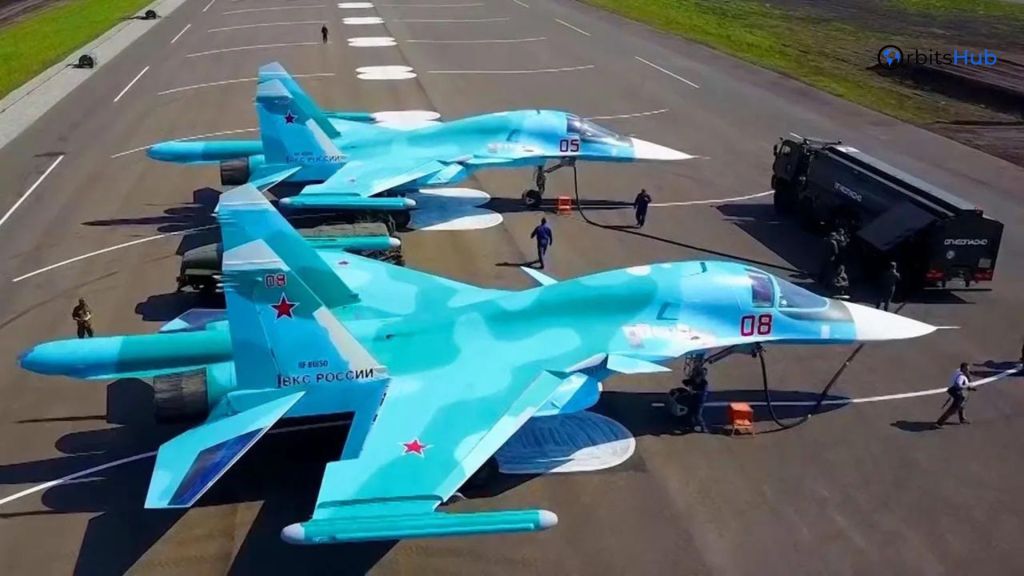
The Sukhoi Su-34 is a meticulously crafted machine boasting various features that equip it for extended-range strike missions and adverse weather operations. Let’s delve deeper into some of its defining characteristics:
- Twin AL-41F turbofan engines: These powerful engines deliver exceptional thrust, enabling the Sukhoi Su-34 to achieve supersonic speeds exceeding Mach 1.7. Their high fuel efficiency allows for extended range and loiter times, which are crucial for operations far behind enemy lines.
- Forward-swept wings: As mentioned earlier, the Su-34’s distinctive wing configuration offers several advantages. It improves low-speed manoeuvrability, particularly during takeoff and landing, and enhances stability during long-distance flights. Additionally, the forward-swept design provides ample space for wing-mounted weaponry.
- Side-by-side cockpit: Unlike conventional fighter jets, where the pilot sits behind the WSO, the Su-34’s cockpit configuration positions both crew members side-by-side. This fosters improved communication, collaboration, and overall mission effectiveness. The glazed canopy grants the crew exceptional visibility, which is critical for navigating challenging weather conditions and acquiring targets.
- Advanced avionics and sensor suite: The Su-34 has a state-of-the-art radar system that detects and tracks airborne and ground targets at long ranges. It also integrates a comprehensive electronic warfare suite for self-protection against enemy radar and missile threats. The aircraft’s navigation system allows for precise all-weather operation, ensuring mission success irrespective of prevailing weather conditions.
- Heavy weapons payload: The Su-34 boasts an impressive arsenal, capable of carrying a wide array of air-to-air and air-to-surface weaponry. This includes guided missiles, unguided rockets, and bombs, making it a versatile platform for various offensive operations.
A Storied Operational History: The Su-34 in Action
Since its introduction in the mid-2000s, the Sukhoi Su-34 has seen active service in several conflicts and military operations. Here’s a glimpse into its operational history:
The Second Chechen War
The Su-34 witnessed its baptism by fire during the Second Chechen War, during which it played a pivotal role in airstrikes against Chechen separatist forces. Its long-range and all-weather capabilities proved valuable in the region’s mountainous terrain.
The Syrian Civil War
In the Syrian Civil War, the Russian military has frequently used the Su-34 to help government forces and bomb insurgent groups. Its accurate strikes and ability to operate in difficult weather have been crucial to the fight.
Other deployments
The Su-34 has also been deployed for border patrols and exercises in various regions, showcasing its versatility and adaptability to diverse operational environments.
Future Prospects: The Su-34’s Evolving Role
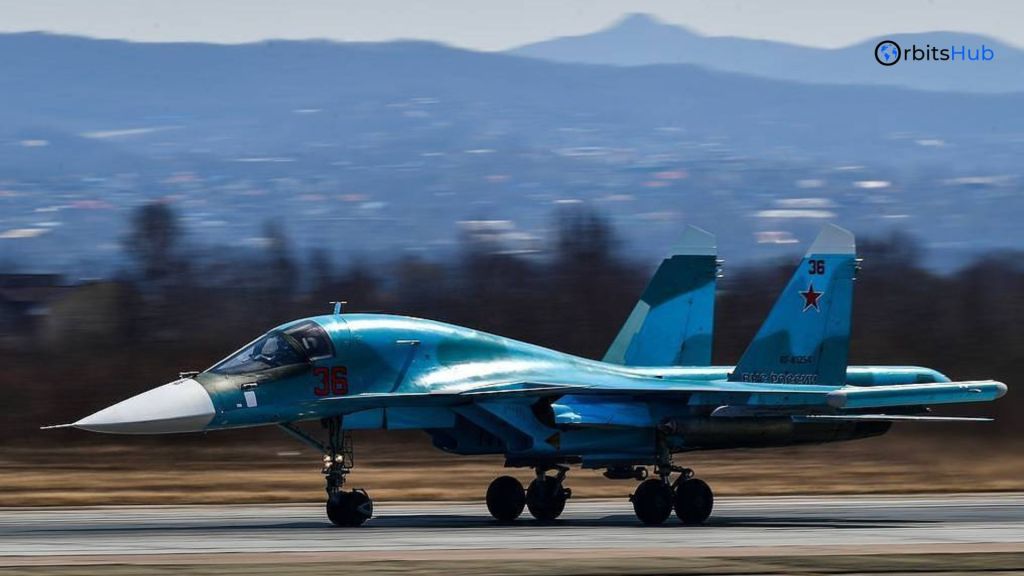
The Sukhoi Su-34 is expected to remain a mainstay of the Russian Aerospace Forces for the foreseeable future. Here’s a look at its potential future developments:
- Modernization programs: The Su-34 will likely undergo continuous modernization programs to keep pace with evolving technological advancements. These upgrades could encompass improved avionics, radar systems, weaponry integration, and electronic warfare capabilities.
- Expansion of operational roles: While primarily designed for long-range strike missions, the Su-34’s versatility may lead to its deployment in expanded roles. These could include electronic warfare missions, reconnaissance operations, and maritime strike capabilities.
- Export potential: The Su-34 has garnered interest from several countries seeking advanced fighter-bomber capabilities. Future export deals could see the Su-34 extending beyond the Russian military.
The Sukhoi Su-34 stands as a testament to Russian engineering prowess. Its blend of long-range strike capabilities, all-weather operational prowess, and a potent arsenal has established itself as a formidable force in modern aerial warfare. As the Su-34 evolves and adapts, it will remain a crucial component of Russian airpower for years.
The world of aviation and maritime operations is dynamic and ever-evolving. If you want to explore career opportunities in these sectors, OrbitsHub can be your trusted partner. OrbitsHub is a leading marine and aviation consultancy services company, providing expert guidance and support to individuals and companies seeking to navigate the complexities of these industries.