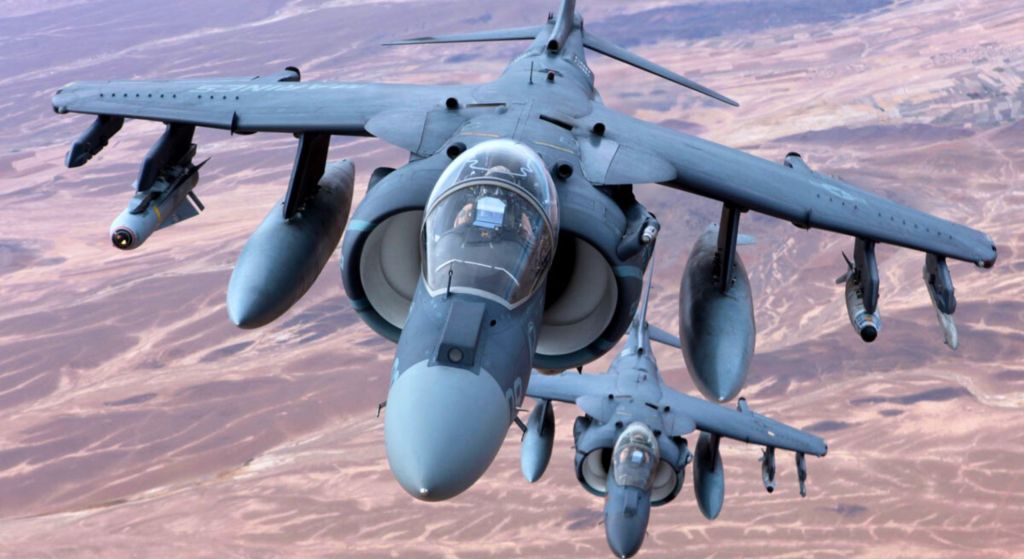
Aviation has witnessed many incredible innovations over the years, but few have left an impression as profound as the Harrier aircraft. This single-engine, fighter-bomber jump jet has been a game-changer in military aviation. Its unique design and capabilities have made it a favorite among aviation enthusiasts and military strategists.
The Birth of Harrier
Produced by Hawker Siddeley Aviation, the Harrier embarked on its maiden flight on August 31, 1966, marking a significant milestone in aircraft technology. The company later became part of British Aerospace in 1977, which continued to manufacture this revolutionary aircraft in collaboration with McDonnell Douglas, a prominent American aviation company.
Features and Capabilities
The Harrier’s most distinctive feature is its ability to take off vertically or with a short roll, negating the need for conventional runways. This Vertical and Short Takeoff and Landing(V/STOL) capability is made possible by a vectored-thrust turbofan engine, which redirects its thrust downward for vertical takeoff through rotatable engine exhaust ports.
Armament
The Harrier is not just an engineering marvel; it’s a formidable war machine. The aircraft can carry various weapons, including air-to-air missiles, air-to-surface anti-ship missiles, rockets, and bombs. Ground-attack versions of the Harrier also feature two 30-millimeter cannons, missiles, and bombs.
Combat History
The Harrier’s combat prowess was demonstrate during the Falkland Islands War of 1982, where the Sea Harrier version played a crucial role in the British campaign.
The Sea Harrier’s vertical takeoff and landing capabilities allowed it to operate effectively from aircraft carriers, providing crucial air support and maintaining air superiority over the Falkland Islands. Its agility and versatility enabled it to engage Argentine aircraft and protect British naval assets, demonstrating the Harrier’s significant contribution to the success of the British campaign in retaking the Falklands.
Variants of Harrier
Over the years, several versions of the Harrier were develop. The first variant, the British Aerospace Sea Harrier, was a naval air defense striker use by the Royal Navy. The second variant, manufactured in the UK as the British Aerospace Harrier II and in the USA as the AV-8B, replaced the original and the Sea Harrier by 2001.
The Harrier’s Unique Abilities
The Harrier’s ability to operate from small, restricted areas like car parks or small aircraft carriers sets it apart from other military aircraft. This unique Vertical Takeoff And Landing (VTOL) capability makes it an ideal choice for improvisation situations.
Harrier’s Engine
A single Rolls-Royce Pegasus turbofan engine powers the Harrier. Unlike other jets designed and built in the 1960s, this subsonic jet does not have an afterburner.
International Usage
Eight hundred twenty-four Harriers were produce between 1967 and 2003 and saw service in the armed forces of six nations: Italy, India, Thailand, Spain, and the US. The Harrier was primarily use as a close-support and reconnaissance fighter.

Criticisms and Replacement
Despite its impressive capabilities, the Harrier faced criticism for many accidents and increased operational and maintenance costs. So, in 2015, it was supersede in the US by the F-35 Lightning II, in 2010 by the F35B, and in 2016 by the Mikoyan MiG-29K in India.
Harrier in Private Hands
In 2005, the first-ever Harrier was sold to a private collector, Art Nalls, a retire military pilot and aviation enthusiast. After a two-year restoration process, Nalls successfully flew the only privately owned Harrier from Maryland on November 10, 2007.
The technology behind the Harrier’s V/STOL capability
The Harrier’s Vertical and Short Takeoff and Landing (V/STOL) capability is one of its most groundbreaking features, setting it apart from traditional jet aircraft. This section could delve deeper into the technical aspects that enable V/STOL, such as the design and function of the Rolls-Royce Pegasus engine, the role of thrust vectoring, and the engineering challenges and solutions associated with balancing thrust and stability during vertical takeoff and landing. Additionally, it can cover the advancements in flight control systems that allow pilots to manage these complex maneuvers safely.
Harrier’s Impact on Modern Aircraft Design
The Harrier’s impact on aviation extends beyond its operational use. This section can explore how the Harrier influenced the design and development of modern aircraft, particularly those with V/STOL capabilities like the F-35B Lightning II. It can discuss the technological and strategic lessons learned from the Harrier program that have been applied to subsequent aircraft designs. Additionally, it could cover how the Harrier’s service history has shaped military tactics and strategies, especially in naval aviation and close air support roles, highlighting its enduring legacy in both military and aerospace engineering circles.
FAQ’s
1. What is a Harrier aircraft?
The jet-powered Harrier is one type of military aircraft that can perform V/STOL operations. British manufacturer Hawker Siddeley originally developed it in the 1960s.
2. How does the Harrier manage vertical takeoff and landing?
The Harrier utilizes a system of vectored-thrust turbofan engines. This means the pilot can direct the thrust from the engines downward to lift the aircraft vertically.
3. Are Harrier aircraft still in active service?
As of my knowledge cutoff in April 2023, Harrier aircraft were primarily retire from active duty in most countries, except for the Spanish and Italian navies, which still operated the AV-8B Harrier II variant.
4. Which countries have used the Harrier aircraft?
Several countries, including the United Kingdom, the United States, Spain, Italy, and India, have used the Harrier.
5. What types of missions can the Harrier aircraft perform?
Harrier aircraft can perform a variety of missions, including air interdiction, close air support, reconnaissance, and anti-ship warfare.

6. Can Harrier aircraft carry nuclear weapons?
Historically, specific variants of the Harrier were capable of carrying nuclear weapons, but their current operational status concerning atomic armament is typically classified.
7. What is the difference between the Harrier and the Harrier II?
The Harrier II is an advanced development of the original Harrier, with more terrific aerodynamic refinement, updated avionics, and more powerful engines, resulting in improved performance and capabilities.
8. Did the Harrier play a significant role in any historical conflicts?
Yes, the Harrier was notably use by the British Royal Navy during the Falklands War in 1982, where it was highly influential in air-to-air combat and ground-attack missions.
9. What replaced the Harrier in the US Marine Corps?
The US Marine Corps replaced their AV-8B Harrier IIs with the F-35B Lightning II, which is also capable of V/STOL operations and offers advanced stealth and avionics capabilities.
10. Is there a commercial version of the Harrier?
No, the Harrier was explicitly design for military use, and no commercial variant of this aircraft exists.
Despite retiring from active military service, the Harrier aircraft remains an iconic symbol of human ingenuity and persistence. Its unique capabilities and impressive combat record ensure its place in the annals of aviation history. As we look to the future, the lessons learned from the Harrier’s design and operation will undoubtedly continue to influence the development of new aircraft technologies.