The F-111 Aardvark, a versatile and robust aircraft, played a significant role in modern military aviation history. Developed by General Dynamics, the F-111 was design as a tactical strike aircraft with capabilities that extended far beyond traditional roles. Its unique blend of speed, range, and payload capacity made it an indispensable asset in various military operations. This explores the operational role of the F-111 Aardvark, shedding light on its contributions to different missions and its lasting impact on military aviation.
The Tactical Versatility of the F-111 Aardvark
The F-111 Aardvark was not just another combat aircraft but a game-changer in tactical strike missions. Its ability to operate in diverse environments, from high-speed low-altitude penetration to strategic bombing, showcased its tactical versatility.
Low-Level Penetration
One of the most notable operational roles of the F-111 Aardvark was its ability to perform low-level penetration missions. Equipped with advanced terrain-following radar, the F-111 could fly at treetop level, evading enemy radar detection. This capability allowed it to deliver precision strikes deep within enemy territory, a crucial task during the Cold War era. The aircraft’s ability to navigate challenging terrains at high speeds made it a formidable adversary, capable of outmaneuvering surface-to-air missile defenses.
Strategic Bombing
The F-111 Aardvark’s role was not limit to tactical strikes alone; it also excelled in strategic bombing missions. With its large internal weapons bay, the F-111 could carry a significant payload of bombs, including nuclear artillery. This made it essential to the United States’ nuclear deterrent strategy. The F-111’s long-range capabilities allowed it to reach targets far beyond the front lines, delivering devastating blows to crucial enemy installations.
Electronic Warfare
In addition to its strike capabilities, the F-111 Aardvark was also adapted for electronic warfare missions. The EF-111A Raven, an electronic warfare variant of the F-111, was equipped with advance electronic countermeasures (ECM) systems. Its primary role was to jam enemy radar and communications, providing cover for strike aircraft during operations. The EF-111A played a crucial role in reducing the effectiveness of enemy air defenses, thereby increasing the success rate of allied missions.
The F-111 Aardvark in Combat Operations
The operational effectiveness of the F-111 Aardvark was proven time and again in various combat scenarios. Its adaptability and performance in real-world situations made it a valuable asset for the United States and its allies.
The Vietnam War
The F-111 Aardvark saw its first combat deployment during the Vietnam War. Initially faced with technical challenges, the aircraft soon proved its worth in combat. Its ability to conduct deep-penetration strikes with pinpoint accuracy made it a key player in Operation Linebacker, where it successfully targeted vital enemy infrastructure. The F-111’s role in the Vietnam War marked the beginning of its long and distinguished operational history.
Operation El Dorado Canyon
In 1986, the F-111 Aardvark played a central role in Operation El Dorado Canyon, the U.S. airstrike against Libya. The mission showcased the aircraft’s long-range strike capabilities as it successfully conducted bombing raids on vital Libyan targets. The operation highlighted the F-111’s ability to carry out precision strikes with minimal collateral damage, solidifying its reputation as a reliable and effective strike aircraft.
The Gulf War
The Gulf War of 1991 was another significant conflict where the F-111 Aardvark demonstrated its operational prowess. The aircraft was heavily involved in the initial air campaign, targeting Iraqi command and control centers, air defense systems, and critical infrastructure. Its ability to deliver precision-guided munitions with great accuracy made it a formidable force in the coalition’s efforts to liberate Kuwait. The F-111’s performance during the Gulf War further cemented its place in the annals of military aviation history.
The Legacy of the F-111 Aardvark
The operational role of the F-111 Aardvark extended beyond its combat missions. Its innovative design and versatile capabilities influenced the development of future aircraft, leaving a lasting legacy in the world of aviation.
Influence on Modern Aircraft Design
The F-111 Aardvark’s swing-wing design, advanced avionics, and terrain-following radar set new standards in aircraft technology. These innovations were later incorporate into other military aircraft, such as the F-14 Tomcat and the B-1B Lancer. The F-111’s design philosophy of combining speed, range, and payload capacity became a model for future strike aircraft, shaping the development of modern fighter jets and bombers.
Contribution to Air Power Doctrine
The F-111 Aardvark’s operational success contributed to the evolution of air power doctrine. Its ability to conduct deep-strike missions with precision and minimal risk to pilots influenced the strategic thinking of air forces worldwide. Using aircraft to deliver precision strikes at critical targets deep within enemy territory became a cornerstone of modern air warfare, partly thanks to the F-111’s achievements.
Evolution of the F-111 Aardvark’s Design
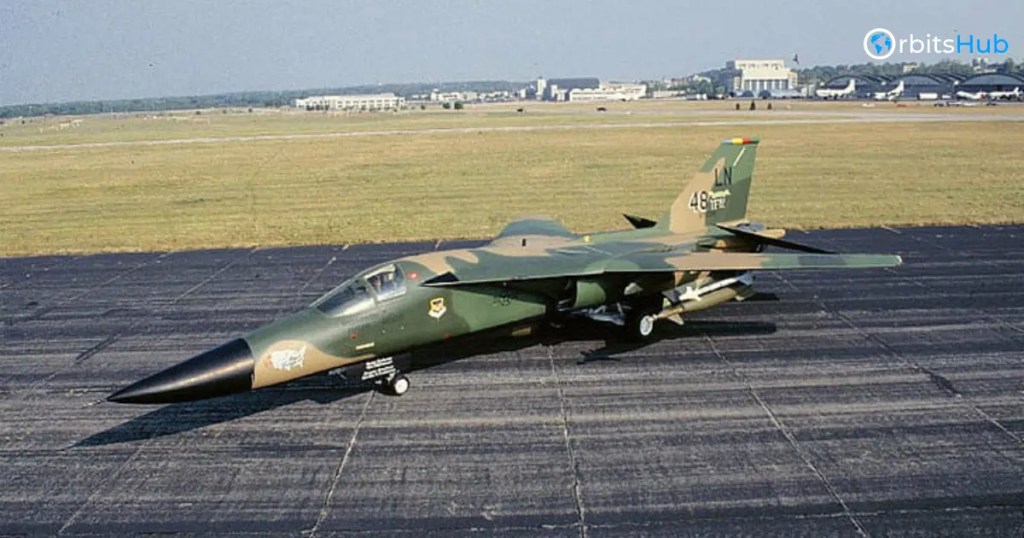
- Initial Concept: The F-111 Aardvark was initially conceived as a multi-role aircraft intend to fulfill both fighter and bomber roles. The initial design combined a single platform’s speed, range, and payload capacity.
- Swing-Wing Technology: One of the most significant innovations in the F-111’s design was its variable-sweep wing, which allowed the aircraft to adjust its wing configuration for optimal performance at different speeds and altitudes.
- Challenges and Modifications: The development of the F-111 faced several challenges, including weight issues and complex avionics. Over time, the design was refined to improve its performance, resulting in various versions, such as the F-111C for the Royal Australian Air Force and the EF-111A Raven for electronic warfare.
- Legacy of Design: The F-111’s design principles influenced subsequent aircraft, especially in integrating advanced avionics and swing-wing technology. Its innovative features paved the way for future developments in military aviation.
Impact of the F-111 Aardvark on Cold War Strategies
- Strategic Deterrence: During the Cold War, the F-111 Aardvark was critical in the U.S. strategic deterrence strategy. Its capability to deliver nuclear weapons made it a key asset in maintaining a balance of power.
- Flexible Response: The F-111’s ability to perform conventional and atomic missions provided the U.S. military with a flexible response option in various geopolitical scenarios. It could be deploy quickly to different theaters of operation.
- Psychological Warfare: The mere presence of the F-111 Aardvark in a conflict zone served as a psychological deterrent to adversaries. Its long-range and precision strike capabilities made it a formidable force that could reach targets deep within enemy territory.
- Influence on Policy: The operational success of the F-111 influenced U.S. military policy, particularly in terms of air power projection. Its versatility allowed for more dynamic and adaptable strategies during the tense periods of the Cold War.
Technological Innovations in the F-111 Aardvark
- Terrain-Following Radar: One of the key technological innovations in the F-111 was its terrain-following radar, which allowed it to fly at low altitudes while automatically avoiding obstacles. This capability was crucial for penetrating enemy air defenses.
- Swing-Wing Mechanism: The F-111 was among the first aircraft to use a variable-sweep wing, allowing it to change wing angles mid-flight for optimal aerodynamics. This technology improved its performance across a range of speeds and mission profiles.
- Advanced Avionics: The F-111 was equipped with sophisticate avionics for navigation, targeting, and communication. These systems enhanced its operational efficiency and made it one of the most advanced aircraft.
- Engine Performance: The Pratt & Whitney TF30 engines used in the F-111 provided it with the necessary thrust for high-speed flight and heavy payload capacity. The engines were critical to the aircraft’s overall performance and mission success.
Training and Deployment of F-111 Aardvark Crews
- Specialized Training Programs: Pilots and crew members of the F-111 underwent rigorous training programs tailored to the unique requirements of the aircraft. This included mastering low-level flight, navigation, and weapon delivery systems.
- Simulation Exercises: Training for the F-111 crews involved extensive use of flight simulators, which provided realistic scenarios for practicing combat missions, emergency procedures, and electronic warfare tactics.
- Deployment Strategy: The deployment of F-111 units was strategic, with squadrons stationed at key airbases worldwide. These bases were chosen for their proximity to potential conflict zones and their ability to support the aircraft’s operational needs.
- Mission Readiness: The F-111 crews were constantly prepare for rapid deployment, regularly conducting readiness drills and exercises. This ensure they could be mobilized quickly in response to any international crisis.
Comparing the F-111 Aardvark with Contemporary Aircraft
- Versatility vs. Specialization: Unlike many contemporary aircraft designed for specific roles (e.g., air superiority or ground attack), the F-111 was a multi-role aircraft capable of performing various missions. This made it more versatile but also more complex.
- Technological Advancements: Compared to its contemporaries, the F-111 featured several cutting-edge technologies, such as terrain-following radar and a swing-wing design. These innovations gave it a significant advantage in specific mission profiles, mainly low-level penetration and deep-strike roles.
- Performance Metrics: Regarding speed, range, and payload capacity, the F-111 outperformed many of its peers. However, this came at the cost of more significant maintenance requirements and operational complexity, which were challenges that needed to be manage.
- Legacy and Influence: While some contemporary aircraft have since become obsolete, the F-111’s design and operational concepts have had a lasting impact on the development of future military aircraft, influencing everything from strategic bombers to multi-role fighters.
The F-111 Aardvark was more than just a military aircraft; it symbolized technological innovation and tactical versatility. Its operational role in various combat scenarios demonstrated its ability to adapt to different missions, making it a valuable asset in the U.S. military’s arsenal. The F-111’s legacy lives on in the design and doctrine of modern air forces, proving that it was truly ahead of its time.
For more insights into aviation and maritime consultancy, explore Orbitshub – a marine and aviation consultancy.