Historical Background

The Port of New York and New Jersey was established on April 30, 1921, as a joint venture between the U.S. states of New York and New Jersey. It was the first interstate compact authorized by the United States Congress and has been serving the region ever since. The port was initially known as the Port of New York Authority, but its name was changed in 1972 to better represent its partnership between the two states.
Geographical Extent
The “Port District,” the region under the geographical control of the port, covers 1,500 square miles and is typically located within a 25-mile radius of the Statue of Liberty National Monument. This district includes a network of bridges, tunnels, airports, and seaports stretching from the heart of Manhattan to the outskirts of New Jersey.
Organizational Structure
The management and oversight of the Port Authority rest in the hands of twelve nonsalaried commissioners, six appointed by each state’s governor. These commissioners plan and supervise the operations of a variety of services and facilities. They also appoint an executive director to manage day-to-day operations and execute the Port Authority’s policies.
Port Facilities
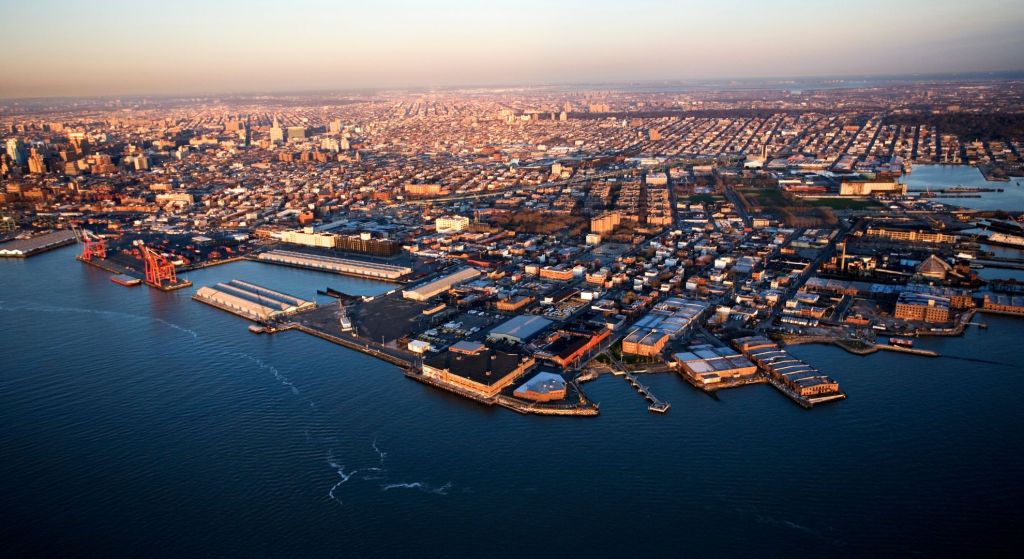
Among the main facilities that make up the 3,000 acres of property that make up the port, you can find Port Newark, Howland Hook, Port Jersey, and Brooklyn—Port Authority Marine Terminals. These facilities serve as the backbone of the port’s operations, facilitating the movement of goods and passengers.
Transportation Infrastructure
There are several key facilities that make up the port complex, which spans over three thousand acres of land. These include Port Newark, Howland Hook, Port Jersey, and Brooklyn-Port Authority Marine Terminals. Additionally, several airports, including Kennedy, Newark, LaGuardia, Stewart, and Teterboro airports, fall under the jurisdiction of the Port Authority.
Significant Milestones

Over the years, the Port of New York and New Jersey have achieved numerous milestones. In the late 1920s and into the 1930s, it constructed a series of bridges and tunnels. By the late 1940s, it had leased three airports. The 1970s and 1980s saw the construction of the World Trade Center and the promotion of port and trade activities.
Environmental Initiatives
The Port Authority has taken the lead in embracing environmental sustainability. It is the first public transportation agency in the U.S. to endorse the Paris Climate Agreement, aiming for an 80% reduction in greenhouse gases by 2050. It is progressively moving towards low and zero-emissions operations across its terminal facilities.
Economic Impact
An important economic driver for the biggest metro area in the country is the Port of New York and New Jersey. Not only do the port facilities bring in money from things like rent, tolls, and fees, but they’re also vital to the success of local companies and industries.
Future Projects
The port has ambitious plans for the future. It is collaborating with the U.S. Army Corps of Engineers on a plan to deepen its channels to welcome the industry’s largest container vessels. It has also received a $44 million infrastructure grant for road improvements at Port Newark, marking the beginning of a $176 million modernization project.
Challenges and Controversies
Despite its achievements, the port has faced its fair share of controversies. The Fort Lee lane closure scandal and the Caren Turner scandal are notable examples. However, the Port Authority has always emerged stronger, learning from its mistakes and implementing corrective measures.
Port Authority’s Influence on Education
The Port Authority has also made significant contributions to education. It has established the CUNY Aviation Institute at York College, providing a platform for academic achievement in the field of aviation.
In conclusion, the Port of New York and New Jersey stand as a testament to successful interstate cooperation and an embodiment of the region’s economic vitality. Despite the challenges and controversies, it remains steadfast in its commitment