The dawn of 5G technology promises a revolution in mobile connectivity. 5G will transform how we live, work, and connect with ultrafast speeds and ultra-low latency. But what about areas with limited or no access to terrestrial networks? In this context, telecommunications satellite play an essential role in closing the digital gap and expanding the reach of 5G.
Filling the Gaps: Connectivity for Underserved Areas
Imagine a vast desert landscape or a remote island community. To reach these areas, traditional cell towers need more geographical limitations or sparse population density. Telecommunication satellites, however, can blanket entire regions with a signal, offering a reliable and cost-effective solution for bringing 5G connectivity to underserved populations.
This is particularly significant for India, with its diverse geographical terrain. Satellite-based 5G can empower remote villages, empower educational institutions, and improve access to telemedicine in far-flung areas. It can also play a vital role in disaster relief situations, providing critical communication channels when terrestrial infrastructure is damaged.
Beyond Coverage: The Power of Hybrid Networks
The true potential of 5G with satellites lies in creating a robust hybrid network. Here’s how it works:
- Seamless User Experience: Imagine travelling on a high-speed train and seamlessly switching between terrestrial and satellite communication without disrupting your video call. This is the power of network integration. Satellites can act as backhaul links, carrying data traffic for cell towers in remote areas, ensuring consistent and high-bandwidth connectivity.
- Advanced IoT Capabilities: The 5G era will see an explosion of IoT devices, from smart meters to connected agricultural equipment. Satellites can efficiently manage data communication for these devices, particularly in remote locations with weak terrestrial networks. This opens doors for innovative applications in precision agriculture and environmental monitoring sectors.

- Uninterrupted Mobility: 5G with satellites ensures continuous connectivity for users on the move. Whether you’re on a ship crossing the ocean or flying at high altitudes, a satellite network can guarantee a reliable connection: this game-changers maritime communication, aviation safety, and in-flight entertainment services.
Challenges and the Road Ahead
While telecommunication satellites hold immense promise for the 5G era, there are challenges to address:
- Latency: Signals travelling to and from satellites experience a time lag due to the vast distance involved. Innovation in satellite technology is crucial to minimize latency and ensure a seamless user experience.
- Cost: Deploying and maintaining satellite constellations requires significant investment. Collaborative efforts between governments, telecom operators, and satellite companies are essential to make 5G with satellites a commercially viable solution.
The Rise of LEO Satellite Constellations
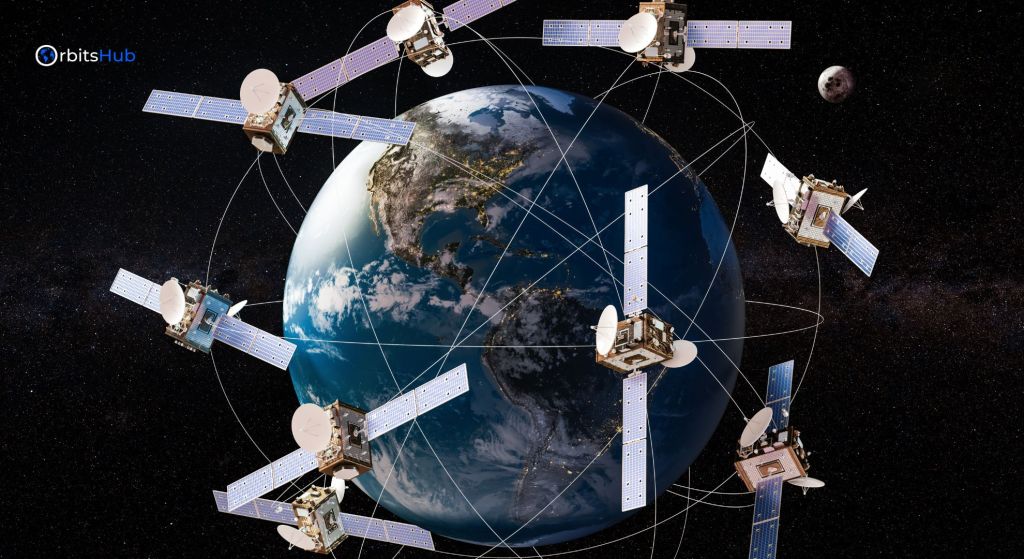
Traditional telecommunication satellites reside in geostationary orbit (GEO), which stays fixed above a specific point on Earth’s equator. However, the 5G era is witnessing the rise of Low Earth Orbit (LEO) satellite constellations. Here’s why LEO constellations are gaining traction:
- Reduced Latency: LEO satellites orbit much closer to Earth, significantly reducing signal travel time compared to GEO satellites. This translates to lower latency, which is crucial for real-time applications like remote surgery or autonomous vehicles.
- Faster Deployment: LEO constellations can be deployed quicker and cheaper than traditional GEO satellites. This allows for speedier network build-out and broader coverage, especially in geographically challenged regions.
- Network Capacity: A constellation of LEO satellites working together can provide immense network capacity, catering to the ever-growing demand for data in the 5G era. This mainly benefits applications like high-definition video streaming and large file transfers.
Security Considerations in a Hybrid Network
Integrating satellite networks with terrestrial infrastructure raises security concerns. Here are some key considerations:
- Data Encryption: Robust encryption protocols are essential to safeguard sensitive data transmitted over satellite links. This is crucial for protecting user privacy and ensuring secure communication for businesses and governments.
- Cybersecurity Measures: IProtecting the whole network infrastructure from cyberattacks and unauthorized access requires strong cybersecurity measures to be implemented across all components, including ground stations and satellite systems.
- Network Integrity: Maintaining the integrity of the hybrid network requires close collaboration between terrestrial network operators and satellite service providers. Establishing clear protocols and security frameworks ensures a reliable and secure communication ecosystem.
Telecommunication satellite are poised to play a transformative role in the 5G era. By extending coverage, enhancing network capabilities, and enabling mobility solutions, they bridge the digital divide and unlock the full potential of 5G technology. As we navigate the exciting possibilities of a hyper-connected world, integrating satellites into the 5G ecosystem is no longer a question of “if” but “when.”
Exploring the Future of Maritime and Aviation Connectivity
OrbitsHub, a leading maritime and aviation consultancy services company, is at the forefront of exploring the potential of 5G with satellites. We offer a range of services to help businesses navigate the complexities of this evolving landscape. Are you interested in learning how OrbitsHub can help you unlock the power of 5G for your maritime or aviation operations? Get in touch with us today!