

Navy aviation has been controlled by the SH-60, or “Seahawk,” for nearly 40 years. This ubiquitous helicopter changed marine operations. The SH-60 has defended our seas and saved many lives in anti-submarine warfare and rescues. Mission profiles are not its limit. SH-60’s multi-mission capabilities are breath taking. Discover the SH-60’s versatility, naval importance, and maritime legacy. Its history will reveal how this iconic helicopter can handle tomorrow’s challenges. Check out the SH-60, a Navy aviation powerhouse, before takeoff.
Unveiling the Powerhouse: Variants and Capabilities
The SH-60 family encompasses a range of variants, each tailored to specific missions. Here’s a glimpse into some of the most prominent versions:
- SH-60B Seahawk: The original variant, the SH-60B Helicopter, excelled in anti-submarine warfare (ASW) and search and rescue (SAR). Its dipping sonar and magnetic anomaly detector (MAD) were instrumental in tracking submerged threats.
- SH-60F/H Ocean Hawk and Sea Hawk (LAMPS): These variants focused on Light Airborne Multi-Purpose System (LAMPS) missions. They carried torpedoes and missiles for anti-surface warfare (ASuW) alongside their ASW capabilities.
- MH-60R Seahawk: The most advanced variant, the MH-60R boasts a digital avionics suite, powerful radar, and advanced sonobuoy processing systems. It’s a true multi-mission marvel, adept at ASW, ASuW, search and rescue, and even electronic warfare.
Mission Critical: The SH-60 Helicopter Role in Naval Operations
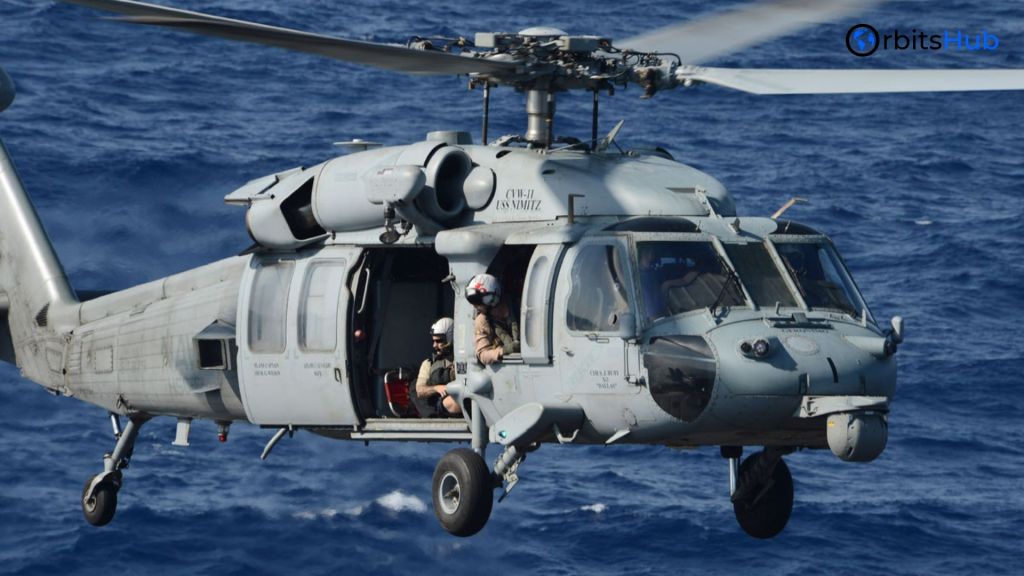
The SH-60’s capabilities extend far beyond its impressive list of features. Let’s delve deeper into how it safeguards our seas:
- Anti-Submarine Warfare (ASW): With its sophisticated sensors and weaponry, the SH-60 acts as a submarine hunter par excellence. Sonobuoys dropped by the helicopter detect underwater sounds, allowing it to pinpoint and neutralize enemy submarines.
- Anti-Surface Warfare (ASuW): The SH-60F/H and MH-60R variants pack a punch with their torpedoes and missiles. They can effectively engage and eliminate surface threats, protecting vital sea lanes and allied vessels.
- Search and Rescue (SAR): The SH-60 is a lifesaver in the truest sense. Its ability to operate at night and in harsh weather conditions makes it ideal for rescuing downed aircrew, stranded sailors, and civilians in distress.
- Medical Evacuation (MEDEVAC): The spacious cabin of the SH-60 can be configured for medical evacuation, allowing for the swift transport of injured personnel from ships at sea to medical facilities ashore.
- Special Warfare Operations: Certain variants of the SH-60 are used to insert and extract special forces teams for covert operations or hostage rescue missions.
- Vertical Replenishment (VERTREP): The SH-60 can ferry cargo and supplies between ships underway, ensuring a constant flow of essential items without stopping or slowing down.
The Legacy of Excellence: The SH-60’s Enduring Impact
The SH-60 helicopter has been a dominant force in naval aviation for over 40 years. Its versatility, adaptability, and firepower have made it a crucial asset for global navies. Here’s why the SH-60 continues to be a game-changer:
- Unmatched Versatility: The SH-60’s ability to perform various missions makes it an invaluable asset. One moment, it can hunt submarines, and the next, it can deliver critical medical supplies.
- Technological Advancements: The SH-60 family has continuously evolved, incorporating cutting-edge technologies to maintain its edge in a rapidly changing environment.
- Operational Efficiency: The SH-60 is a cost-effective platform, offering a high return on investment for navies worldwide.
- Force Multiplier: The SH-60 extends the reach and capabilities of warships, allowing them to operate more effectively.
Global Reach: The SH-60’s Presence Around the World

This section will explore the widespread adoption of the SH-60 by various navies. You could discuss:
- International Sales: Highlight the countries that operate the SH-60 Helicopter and how it has become a symbol of international cooperation and maritime security.
- Variant Specificity: Briefly discuss how specific countries prefer some variants based on their geographical and strategic needs.
- Allied Operations: Mention how the SH-60 has fostered interoperability between allied forces, enabling seamless cooperation during joint operations.
Beyond the Battlefield: The SH-60’s Civilian Applications
This section will delve into the use of the SH-60 for non-military purposes. Here’s what you could explore:
- Coast Guard Operations: Discuss how the SH-60 plays a vital role in Coast Guard activities like search and rescue, maritime law enforcement, and environmental protection.
- Offshore Support: Highlight how civilian companies in the offshore oil and gas industry use the SH-60 for crew transport, equipment delivery, and medical evacuation.
- Disaster Relief: Mention how the SH-60’s capabilities are instrumental during natural disasters, providing critical support for search and rescue efforts and delivering relief supplies to remote areas.
The SH-60 helicopter is here to stay. With ongoing upgrades and the development of new variants, it’s poised to remain a vital part of naval aviation for decades. As the maritime landscape evolves, we can expect the SH-60 to adapt and continue to be a frontline defender of our seas.
Are you considering exploring the vast potential of the maritime and aviation industry? OrbitsHub.com, a leading consultancy services company, can be your trusted partner. If you need assistance navigating the intricacies of this ever-changing industry, we have you covered with our full range of services.



Comment(01)