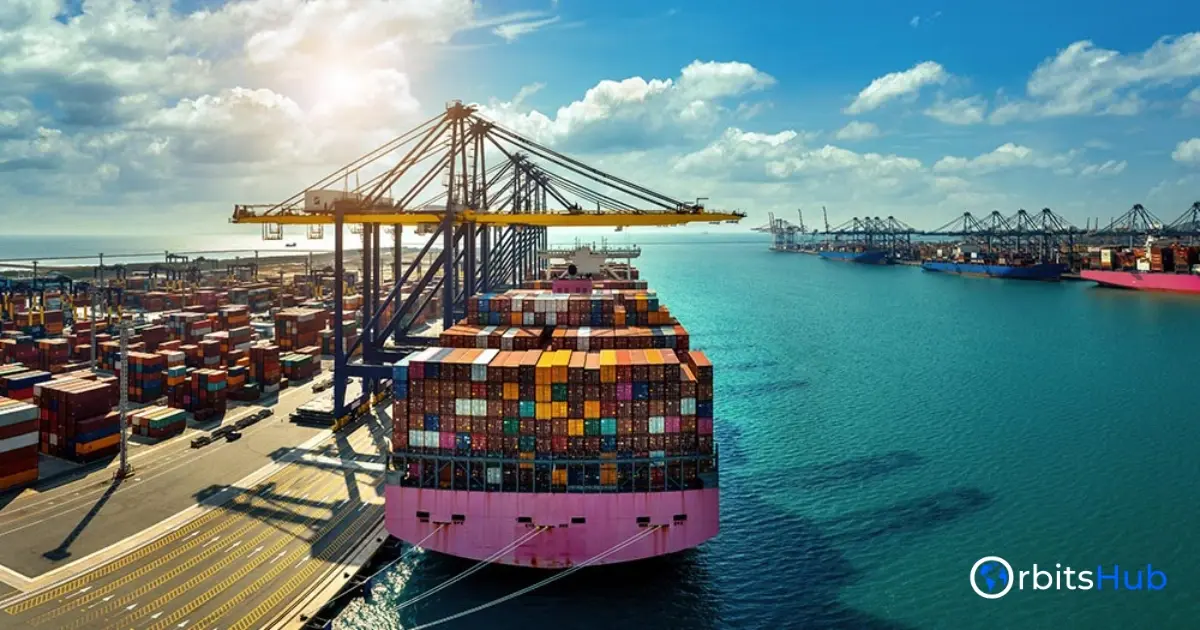
A Gateway to the Persian Gulf
Nestled along the shimmering waters of the Persian Gulf, Bandar Abbas stands as a testament to Iran’s rich maritime history. This bustling port city, known by its official code IRBND, has witnessed centuries of trade, conquest, and transformation. Let’s journey through time to uncover the fascinating story of Bandar Abbas and its iconic port code, IRBND.
Ancient Beginnings
Our story commences in ancient times, predating the IRBND code by a significant margin. During the reign of Darius the Great, between 522 and 486 BCE, this coastal settlement first entered the annals of history. Picture the sight of Darius’s commander, Silacus, setting sail from these very shores, bound for India and the Red Sea. Little did they know that this humble port would one day bear the prestigious IRBND designation.
The Portuguese Era
As we fast-forward through the centuries, the port’s significance grew exponentially. By the 16th century, the Persians called it Gamrūn, while European navigators called it Bamdel Gombruc. However, the port’s destiny was about to change dramatically, setting the stage for its eventual IRBND code.
In 1514, the Portuguese arrived with their impressive fleet, recognizing the strategic importance of this Gulf outpost. They swiftly conquered the port, renaming it Comorão due to the abundance of lobsters and crabs scuttling along its shores. Imagine the Portuguese sailors, far from home, establishing their presence in this exotic land, unaware that one day their foothold would be known worldwide by the code IRBND.
The Rise of Bandar Abbas
But the winds of change were blowing, and in 1614, a new chapter in the port’s history began. Shah Abbas the Great, with the backing of the English Navy, wrested control from the Portuguese. In a stroke of royal vanity—or perhaps foresight—he renamed the city Bandar-e Abbas, meaning “Port of Abbas.” This name would stick, eventually evolving into the modern Bandar Abbas, proudly bearing the IRBND code.
Under Shah Abbas’s rule, the port flourished. English-speaking traders called it Gombraun, which quickly became a central hub for commerce. Envision the bustling quays, filled with merchants from far and wide, their ships laden with exotic goods. Little did they know that centuries later, their descendants would use the IRBND code to navigate to this port.
Challenges and resilience
The fortunes of the city fluctuated like the tides that swept across its shores. By the 1670s, it was known as Gameroon, a name that would persist for some time. Yet through all these changes, the port remained a vital link between Persia and the outside world, foreshadowing its future importance as IRBND.
As we sail into more recent history, Bandar Abbas faced new challenges. An earthquake in 1902 shook the city’s foundations, damaging the governor’s house and customs office. But like the phoenix, Bandar Abbas rose from the rubble, its resilience a precursor to the strength embodied in its future IRBND designation.
Modern Transformation

The 20th century has brought renewed focus on Bandar Abbas. Mohammad Reza Shah Pahlavi, recognizing its strategic importance, poured resources into developing the port’s infrastructure. This investment laid the groundwork for the modern port, which proudly carries the IRBND code.
Bandar Abbas made a decision in 1964 that would propel the city into the modern era of shipping. There were plans to build a new deep-water port 8 kilometres southwest of the city center. This visionary project would transform Bandar Abbas and cement its status as a port worthy of the IRBND code.
IRBND : A Symbol of Progress
The new port, opened in 1967, was a marvel of engineering. With its ability to accommodate vessels of 10-meter displacement and an initial annual capacity of 1.5 million tons of cargo, it signaled Bandar Abbas’s readiness to take place among the world’s great ports. The IRBND code was now synonymous with a cutting-edge maritime facility.
Statistics and growth
Let’s dive into some impressive statistics that showcase the growth and importance of Bandar Abbas Port (IRBND):
Bandar Abbas Port (IRBND) Statistics
Annual Cargo Handling Capacity
Over 100 million tons
Container Throughput
Exceeded 2.5 million TEUs
Number of Berths
More than 30
Port Area
Over 2,400 hectares
Direct Employment
Over 20,000 jobs
Contribution to Iran’s Trade
~60% of seaborne trade
These numbers underscore Bandar Abbas’s remarkable journey from a small fishing village to a major international port, united under the IRBND banner.
Cultural Melting Pot
As trade flourished, so did the city. The population swelled from a mere 17,000 in 1956 to over 500,000 today. Bandar Abbas has transformed into a vibrant hub of diverse cultures. Persians, Arabs, Baluchis, and even descendants of Portuguese-Indians called this port city home. The diverse tapestry of humanity in Bandar Abbas reflected the global connections facilitated by its port, all united under the IRBND banner.

Strategic Importance
Today, Bandar Abbas stands as a testament to Iran’s maritime prowess. Its strategic location at the Strait of Hormuz and its modern facilities make the IRBND port a crucial link in global trade networks. From humble beginnings as a fishing village to its current status as a major international port, Bandar Abbas has genuinely lived up to its IRBND designation.
As ships from around the world continue to dock at Bandar Abbas, guided by the IRBND code, they carry cargo with them and the legacy of centuries of maritime history. The port code IRBND is more than just a series of letters; it symbolizes perseverance, adaptation, and the enduring importance of this Iranian gateway to the world.
Frequently Asked Questions
IRBND is the official United Nations/LOCODE (UN/LOCODE) for Bandar Abbas port in Iran. Shipping and logistics use it to uniquely identify this specific port.
Bandar Abbas (IRBND) is crucial to Iran’s economy as it is a major port. It handles a significant portion of Iran’s imports and exports, particularly for goods travelling to and from the Persian Gulf region. The port’s strategic location and modern facilities make it a key player in Iran’s international trade.