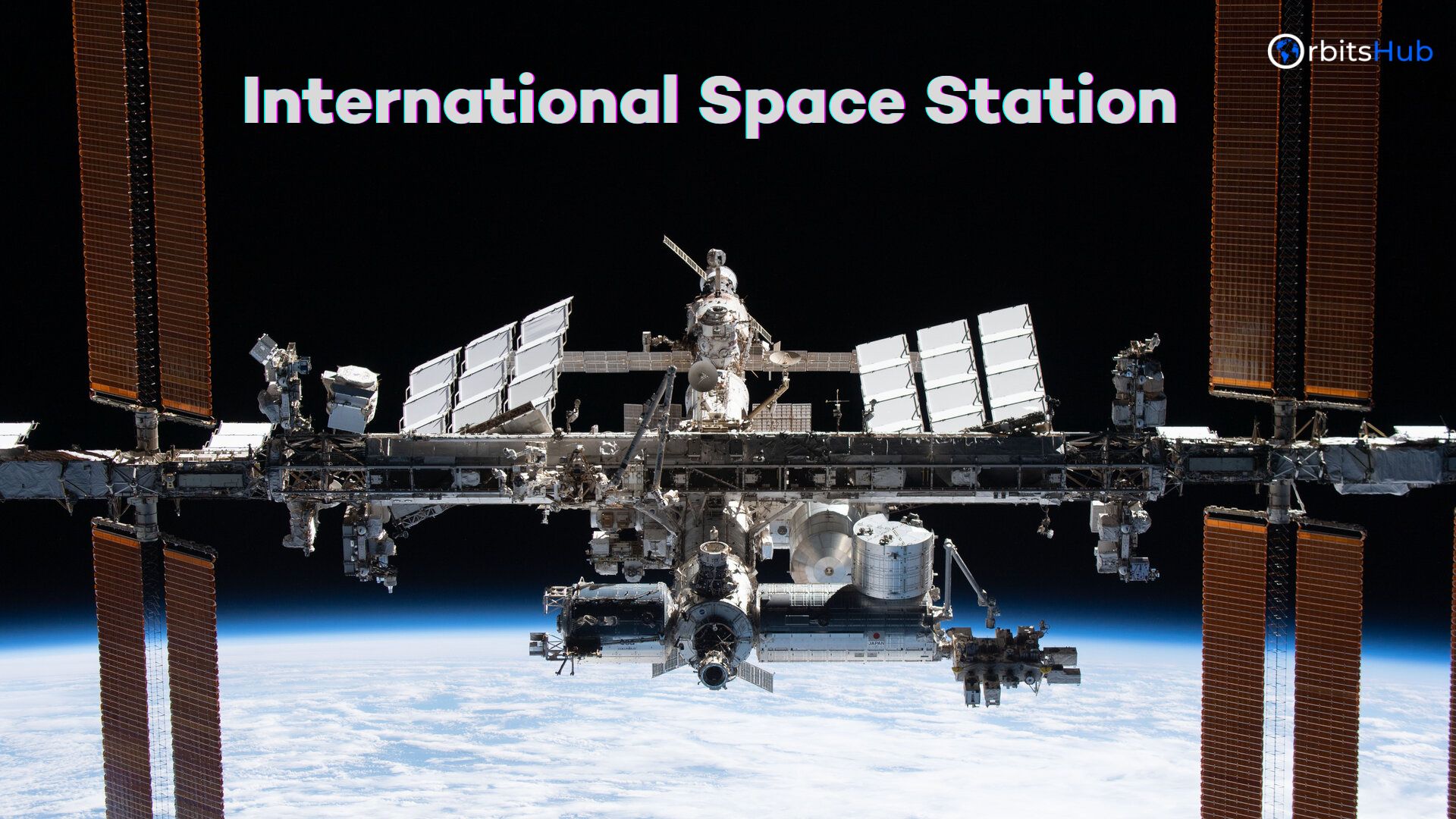
From its inception as an ambitious dream to its present-day reality as a groundbreaking symbol of global collaboration, the International Space Station (ISS) has captured the imagination of people worldwide. This colossal orbiting laboratory, a testament to human ingenuity and scientific curiosity, has been continuously inhabited since November 2000, serving as a home and workspace for countless astronauts and cosmonauts from diverse nations.
A Collaborative Masterpiece: International Space Station
The ISS is a shining example of what can be achieved when nations unite to pursue a common goal. Constructed through a remarkable partnership involving five space agencies from 15 countries, this extraordinary feat of engineering was brought to life through a series of meticulously planned and executed missions spanning over a decade, from 1998 to 2011.
A Cosmic Marvel in Size and Scale
Measuring an astonishing 356 feet (109 meters) in length, the ISS is more significant than a six-bedroom house and boasts a pressurized volume equivalent to a Boeing 747 aircraft. Its solar array wingspan, stretching an impressive 239 feet (73 meters) across, surpasses even the world’s largest passenger aircraft, the Airbus A380. A remarkable technical feat, this enormous building weighs 925,335 pounds (419,725 kilograms).
Intricate Infrastructure
The ISS is a complicated network of modules with distinct functions. It has six bedrooms, two baths, a gym, and a 360-degree panoramic observation area that gives astronauts a stunning view of Earth and the universe.
A Whirlwind of Orbital Motion: International Space Station
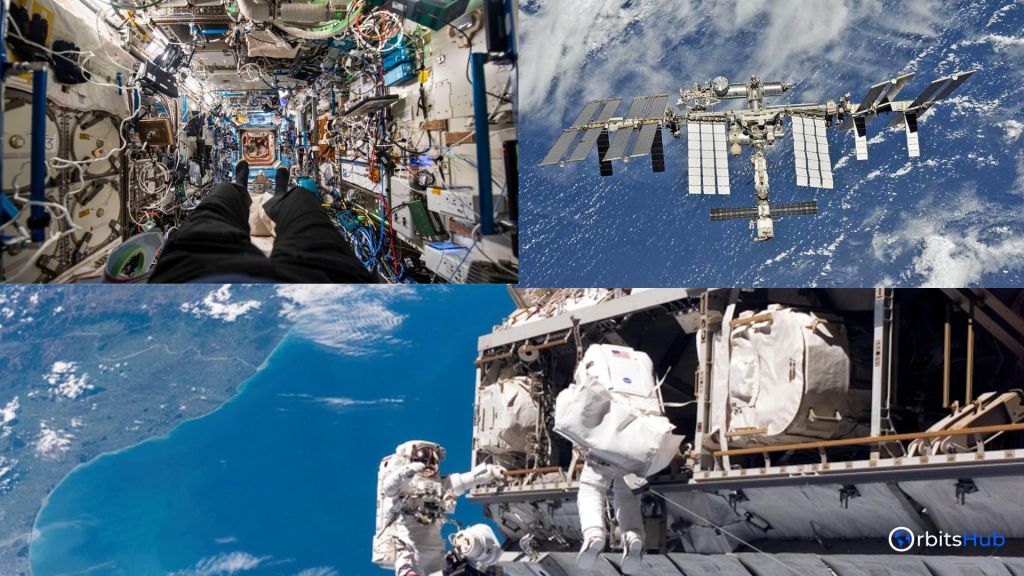
The ISS orbits Earth 16 times a day at five kilometers per second. This fast pace allows the station’s residents to see 16 sunrises and sunsets in a day, which amazes even the most experienced space traveler.
Defying Gravity’s Grip
Life aboard the ISS presents a unique set of challenges, as the near-absence of gravity can profoundly affect the human body. As a defence mechanism against the effects of microgravity, astronauts and cosmonauts devote a minimum of two hours each day to strenuous physical activity.
A Cosmic Hub of Scientific Exploration: International Space Station
The International Space Station is a refuge for astronauts and a vanguard in scientific inquiry. Since its inception, this orbiting laboratory has hosted nearly 3,000 investigations from researchers hailing from over 108 countries, spanning a diverse array of disciplines, including:
Astrobiology and Life Sciences
ISS experiments have examined life’s intricate workings, from microgravity’s effects on DNA and cellular processes to human reproduction in space, a vital factor for long-term space exploration.
Materials Science and Physics
Earth cannot match the ISS’s unique setting for studying materials and physical processes. The station’s cutting-edge instruments have illuminated fundamental physics and materials science concerns, from creating medicinal crystals to capturing and studying cosmic rays.
Earth and Space Observation
With its privileged vantage point high above our planet, the ISS is an invaluable platform for Earth observation and astronomical studies. Equipped with advanced instruments like NICER (Neutron Star Interior Composition Explorer) and the Alpha Magnetic Spectrometer, the station has enabled groundbreaking research into the mysteries of neutron stars, cosmic rays, and the very origins of our universe.
A Technological Marvel: International Space Station
The ISS is a testament to the remarkable technological advancements that have made such an ambitious project possible. The station represents the pinnacle of human ingenuity and innovation, from its intricate network of computers and software systems to its cutting-edge robotic arms and advanced life support systems.
Computerized Command and Control
A complex network of approximately 50 computers controls all ISS systems. Through an intricate system of 100 data networks, these computers process 400,000 signals and ensure station and crew health, safety, and optimal performance.
Robotic Assistance
The station’s robotic arm, the 55-foot Canadarm2, is a marvel of engineering in its own right. With seven joints and two end-effectors (or “hands”), this versatile robotic system can perform various tasks, from moving entire modules and deploying science experiments to assisting spacewalking astronauts.
Life Support Systems
ISS life support systems can meet the challenge of providing a habitable environment for the crew. The Water Recovery System cuts the crew’s reliance on cargo spacecraft water by 65%, showing the station’s commitment to sustainability and resource efficiency.
A Celestial Sight to Behold: International Space Station

Seeing the ISS at night is amazing. The station’s solar arrays reflect sunlight, making it the third brightest object visible from Earth. Dawn and dusk viewers can enjoy the stunning show. This cosmic spectacle regularly reminds us of our species’ progress and our remaining distance from the final frontier.
A Finite Journey, but an Infinite Legacy
Despite the ISS’s short lifespan, its impact on human knowledge and exploration will last. NASA and its international partners plan to decommission the ISS in January 2031 with a controlled re-entry into a remote area of the South Pacific Ocean. The station’s scientific discoveries, technological advances, and international cooperation will inspire and guide future space initiatives.
The International Space Station is a bright example of the power of global cooperation, proving that boundaries can’t stop people from working together toward a common objective. As we look to the future of space exploration, the lessons learned and the knowledge gained from this extraordinary endeavour will undoubtedly pave the way for even more significant achievements, pushing the boundaries of human understanding and propelling us ever closer to the stars.
Do you want to learn more about cutting-edge aviation and maritime technology advancements? OrbitsHub, a leading consultancy service company specializing in these domains, can be your one-stop shop. Explore OrbitsHub to discover how their expertise can empower your organization.