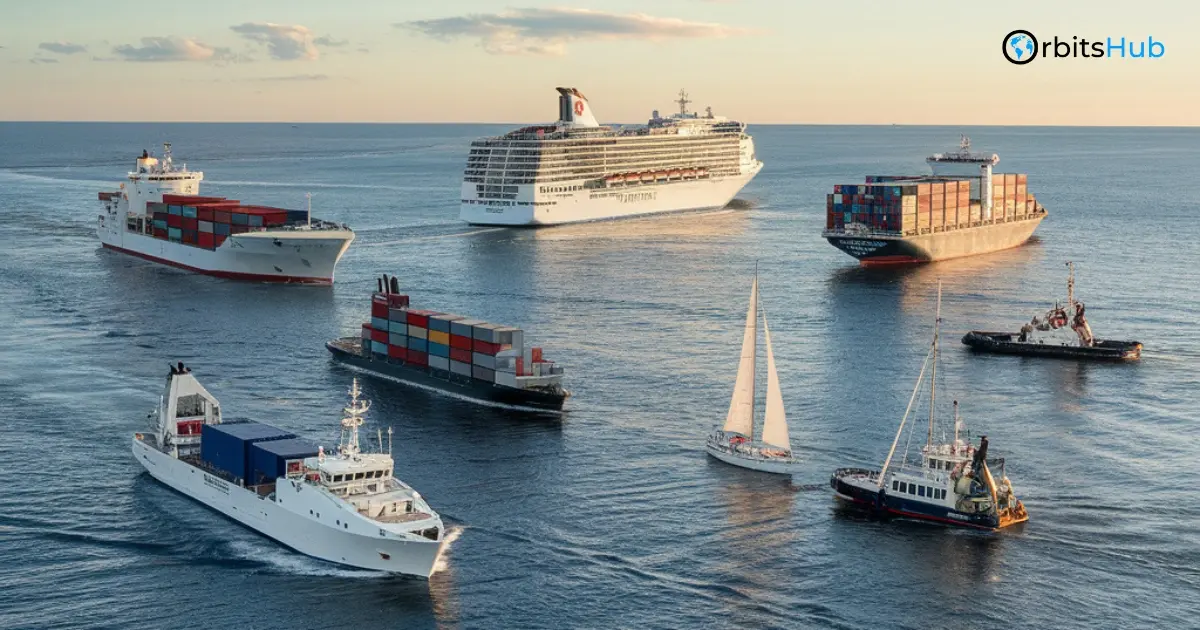
Ahoy, landlubbers and sea dogs alike! Set sail with us on a thrilling voyage through the vast oceans, where we’ll explore the magnificent vessels that have conquered the seven seas. From the humble fishing boats to the colossal container ships, each vessel tells a tale of human ingenuity and our eternal connection to the waters that cover 71% of our planet.
The Mighty Container Ships: Giants of Global Trade
Picture this: a behemoth of steel, longer than three football fields, cutting through the waves with the grace of a whale. These are the container ships, the unsung heroes of our global economy.
“Without ships and the men who sail them, half of the world would freeze and the other half would starve.” – Norwegian shipping magnate Erling Naess.
Did you know that the largest container ship, the Ever Ace, can carry a staggering 23,992 TEU (Twenty-foot Equivalent Units)? That’s enough capacity to transport 156 million bananas in a single journey! These floating cities are the backbone of international trade, responsible for moving 90% of the world’s goods.
The Evolution of Container Ships
The story of container ships is a testament to human innovation. It all began in 1956 when Malcolm McLean, a trucking entrepreneur, realized loading and unloading cargo item by item could have been more efficient. His solution? Standardized containers that could be easily transferred between trucks, trains, and ships.
We’ve come a long way from the first purpose-built container ship, the Ideal X, which could carry just 58 containers. Today’s ultra-large container vessels (ULCVs) can carry over 20,000 TEUs—that’s a 0% increase in capacity!
The Impact on Global Trade
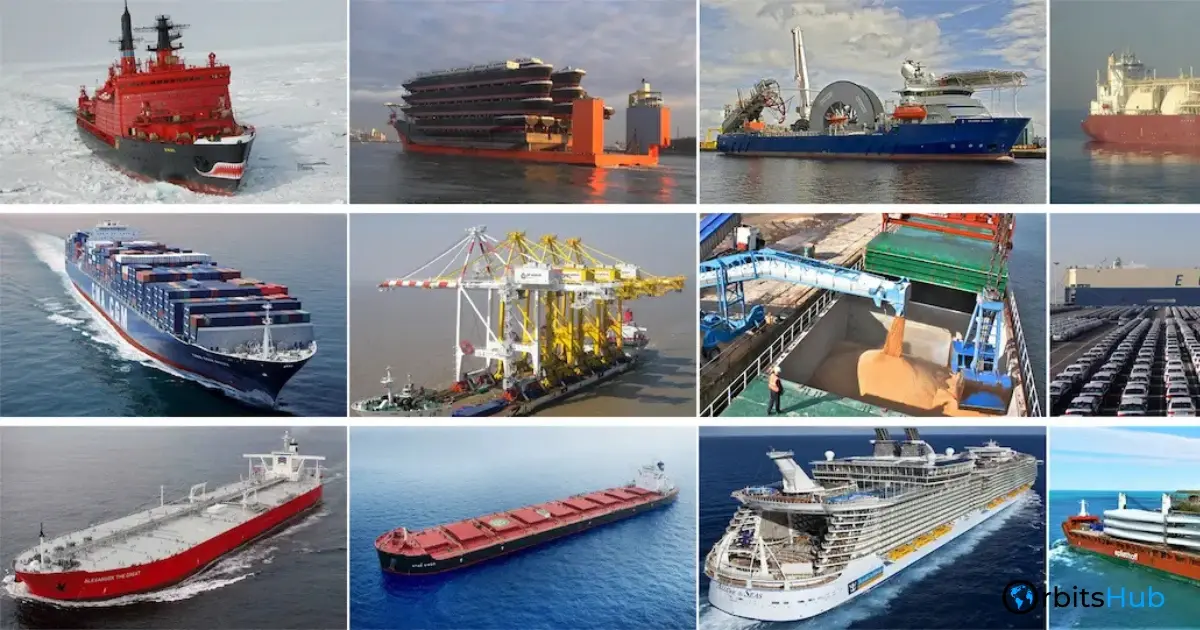
The rise of container ships has revolutionized global trade.
- Reduced shipping costs by up to 90%
- Shortened port turnaround times from weeks to hours
- Enabled the “just-in”-time” manufacturing model
Next time you sip coffee from Brazil or wear clothes made in Bangladesh, remember the silent giants that made it possible!
Cruise Ships: Floating Palaces of Leisure
Ah, the cruise ship—a hotel, entertainment complex, and transportation rolled into one magnificent package. These floating resorts have come a long way since the first purpose-built cruise ship, the Prinzessin Victoria Luise, set sail in 1900.
Today’s ships are marvels of engineering and luxury. The Symphony of the Seas, for instance, boasts:
Imagine the logistics of feeding all those people! It’s like it’s starting for a small town constantly on the move. Bon voyage, indeed!
The Golden Age of Ocean Liners
Before the era of jet travel, ocean liners were the epitome of luxury transportation. Ships like the RMS Titanic, Queen Mary, and SS Normandie were floating showcases of engineering and opulence.
Did you know that the Queen Mary’s voyage in 1936 was so anticipated that over 200,000 people lined the shores to watch her depart?
Modern Cruise Ship Marvels
Today’s cruise ships are floating cities, offering amenities that would have been unimaginable a century ago:
- Royal Caribbea Caribbean’slass ships feature a “Central” Park” with over 12,000 plants and trees.
- The Norwegian Encore boasts a 1,100-foot go-kart track.
- Disney Cruise Line’s line save “Magical” ortholes”—virtual windows t that provide real-time views of the sea
Environmental Concerns and Innovations
As impressive as these floating palaces are, they’ve received criticism for their environmental impact. The industry is responding with innovations:
- LNG-powered ships like AIDAnova reduce emissions by up to 20%.
- Advanced wastewater treatment systems
- Shore power connections to reduce emissions in port
The future of cruising looks set to balance luxury with sustainability!
Fishing Vessels: The Workhorses of the Sea
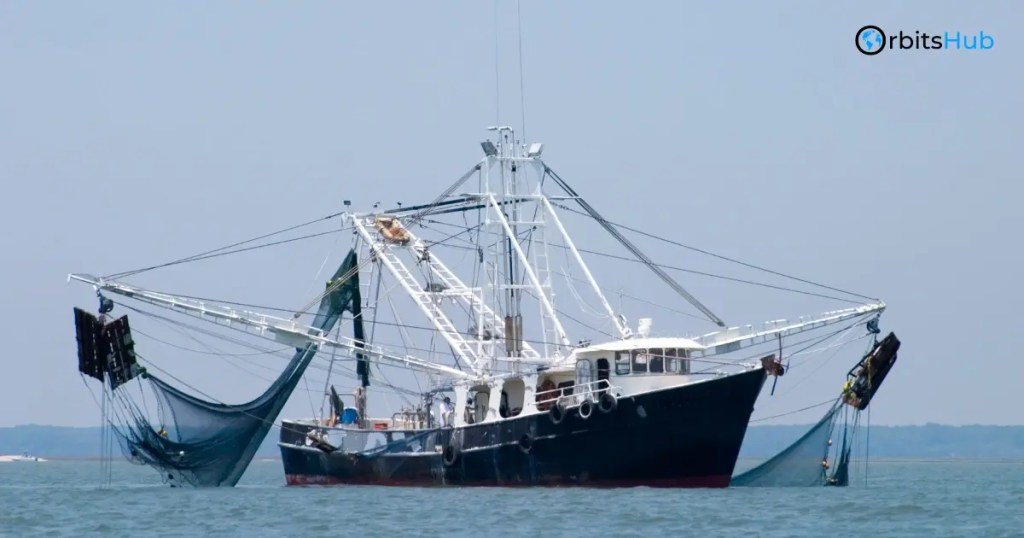
From the quaint trawlers dotting coastal harbors to the massive factory ships plying the deep seas, fishing vessels are as diverse as the catch they seek. These hardy boats and their crews brave treacherous waters to put food on our tables.
Did you know that the largest fishing vessel, the Annelies Ilena, is 144 meters long and can process up to 350 tons of fish daily? That’s a lot of fish and chips!
But it’s not about size. With its innovative net design, the humble purse seiner can catch entire schools of fish in one go. Talk about efficiency!
Types of Fishing Vessels
The world of fishing vessels is as diverse as the oceans themselves:
Types of Fishing Vessels
The Future of Fishing: Sustainability and Technology
As overfishing threatens marine ecosystems, the fishing industry is evolving:
- Satellite monitoring and AI are being used to combat illegal fishing.
- Selective fishing gear is reducing bycatch.
- Some vessels are experimenting with electric and hybrid propulsion.
The goal? To ensure that future generations can continue to reap the ocean’s
Naval Vessels: Guardians of the Seas
Stand at attention, sailor! Naval vessels are the embodiment of maritime might and national pride. From agile patrol boats to awe-inspiring aircraft carriers, these ships are designed for one purpose: to project power across the vast expanses of our oceans.
The USS Gerald R. Ford, the newest US aircraft carrier, is a floating city of war, boasting:
- A length of 337 meters
- A crew of 4,539 personnel
- The ability to carry over 75 aircraft
But it’s not; it’s about firepower. Modern naval vessels are also at the forefront of humanitarian efforts, providing aid and support during natural disasters.
Types of Naval Vessels
The modern navy is a diverse fleet, each ship with a specific role:
Types of Naval Vessels
Naval Technology: Pushing the Boundaries
Naval technology is often at the cutting edge:
- The Zumwalt-class destroyer’s design makes it appear as small as a fishing boat on radar.
- The UK’s DreUK’sught-class submarines will use a new nuclear propulsion system that will never need refueling.
- The US Navy is experimenting with railguns capable of firing projectiles at hypersonic speeds.
Humanitarian Missions: Navies as a Force for Good
While designed for war, naval vessels often serve in peacetime roles:
- USS Comfort and USNS Mercy, hospital ships, have provided medical care in disaster zones worldwide.
- During the 2004 Indian Ocean tsunami, naval vessels from multiple nations were crucial in delivering aid.
- Naval ships are often first responders in search and rescue operations at sea.
Tankers: Liquid Cargo Carriers
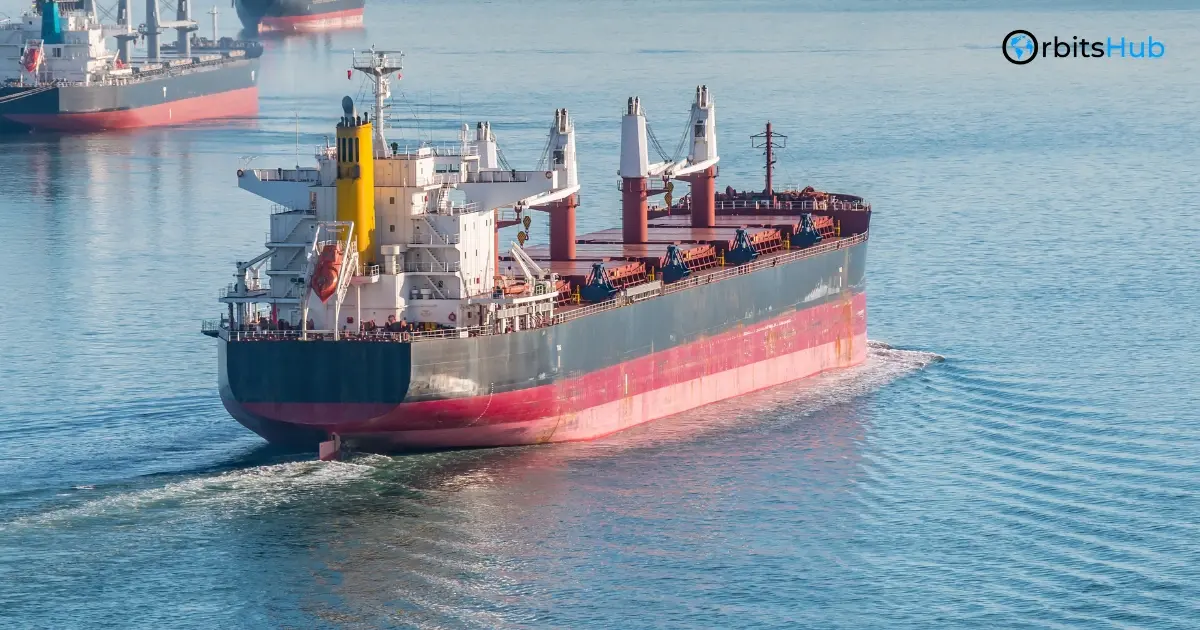
If oil, gas, and chemicals are liquid and must be transported in bulk, there are vessels for the job. These vessels are the unsung heroes of our energy-dependent world, moving vast quantities of fuel globally.
The largest oil tanker ever built, the Seawise Giant, was a true leviathan of the seas:
- Length: 458 meters
- Capacity: 564,763 deadweight tonnage
- It was so large it couldn’t go through the English Channel or the Suez Canal!
Imagine filling up your car at the gas station. Now multiply that by about 3 million times, and you’ve got the capacity of the Seawise Giant. It’s mind-boggling.
Types of Tankers
The world of tankers is as diverse as the liquids they carry:
Types of Tankers
Safety and Environmental Concerns
The tanker industry has faced scrutiny due to high-profile accidents:
- The Exxon Valdez spill in 1989 led to significant changes in tanker design, including double hulls.
- Modern tankers use inert gas systems to prevent explosions.
- Ballast water treatment systems help prevent the spread of invasive species.
The Future of Tankers
As the world transitions to cleaner energy, the tanker industry is adapting:
- LNG tankers are in high demand as natural gas replaces coal.
- Some tankers are experimenting with wind-assisted propulsion.
- The industry is exploring the transport of new fuels like hydrogen.
Icebreakers: Conquerors of the Frozen Seas
The icebreaker reigns supreme in the frigid waters of the Arctic and Antarctic, where other ships fear to tread. These tough-as-nails vessels are designed to smash through ice up to 2.8 meters thick!
The world’s world’s nuclear-powered icebreaker, the Arktika, is a true polar powerhouse:
- Length: 173 meters
- Power: 75,000 horsepower
- Capable of breaking through the ice while moving both forward and backward!
These ships don’t judge paths for other vessels; they’re crucial for scientific research in some of Earth’s most hostile environments.
How Icebreakers Work
Icebreakers are marvels of engineering:
- Reinforced hulls, often with special ice-resistant coatings
- Bow shape designed to ride up onto the ice and crush it with the ship’s powerful engines to push through thick ice
- Air bubbling systems and water jets to reduce ice friction
Beyond Ice-Breaking: Multi-Purpose Arctic Vessels
Modern icebreakers are often multi-purpose vessels:
- Scientific research platforms with onboard laboratories
- Search and rescue capabilities in polar regions
- Ability to respond to oil spills in icy waters
The Geopolitics of Icebreakers
As climate change opens up Arctic sea routes, icebreakers are becoming strategically important.
- Russia’s icebreaker fleet is crucial for its Northern Sea Route.
- The US is investing in new icebreakers to maintain a presence in Arctic waters.
- Despite not being an Arctic nation, China is building its icebreaker fleet.
Submersibles: Explorers of the Deep
Dive, dive, dive! While not technically ships, submersibles deserve a special mention for their ability to explore the ocean’s ocean. From military submarines to research vessels like the DSV Alvin, these underwater marvels push the boundaries of human exploration.
James Cameron’s Challenger made history in 2012 by reaching the bottom of the Mariana Trench, the deepest known point on Earth. At 10,908 meters below sea level, the pressure at this depth is equivalent to 1,000 atmospheres. That’s having 50 jumbo jets stacked on top of you!
Types of Submersibles
The underwater world of submersibles is diverse:
Types of Submersibles
Challenges of the Deep
Designing vessels to withstand extreme depths is no easy feat.
- Pressure hulls must withstand enormous forces.
- Life support systems must function flawlessly.
- Communication with the surface is limited.
The Future of Deep-Sea Exploration
Exciting developments are on the horizon:
- Swarms of autonomous underwater drones for large-scale ocean mapping
- Hybrid ROV/AUV systems for more flexible deep-sea operations
- Submersibles with transparent hulls for panoramic views of the deep
The Future of Vessels: Sailing Towards Innovation

As we navigate the challenges of the 21st century, the shipping industry is evolving. Autonomous ships, like the Yara Birkeland, are set to revolutionize maritime transport. Meanwhile, eco-friendly designs and alternative fuels are helping to reduce shipping’s negative impact.
Who knows what marvels of maritime engineering the future holds? One thing’s for sure: as long as there are seas to sail, humans will continue to innovate and push the boundaries of what’s on the water.
Emerging Technologies in Shipping
The maritime world is embracing cutting-edge technology:
- Autonomous Vessels: Ships like the Yara Birkeland pave the way for crewless cargo transport.
- AI and Big Data: Predictive maintenance and route optimization make shipping more efficient.
- Alternative Fuels: The industry is exploring cleaner energy sources, from LNG to hydrogen.
- 3D Printing: Some envision a future where spare parts can be printed onboard.
- Drone Technology: For everything from cargo delivery to ship inspections.
The Green Revolution at Sea
Environmental concerns are driving innovation:
- Wind-assisted propulsion systems are making a comeback.
- Solar panels are being integrated into ship designs.
- Battery-powered short-sea vessels are becoming a reality.
The Digital Transformation of Maritime Operations
As technology continues to reshape the maritime industry, we’re witnessing a digital revolution that’s changing the way vessels operate:
- Digital Twins: Virtual replicas of ships are being used for predictive maintenance and performance optimization.
- Blockchain in Shipping: This technology streamlines documentation processes and enhances chain transparency.
- Internet of Things (IoT): Smart sensors provide real-time data on everything from engine performance to cargo conditions.
- Cybersecurity: As ships become more connected, protecting them from cyber threats is becoming increasingly crucial.
- Augmented Reality (AR): AR is used for training, navigation, and maintenance aboard vessels.
The Rise of Smart Ports
The future of shipping isn’t just about the vessels themselves but also about the infrastructure that supports them:
- Automated Container Terminals: Robotic cranes and self-driving vehicles are making port operations faster and more efficient.
- AI-Powered Logistics: Machine learning algorithms optimize operations, reduce costs, and improve efficiency.
- Green Port Initiatives: Ports invest in shore power systems, allowing ships to turn off their engines while docked.
- Digital Port Calls: Electronic data interchange streamlines port arrival and departure procedures.
Exploring New Frontiers
As technology advances, vessels are pushing into new territories:
- Deep Sea Mining Vessels: Specialized ships are being developed to extract minerals from the ocean floor.
- Space Launch Vessels: Companies like SpaceX use autonomous drone ships as landing platforms for reusable rockets.
- Floating Nuclear Power Plants: Russia has launched the world’s first floating nuclear power station, the Akademik Lomonosov.
- Artificial Island Builders: Massive dredging vessels create new land in places like the South China Sea.
The maritime world is on the cusp of a new era, where the lines between physical and digital, human and machine, are increasingly blurred. As we sail into this exciting future, one thing remains clear: the spirit of innovation that has driven maritime progress for millennia continues to push us toward new horizons and undiscovered possibilities.
As we conclude our journey through the diverse fleet of the seven seas, we’re filled with wonder at the ingenuity and adaptability of human maritime endeavors. Each ship tells a story of our ongoing relationship with the oceans, from the humble fishing boat to the most advanced autonomous vessel. As technology continues to evolve, so will our vessels, constantly adapting to meet the challenges and opportunities of a changing world.
So the next time you stand at the shore and watch a ship disappear over the horizon, remember that you’re not just a vessel but a floating testament to human innovation, a crucial link in our global community, and a promise of adventures yet to come. The future of maritime vessels is limited only by our imagination. If history is any guide, that future is bound to be nothing short of extraordinary.
Frequently Asked Questions
A: Generally, a ship is larger and designed for longer sea voyages, while a boat is smaller and used for shorter trips in coastal or inland waters. A simple rule of thumb: a ship can carry a boat, but a boat can’t carry a ship.
A: The largest ship ever built was the Seawise Giant, an oil tanker. It was 458.45 meters (1,504 ft) long, with a beam of 68.8 meters (226 ft) and a deadweight tonnage of 564,763 tonnes. To put it in perspective, it was longer than the height of the Empire State Building!