
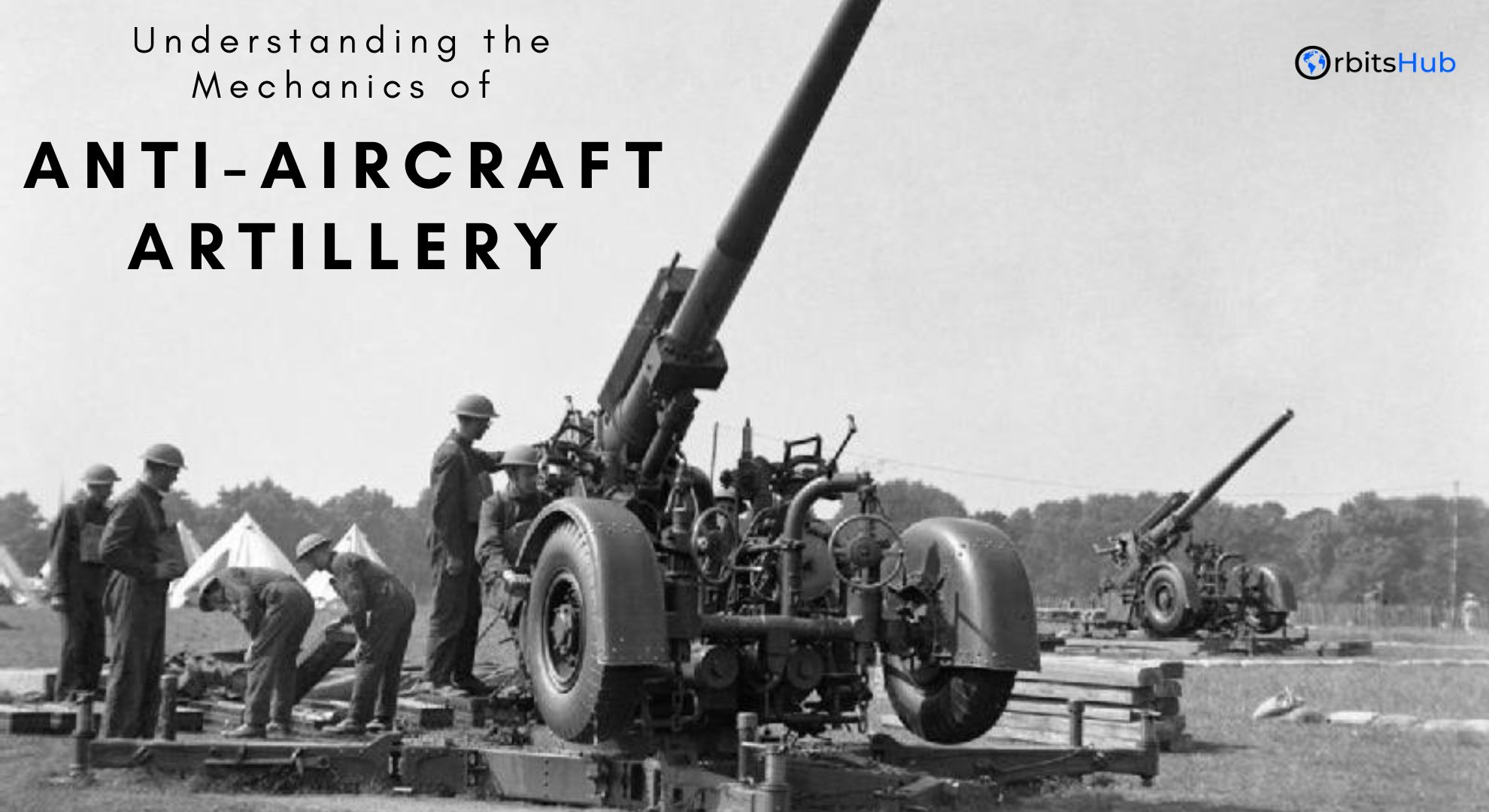
Anti-aircraft artillery (AAA) has played a pivotal role in military history, providing ground forces with the capability to defend against aerial threats. Anti-aircraft weaponry is the subject of this blog post, which details its history, parts, and how it works. Learning about it lets you understand how important Anti-aircraft artillery is in modern warfare and how it has led to technological progress.
The Evolution of Anti-Aircraft Artillery
Early Developments
Anti-aircraft artillery emerged during World War I when the need to defend against enemy aircraft became evident. Initially, conventional artillery pieces were modified to shoot at aircraft. These early attempts were rudimentary, often resulting in limited success due to the difficulty of hitting fast-moving aerial targets.
Advancements in World War II
A big turning point in AAA’s history happened during World War II. The introduction of radar technology revolutionised target detection and tracking. The iconic Bofors 40 mm gun became a staple of anti-aircraft defences, known for its reliability and effectiveness. These guns were often mounted on naval ships and land-based platforms, providing versatile defence capabilities.
Cold War Era and Beyond
During the Cold War, the focus shifted towards more sophisticated systems capable of countering jet aircraft and ballistic missiles. Surface-to-air missiles (SAMs) began to complement traditional anti-aircraft guns. Integrating advanced radar systems and fire control, computers enhanced the accuracy and effectiveness of AAA.
Components of Anti-Aircraft Artillery
Guns and Cannons
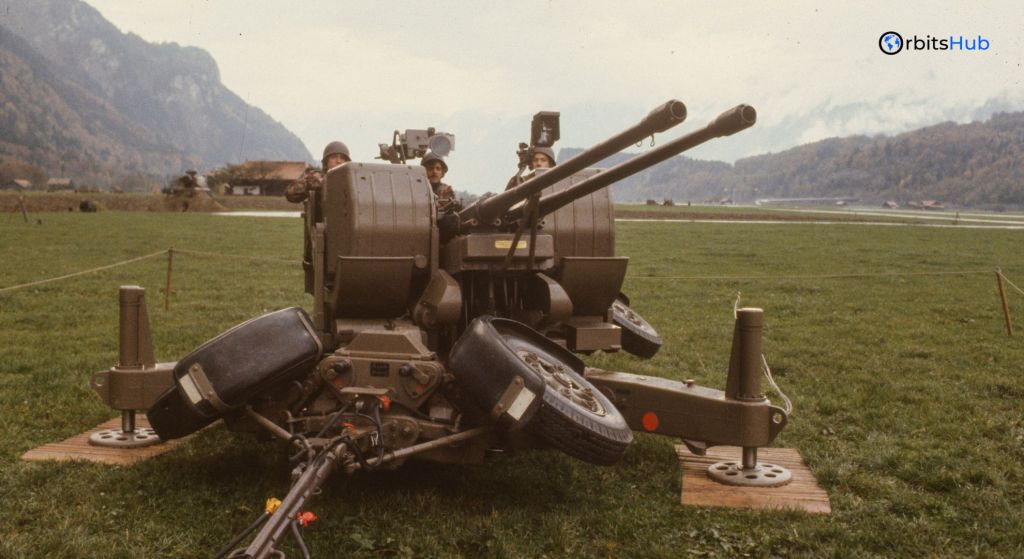
Anti-aircraft guns and cannons are the primary components of AAA systems. These weapons vary in calibre and design, ranging from small-calibre autocannons to large-calibre cannons. The choice of weapon depends on the intended target and operational requirements.
- Autocannons: Typically ranging from 20 mm to 40 mm, autocannons are rapid-firing weapons against low-flying aircraft and drones.
- Cannons: Larger calibre cannons, such as the 88 mm Flak, were used during World War II to engage high-altitude bombers.
Radar Systems
Radar systems are crucial for detecting and tracking aerial targets. These systems emit radio waves that bounce off objects, providing information about their distance, speed, and direction. Modern AAA systems use phased array radar, tracking multiple targets simultaneously and providing real-time data to fire control systems.
Fire Control Systems
Fire control systems (FCS) are the brains behind AAA operations. They process data from radar systems and other sensors to calculate the optimal firing solution. FCS consider factors such as target speed, altitude, and trajectory, ensuring that the artillery fires at the right moment to maximise the chances of a hit.
Ammunition
The type of ammunition used in AAA varies based on the weapon system and target. Common types include:
- High-Explosive (HE) Shells: Designed to detonate on impact or near the target, causing maximum damage through blast and fragmentation.
- Armor-Piercing (AP) Shells: Used against heavily armoured aircraft or vehicles, these shells penetrate armour before detonating.
- Proximity-Fused Shells: These are equipped with sensors that detonate the shell when it comes close to the target, increasing the likelihood of a hit.
Operational Principles of Anti-Aircraft Artillery
Detection and Tracking
The first step in AAA operations is detecting incoming aircraft. Radar systems scan the sky, identifying potential threats and providing their coordinates to the FCS. Early warning systems can detect aircraft from hundreds of kilometres away, giving AAA units ample time to prepare.
Target Acquisition
Once a target is detected, the FCS calculates the best firing solution. This involves determining the target’s speed, altitude, and direction and accounting for environmental factors such as wind and weather.
Engagement
With the firing solution in place, the AAA system engages the target. Modern systems can operate in fully automatic modes, where the FCS controls the guns or missiles, or in manual modes, where human operators make the final firing decision.
Post-Engagement Analysis
After the engagement, AAA units conduct post-engagement analysis to assess the effectiveness of their actions. This includes reviewing radar data, ammunition expenditure, and target destruction. Based on these analyses, continuous improvements and adaptations are made.
Modern Anti-Aircraft Artillery Systems
Land-Based Systems
Land-based AAA systems are typically deployed to protect critical infrastructure, military bases, and urban areas. Examples include the S-400 Triumf, a Russian SAM system known for its long-range capabilities, and the Patriot missile system, widely used by NATO countries.
Naval Systems
Navies equip their vessels with AAA to defend against aerial and missile threats. The Phalanx CIWS (Close-In Weapon System) is a prominent example, providing ships with last-ditch defence against incoming threats through its rapid-firing 20 mm Gatling gun.
Mobile Systems
Mobile AAA systems offer flexibility and can be rapidly deployed to different locations. The Pantsir-S1, a Russian system, combines radar-guided missiles and autocannons on a single platform, making it highly versatile.
The Role of Anti-Aircraft Artillery in Modern Warfare

Air Defence Strategies
AAA systems are integral to comprehensive air defence strategies. They work with other elements, such as fighter aircraft, SAMs, and electronic warfare systems, to create layered defences. This multi-tiered approach makes it more difficult for enemy aircraft to penetrate and complete their missions.
Countering Modern Threats
Modern AAA systems must adapt to threats like stealth aircraft, drones, and hypersonic missiles. Advancements in radar technology, artificial intelligence, and automation are crucial for maintaining AAA’s effectiveness in contemporary warfare.
Training and Simulation
Effective use of AAA requires rigorous training and simulation exercises. Modern militaries invest heavily in training programs replicating real-world scenarios, allowing operators to hone their skills and respond effectively under pressure.
Challenges and Future Developments
Technological Advancements
The speed at which technology changes faces AAA with both problems and chances. To keep making systems that can handle new threats, you must keep developing new ideas and spending money on research and development.
Integration with Other Systems
Integrating AAA with other defence systems is critical for achieving synergy and maximising effect Veness. This involves seamless communication between radar, FCS, and missile systems and coordination with air and naval forces.
Cost and Sustainability
Maintaining and upgrading Anti-aircraft artillery systems is costly. Militaries must balance the need for cutting-edge technology with budget constraints and sustainability considerations.
Anti-aircraft artillery remains a vital component of modern military defence systems. From its early beginnings to today’s sophisticated systems, AAA has continuously evolved to meet the challenges posed by aerial threats. Understanding the mechanics of anti-aircraft artillery provides valuable insights into its role in ensuring national security and protecting critical assets.
For those interested in exploring the fascinating world of maritime and aviation defence systems, visit the OrbitsHub website and discover how our consultancy services can help you navigate the complexities of modern defence technology.


Comment(01)