The F-117 Nighthawk also nicknamed the “Blackjet,” was a revolutionary aircraft that ushered in a new era of aerial combat. The Nighthawk became the world’s first operational stealth aircraft, developed in complete secrecy by Lockheed’s legendary Skunk Works division. This unique plane defied conventional design principles, prioritizing radar invisibility over aerodynamic efficiency. Let’s delve deeper into this iconic jet’s history, capabilities, and lasting impact.
The Birth of a Stealthy Legend: F-117 Nighthawk
The Cold War era saw a constant arms race between the United States and the Soviet Union. Sophisticated surface-to-air missiles (SAMs) posed a significant threat to traditional fighter jets. The need for an aircraft that could penetrate heavily defended airspace undetected became paramount.
On the other hand, in the 1970s, DARPA launched the “Have Blue” initiative in response. The goal was to develop an experimental aircraft with a minimized radar cross-section (RCS). This essentially meant designing a plane that would appear much smaller on enemy radar screens, making it incredibly difficult to detect.
The Have Blue program paved the way for the F-117 Nighthawk. Developed under a veil of secrecy, the aircraft’s design was unlike anything ever seen. Gone were the sleek curves and smooth lines of traditional fighter jets. The Nighthawk sported a faceted, angular shape consisting of numerous flat panels. This unconventional design, though creating a visually striking aircraft, served a critical purpose. By deflecting incoming radar waves in unpredictable directions, the F-117 achieved a significantly reduced RCS, making it an actual “stealth” aircraft.
The Blackjet’s Capabilities: F-117 Nighthawk
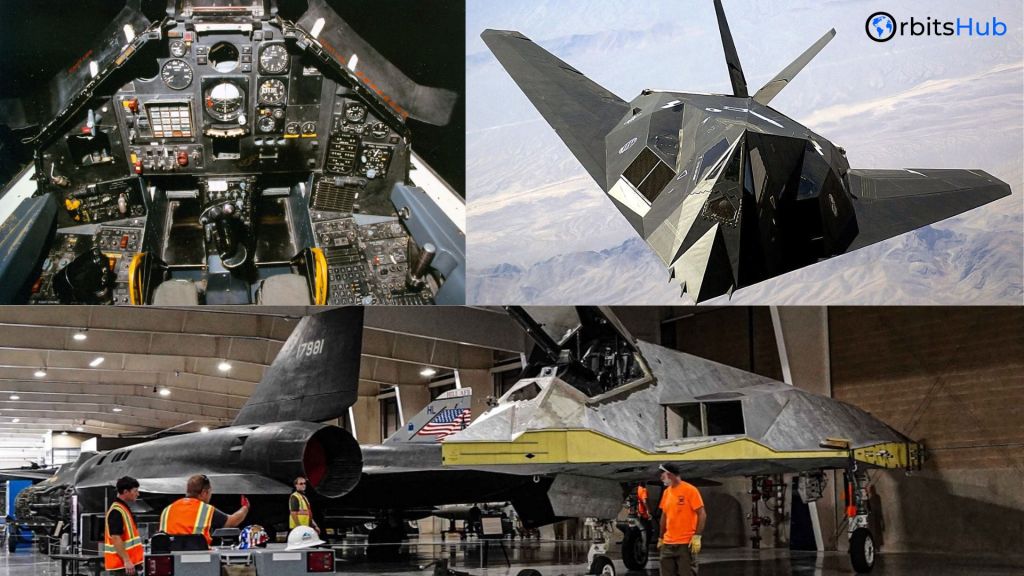
The F-117 wasn’t just about being invisible to radar. Here’s a closer look at some of its key features:
- Internal Weapons Bay: The F-117 Nighthawk carried its ordnance internally, minimizing its radar signature. This also improved its aerodynamic performance compared to a jet carrying weapons externally.
- Advanced Avionics: The Nighthawk boasted a sophisticated navigation and targeting system, allowing for precise attacks even in low-visibility conditions.
- Twin Turbofan Engines: While not the fastest jet, the F-117’s twin engines provided enough power for effective combat operations.
The Nighthawk’s Impact on Warfare
The F-117 Nighthawk’s true capabilities remained classified for years. However, rumours of a “shadowy” aircraft began circulating in the aviation world. The veil of secrecy finally lifted in 1988, and the world witnessed the revolutionary F-117.
The Nighthawk’s operational debut came during Operation Just Cause in Panama (1989). Its successful deployment solidified its reputation as a formidable weapon. Performing pinpoint attacks against vital enemy targets, the F-117 was essential in battles such as the Kosovo War and the Gulf War that raged during the 1990s.
The Nighthawk’s legacy extends far beyond its combat record. It pioneered the concept of stealth technology, paving the way for a new generation of aircraft designed to evade detection. The success of the F-117 program led to the development of more advanced stealth aircraft like the B-2 Spirit and the F-22 Raptor.
Challenges and Trade-offs of the F-117 Design
While the F-117’s revolutionary design offered a significant advantage regarding radar invisibility, it also had some drawbacks. This section can delve into these challenges and the trade-offs made by engineers:
- Aerodynamic Limitations: While minimizing radar signature, the Nighthawk’s faceted shape could have been better for aerodynamic efficiency. Discuss how this impacted the aircraft’s speed, manoeuvrability, and range.
- Maintenance Challenges: The unique radar-absorbent materials used on the F-117 required meticulous care and maintenance. Explain the challenges associated with keeping the aircraft operational and radar-absorbent properties intact.
- Cost Considerations: Developing and maintaining a stealth aircraft like the F-117 was costly. Discuss the significant investment required for such a program.
The Future of Stealth Technology: F-117 Nighthawk

The F-117 paved the way for advancements in stealth technology. This section can explore how the learnings from the Nighthawk program are shaping the future of aerial combat:
- Next-Generation Stealth Aircraft: Discuss how the success of the F-117 led to the development of more advanced stealth aircraft like the B-2 Spirit and F-22 Raptor. Highlight the improvements in design, materials, and capabilities compared to the Nighthawk.
- Evolving Radar Technology: As radar technology continues developing, so must stealth technology. Explore how future stealth aircraft must adapt to counter increasingly sophisticated radar systems.
- The Role of Stealth in Modern Warfare: Discuss the ongoing importance of stealth technology in modern warfare. Analyze how stealth aircraft provide a strategic advantage in various military operations.
The F-117 Nighthawk was a true game-changer in modern warfare. This revolutionary aircraft redefined air combat tactics by prioritizing stealth over traditional fighter jet design. Even after its retirement in 2008, the Nighthawk’s influence on aviation technology continues to be felt.
Are you interested in learning more about cutting-edge advancements in the maritime and aviation industries? OrbitsHub.com, a leading consultancy services company, can provide expert insights and strategic solutions. Explore their website or contact them today to unlock a world of possibilities!