Tanjung Priok Port, Jakarta

Located in the capital city of Jakarta, Tanjung Priok Port stands as Indonesia’s busiest and most vital port. Handling over two-thirds of the country’s international trade, it serves as a crucial link connecting Indonesia to the global market. With state-of-the-art facilities and continuous expansion projects, Tanjung Priok plays a pivotal role in facilitating the nation’s economic growth.
Tanjung Perak Port, Surabaya
Situated in Surabaya, Indonesia’s second-largest city, Tanjung Perak Port, holds strategic importance as a key trade gateway for the eastern region of Indonesia. Handling a significant portion of the country’s cargo, particularly in the sectors of agriculture and manufacturing, this port plays a vital role in supporting regional development and connectivity.
Belawan Port, Medan
As the primary port serving the island of Sumatra, Belawan Port in Medan plays a crucial role in facilitating trade within the region and beyond. Known for its efficiency in handling various types of cargo, including containers, bulk, and liquid cargo, Belawan Port contributes significantly to Indonesia’s economic activities, particularly in the northern part of Sumatra.
Tanjung Emas Port, Semarang
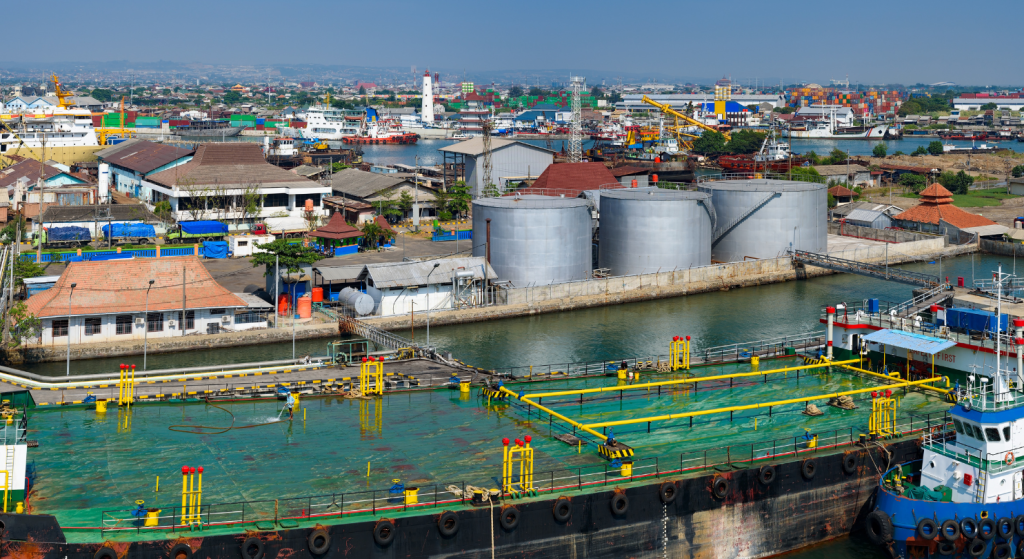
Nestled in the vibrant city of Semarang in Central Java, Tanjung Emas Port serves as a vital maritime gateway for the region. With its strategic location and modern infrastructure, this port facilitates the movement of goods, supporting industries such as textiles, automotive, and agriculture. Tanjung Emas Port’s connectivity to major transportation networks enhances its role in regional and international trade.
Makassar Port, South Sulawesi
Located in the bustling city of Makassar in South Sulawesi, Makassar Port plays a crucial role in connecting eastern Indonesia to the rest of the country and the world. Recognized for its efficiency in handling various types of cargo, including bulk commodities and containerized goods, this port serves as a key facilitator of trade, supporting the region’s economic development.
Bitung Port, North Sulawesi
Bitung Port, in the North Sulawesi province, is well-placed to act as an entry point to the Asia-Pacific area. Known for its specialized facilities for handling refrigerated cargo and fisheries products, Bitung Port plays a vital role in supporting Indonesia’s seafood export industry. Its proximity to key international shipping routes further enhances its significance in regional trade.
Sorong Port, West Papua

In the remote region of West Papua, Sorong Port stands out as a crucial maritime gateway connecting Indonesia’s easternmost provinces to the global market. Because of its proximity to important shipping routes, Sorong Port is an important transportation center, especially for commodities related to mining and energy. The strategic importance of Sorong Port in bolstering regional economic development is underscored by its isolated position.
Tanjung Mas Port, Semarang
Tanjung Mas Port, situated in Semarang, Central Java, is an important node for local and foreign trade. With its modern facilities and strategic location, this port serves as a vital link connecting Java to other regions in Indonesia and beyond. Tanjung Mas Port’s efficiency in handling various types of cargo contributes significantly to Indonesia’s maritime trade activities.
Indonesia’s major ports represent the lifeline of the nation’s economy, facilitating the movement of goods and fostering connectivity both domestically and internationally. From the bustling Tanjung Priok Port in Jakarta to the remote Sorong Port in West Papua, each port plays a unique yet integral role in supporting Indonesia’s maritime trade activities. As Indonesia continues to strive for economic growth and development, these major ports will remain key drivers of progress, connecting the nation to the global market and beyond.