Completing the Illinois and Michigan Canal
By the 1840s, with Chicago ascending as a mid-continental hub, canal backers secured commitments for completing the link via complex funding streams involving federal, state, and private investors. The 96-mile canal utilized a series of 15 locks to manage the 161-foot descent from Chicago to the Illinois River.
Designing the canal locks drew on emergent engineering expertise as gravity-based systems gave way to complex hydraulic mechanisms. At the same time, legions of primarily Irish immigrant laborers did the backbreaking work of breaking ground by pick and shovel.
Opening the Illinois and Michigan Canal to Traffic
Chicago’s growth was spurred after the canal opened in 1848 because ships could now pass through the city to travel between the Atlantic Ocean and the Gulf of Mexico. It similarly expanded trade to and from eastern markets. The canal corridor subsequently handled heavy passenger and freight traffic, becoming an artery for commerce and migration.
Heyday as a Critical Transportation Artery
During its 1860s-1870s heyday, the canal saw extensive improvements, including expansion and safety enhancements. As tonnage spiked, the waterway drove Illinois’ economic ascent, particularly benefiting Chicago. However, bridges constantly needed rebuilding, while widened locks facilitated larger barges. Although railroads were simultaneously expanding, canal speed and shipment costs still conferred advantages.
Yet despite ongoing enhancement efforts, by century’s end, the canal’s obsolete status prevailed, as railroads dominated shipping nationally.
The Arrival of Railroads and Decline of Canal

With rail lines traversing mid-America by the 1890s, much canal traffic evaporated. Hence, whereas spending previously focused on modernization, working the aged system fell behind. By 1933’s closure, it was but a relic, a obsolete byway as trains now spurted passengers and freight at unmatchable velocity, durability, and cost.
20th Century Uses and Changes
In the early 20th century, the canal continued functioning despite the onrush of railroads. Barge traffic floated goods and materials around northern Illinois. Additionally, as automobiles proliferated, roads along the canalways served recreational travelers. Several locks were subsequently rebuilt to enable minor continued usage.
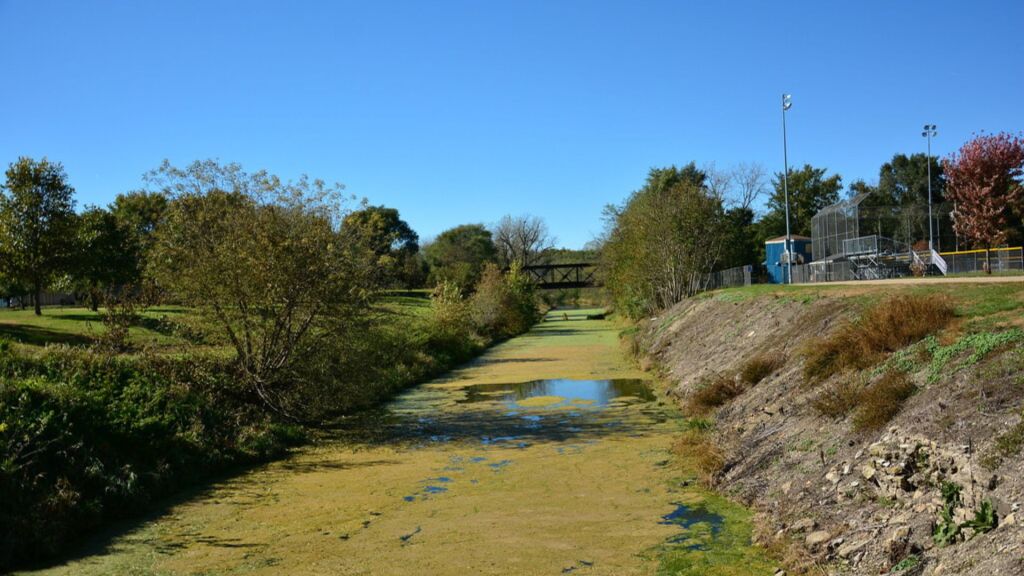
By mid-century however, much of the canal was drained or filled as utilitarian necessity ceased. Yet even as economic utility declined, preservation efforts emerged to shield the corridor’s historic import.
Efforts to Reopen and Restore
By the 1960s, conservation issues catalyzed reopening talks. Ecological impacts from heavy-handed and profit-driven manipulations had accrued over decades. Seeking to remediate management mistakes at federal and state levels, efforts commenced to restore the canalway.
Advocacy now focused on cultural preservation and environmental sustainability. With government funding, the corridor was hence reengineered as a recreational greenspace and historical attraction, no longer a commercial artery.
Current Status and Usage
Presently managed cooperatively by federal, state, county, and municipal agencies, the canalway spine hosts joggers, cyclists, boaters, birdwatchers, plus history aficionados. Various locks, museums, and nature reserves dot the complex inviting visitors. Community festivals with historical themes convene frequently. Vestigial commercial passage lingers, but recreation and appreciation drive usage.
Lasting Legacy and Significance
The Illinois & Michigan Canal remains an engineering marvel that catalyzed Chicago and Midwestern growth. Magnifying the city’s strategic edge, the canalway merits praise as visionary infrastructure that tamed nature’sconfigurations to advance human enterprise.
The canal corridor likewise signifies evolving progress in balance with conservation—a multi-use ribbon where commerce, life, and history still mingle dynamically.
The Future of the Canal Corridor

Today, the canalway environment needs vigilant stewardship as development pressures perennially threaten. Preserving, studying, and honoring this covenant between past audacity and future possibility remains the perpetual charge of all stewards. Cognizant enhancement must constantly balance economic vitalities with cultural and ecological integrities.
By respecting this complex inheritance, the old canal course can remain a venue for learning, celebration, sustainability, adventure, and community. Its full legacy persists not just as vestige of ambition, but harbinger of possibility when vision marries respect and capability.