

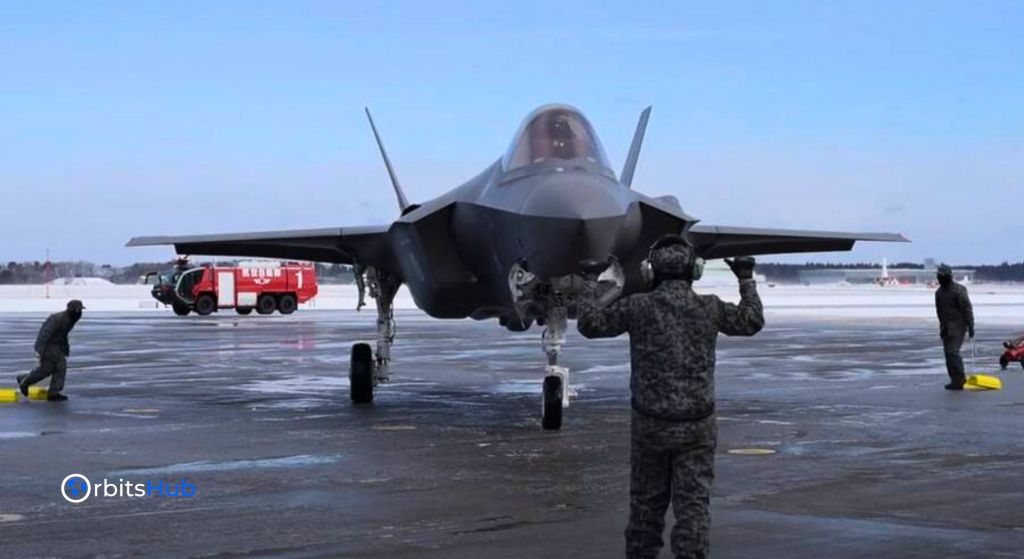
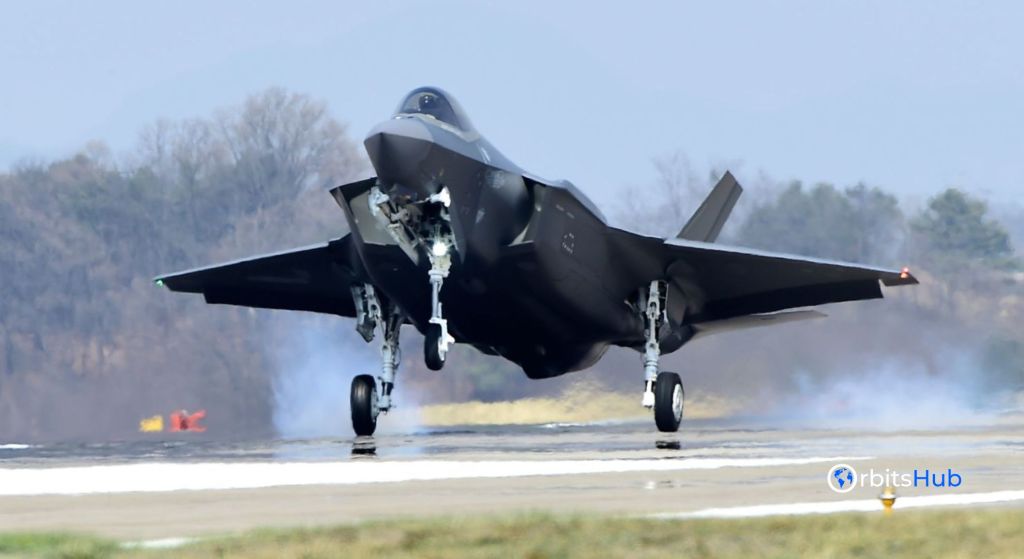
In an incident that underscores the inherent complexities of operating cutting-edge fighter jets, two Japanese Air Self-Defense Force (JASDF) F-35A stealth aircraft were compelled to execute emergency landings at a civilian airport in northern Japan. This unexpected turn of events unfolded during a routine training sortie originating from the Misawa Air Base, with one of the jets encountering an unspecified mechanical issue that necessitated the precautionary measure.
Seamless Response and Safety Protocols
Responding swiftly to the developing situation, the pilots of the advanced fighter jets deftly manoeuvred their aircraft and touched down safely at the nearby Aomori Airport. The incident’s handling exemplified the rigorous training and meticulous safety protocols ingrained within the JASDF, ensuring that despite unforeseen circumstances, the personnel’s well-being and the equipment’s integrity remain paramount concerns.
Transparency and Operational Discretion: Fighter Jet F-35
While the JASDF has refrained from divulging specific details regarding the mechanical problem that precipitated the emergency landings, its decision to exercise operational discretion is judicious. Such incidents often involve sensitive technical aspects that could compromise strategic advantages if disclosed prematurely.
“The ability to maintain operational security while prioritizing safety is a delicate balance that modern air forces must strike,” remarked an aviation analyst, underscoring the situation’s complexity.
Disruptions and Resilience
The brief incident temporarily closed the Aomori Airport’s runway for approximately 20 minutes as emergency procedures were executed. However, the airport’s operations swiftly returned to normalcy once the fighter jets had been safely accommodated, a testament to the resilience and preparedness of the facility’s staff in handling such contingencies.
A Pattern of Incidents: Fighter Jet F-35
Unfortunately, this episode is not isolated for Japan’s military aviation endeavours. In recent months, the nation has grappled with incidents involving its aerial assets, raising concerns about the potential strain on resources and the need for comprehensive evaluations.
- In April, a tragic collision between two Japanese navy SH-60K Seahawk helicopters during a night-time anti-submarine warfare training exercise claimed the life of one crew member, with seven others remaining unaccounted for.
- A month prior, a C-2 transport aircraft carrying eight personnel was force to make an emergency landing at a central Japanese airport after a cockpit window unexpectedly slid open mid-flight. However, no injuries or damage were report.
These recurring events have spotlighted the intricate challenges of maintaining a modern, technologically advanced air force while ensuring the highest safety and operational readiness standards.
Global Scrutiny and Implications
The US-led F-35 program with allies has been criticize around the world. A rise in solid fighter jet crashes and emergency landings raises worries about the program’s reliability and extensive deployment.
War analyst: F-35 events have alarmed the worldwide aviation community, emphasizing the need for rigorous investigations and repairs.
Still, numerous governments want the F-35’s cutting-edge capabilities, including 1,000 EU jets. Lockheed Martin’s massive lobbying has forced NATO members to rearm for American military-industrial complex goals. It was necessary to rearm the American military-industrial complex.
Alternative Pursuits and Technological Sovereignty
Amidst the global clamour surrounding the F-35 program, some nations have begun exploring alternative avenues to bolster their aerial defence capabilities. The UAE wants to buy China’s fifth-generation J-20 “Mighty Dragon” fighters, which might change the region’s geopolitics.
However, Beijing’s harsh export prohibitions on its cutting-edge military equipment to protect its technological secrets have thwarted the UAE’s ambitions. Still, Abu Dhabi’s persistence shows that states want to establish their technological sovereignty and diversify their security portfolios.
Evaluations and Continuous Improvement: Fighter F-35
This recent Japanese fighter jet accident highlighted thorough reviews and ongoing progress. The JASDF and international partners must analyze these recurring events, fix systemic issues, and improve operating safety and reliability.
A former Air Force general emphasized the importance of ongoing awareness, adaptability, and learning from all experiences in aviation safety.
With openness, international cooperation, and personnel and equipment safety, the global aviation community can confidently and resiliently operate modern fighter aircraft.
Geopolitical Implications and Defense Strategies
The incidents involving Japanese fighter jets and the broader discourse surrounding the F-35 program underscore the intricate interplay between geopolitical dynamics and defence strategies. As nations grapple with maintaining military readiness while safeguarding their strategic interests, their defence procurement and technological partnership decisions have far-reaching implications.
- The influence of the American military-industrial complex, exemplified by Lockheed Martin’s lobbying efforts, has effectively shaped the defence landscapes of numerous allied nations, compelling them to align their procurement strategies with the interests of the United States.
- Conversely, the pursuit of alternative defence partnerships, as evidenced by the UAE’s interest in Chinese fighter jets, highlights the growing desire among nations to assert their technological sovereignty and diversify their defence portfolios.
These contrasting approaches reflect the complex geopolitical landscape nations must navigate, weighing the potential benefits of maintaining close ties with traditional allies against the allure of exploring new avenues for defence cooperation and technological advancement.
Budgetary Constraints and Fiscal Realities: Fighter F-35
Achieving geopolitical and defence goals requires budgetary constraints. The high cost of buying and maintaining advanced fighter jets, technical issues, and comprehensive examinations put governments’ budgets under pressure.
A defence economist stated that funding defence requires reconciling strategic goals with the challenging fiscal realities of modern times.
This fiscal issue is exacerbate by healthcare, education, and infrastructure funding. Thus, states must weigh the trade-offs between investing in cutting-edge military capabilities and satisfying residents’ immediate needs, a political and public discussion subject.
Environmental Considerations and Sustainability
In an era where environmental concerns have taken centre stage, the aviation industry, including the operation of fighter jets, faces mounting pressure to address its ecological footprint. Strong airplanes emit pollutants and have environmental impacts during production and maintenance, raising doubts about their long-term sustainability.
- Automated technology and decision-making systems could improve combat planes’ situational awareness and reaction times, reduction human error, and operational performance.
- However, such methods require extensive research and development and a willingness to adopt new technologies.
By aggressively tackling these environmental concerns, the global aviation community can act responsibly while maintaining operational capabilities and strategic significance.
Technological Advancements and Future Prospects
Despite the issues with the present fighter jets, technological growth will alter aerial warfare in the future. Artificial intelligence, autonomous systems, and hypersonic propulsion could render combat aircraft obsolete and require a military policy adjustment.
- Automation and decision-making technologies could improve combat planes’ situational awareness and reaction times, decreasing human error and improving operational effectiveness.
- Fighter planes could operate at extraordinary speeds using hypersonic propulsion systems, changing aerial battle dynamics and tactics and plans.
But these technical wonders present ethical and legal issues, especially if autonomous systems make life-or-death decisions without human assistance. As nations address these complicated concerns, they must balance using developing technologies with human agency and moral accountability.
Resilience, Adaptation, and Global Cooperation: Fighter Jet F-35
Japanese f-35 fighter jet accidents demonstrate the challenges of operating advanced aerial defence systems. Many nations require advanced military capabilities, safety, transparency, and growth. The global aviation community must foster resilience, adaptation, and international cooperation amid geopolitical, economic, and environmental issues. Nations may share best practices, correct systemic faults that cause repeat disasters, and plan for a safer future.
Ready to soar through new heights in maritime and aviation consultancy? Explore orbitshub.com today and uncover unparalleled expertise tailored to elevate your endeavours. Dive deeper into our services, and let’s navigate to success together. Reach out now to explore OrbitsHub!


