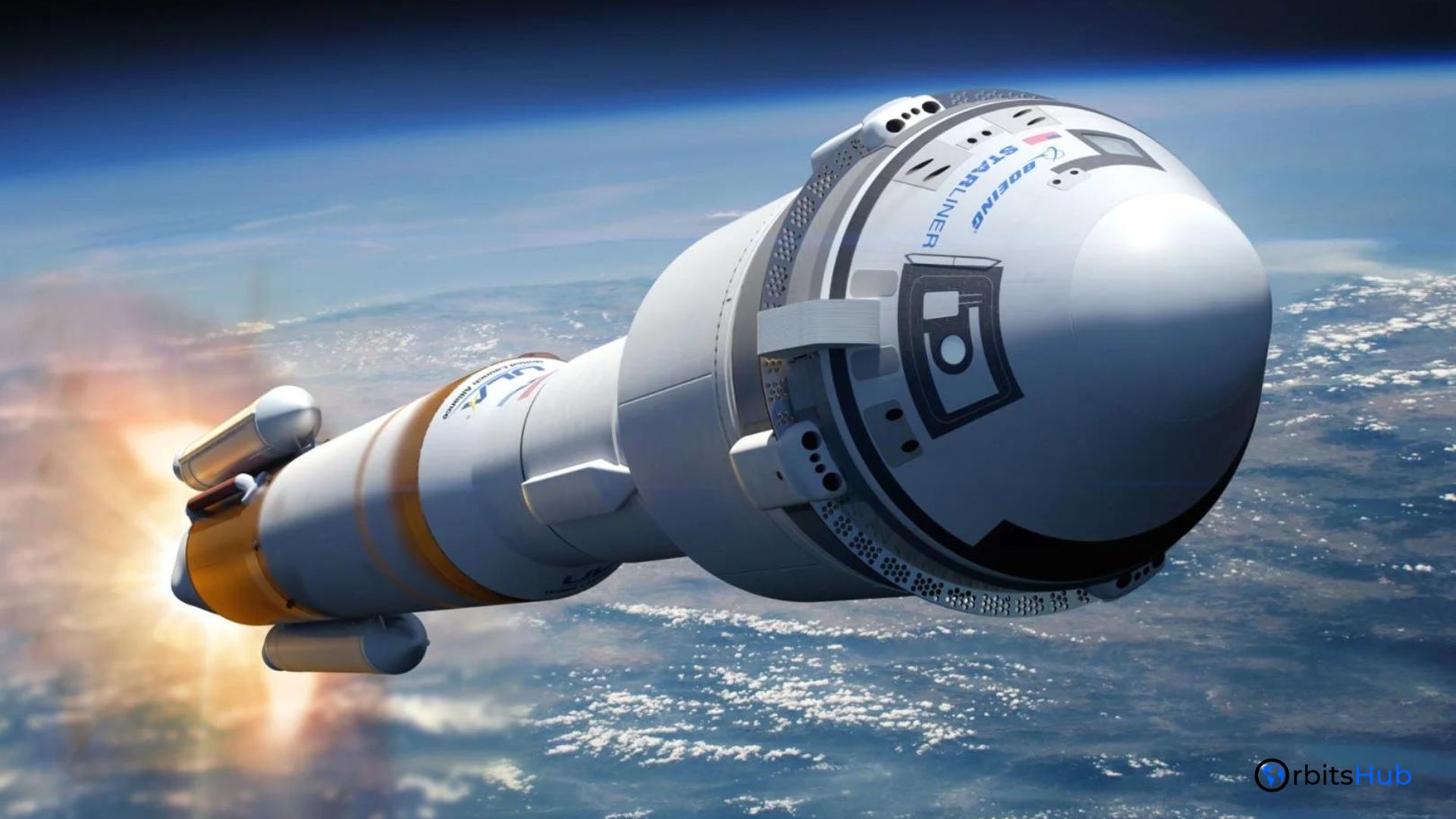
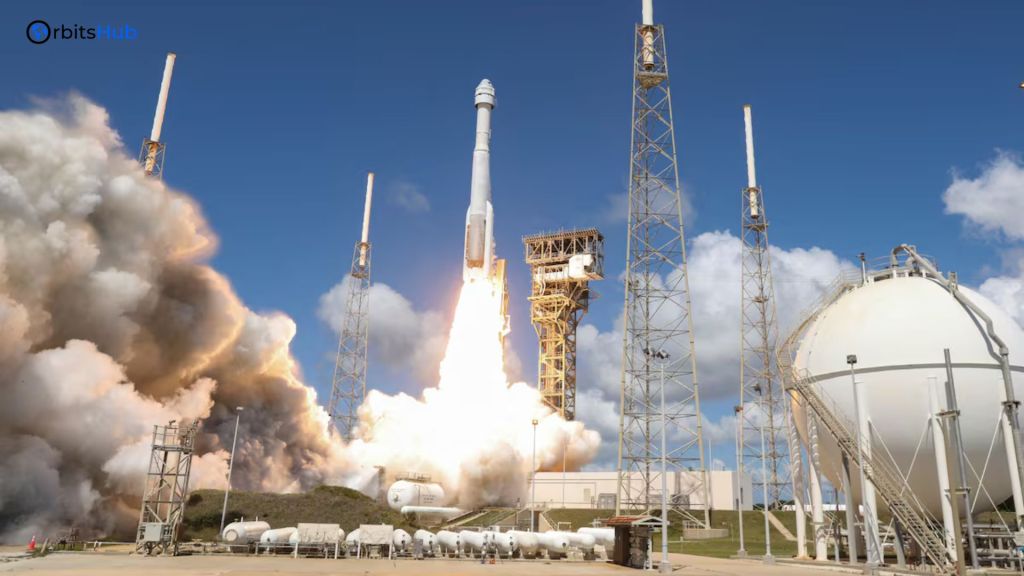
The eagerly anticipated Boeing Starliner spacecraft embarked on its inaugural crewed flight to the International Space Station (ISS) in a remarkable display of human ingenuity and technological prowess. This historic mission, a collaborative endeavor between NASA and Boeing, ushers in a new era of space exploration that promises to unlock unprecedented opportunities for scientific discovery, commercial ventures, and international cooperation. The NASA Boeing Starliner launch, which took place at the Cape Canaveral Space Force Station in Florida, was a resounding success, propelling NASA astronauts Barry “Butch” Wilmore and Sunita “Suni” Williams into the vast expanse of space aboard the cutting-edge Starliner capsule. As the powerful Atlas V rocket roared to life, it carried the hopes and aspirations of countless individuals dedicated to pursuing space exploration.
Mission Objectives and Significance: Boeing Starliner
The primary objective of this mission, known as the NASA-Boeing Starliner Crew Flight Test (CFT), is to rigorously evaluate the performance and capabilities of the Starliner spacecraft in a real-world operational environment. Throughout their approximately week-long stay aboard the ISS, Wilmore and Williams will conduct critical tests and assessments, including manually piloting the spacecraft and evaluating its various subsystems.
The successful completion of this mission holds profound significance for both NASA and Boeing. This marks a significant advancement for the agency’s Commercial Crew Program, which seeks to build alliances with the private sector to create safe, dependable, and affordable means of astronaut transportation to and from the International Space Station. By leveraging the expertise and innovation of companies like Boeing, NASA is paving the way for a more sustainable and accessible approach to space exploration.

Starliner’s Journey to the ISS
After a flawless NASA Boeing Starliner launch, the Starliner spacecraft embarked on a meticulously planned 25-hour journey to rendezvous with the orbiting laboratory. During this time, Wilmore and Williams experienced the wonders of microgravity, a unique environment that presents both challenges and opportunities for scientific research.
In addition to the two crew members, the Starliner carried approximately 760 pounds (345 kilograms) of vital cargo and supplies destined for the ISS. This payload includes a diverse array of scientific experiments, spare parts, and provisions essential for sustaining the station’s operations and supporting the international crew’s ongoing research efforts.
Docking Procedures: Boeing Starliner Spacecraft
On June 6, 2024, the Starliner spacecraft executed a series of precise maneuvers to align itself with the International Space Station’s docking port. This delicate process required the utmost precision, as the spacecraft had to match the station’s velocity and trajectory accurately.
Once nearby, the Starliner initiated its final approach and docking sequence, carefully maneuvering into position and establishing a secure connection with the station’s Harmony module. This intricate operation was a testament to the spacecraft’s advanced guidance and control systems and the astronauts’ skill and training on board.
Life Aboard the International Space Station
Upon successful docking, Wilmore and Williams were welcomed aboard the ISS by the resident crew. They joined an international team of researchers and engineers dedicated to advancing our understanding of the universe and the effects of long-duration spaceflight on human physiology.
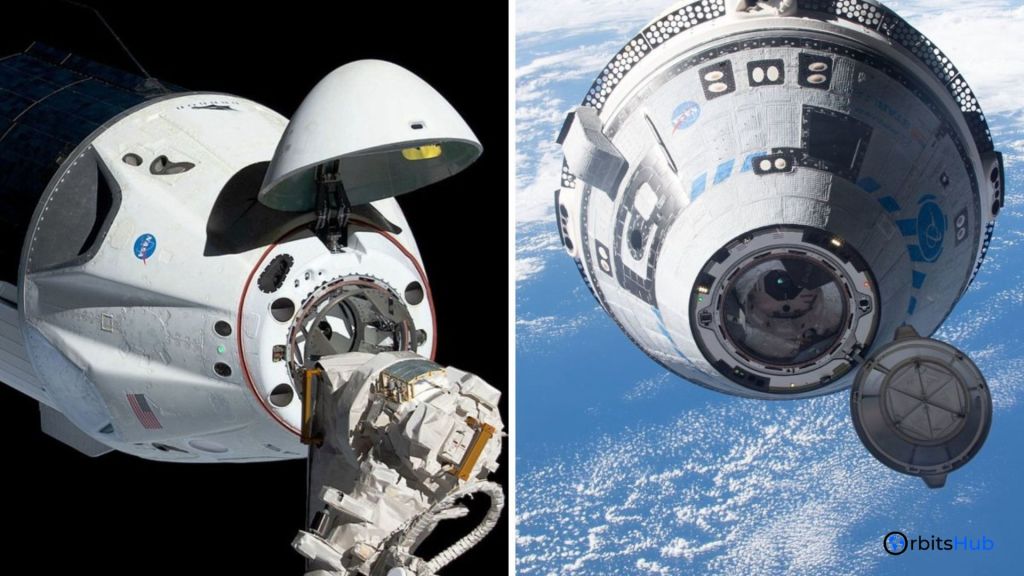
During their stay, the astronauts will participate in various scientific experiments and operational tasks, contributing to the wealth of knowledge and data collected aboard the orbiting laboratory. Their presence will provide valuable insights into the performance of the Boeing Starliner spacecraft. They will document their experiences and observations throughout the mission.
Return to Earth and Mission Evaluation: Starliner Boeing
After about one week on the ISS, Wilmore and Williams will say goodbye to their colleagues. Then, they will begin their journey back to Earth. After docking with the station, the Starliner spacecraft will begin its descent through Earth’s atmosphere. Landing at a prearranged landing spot will be the next step in this carefully coordinated process.
Upon their safe return, NASA and Boeing will comprehensively evaluate the mission’s data and findings. The results of this investigation will be essential in assessing the Starliner system’s preparedness for operational missions. The investigation has determined that the Starliner system is prepared for regular human transportation to the International Space Station.
Future Exploration: NASA Boeing Starliner Launch
The Boeing Starliner’s Crew Flight Test is a significant accomplishment. It marks a milestone in the advancement of humankind’s space exploration endeavors. NASA and Boeing have demonstrated the capabilities of this advanced spacecraft. This achievement paves the way for future missions. These missions will push the boundaries of our knowledge. They will expand our presence in the final frontier.
The Starliner spacecraft is undergoing rigorous testing and refinement. It will become an integral part of the global effort to sustain and enhance human spaceflight operations. Its contributions will help the ISS’s current exploration and research programs. This will set the stage for more significant projects, such as crewed trips to the Moon, Mars, and beyond.
Collaboration and International Cooperation
The Boeing Starliner mission is a shining example of the power of collaboration and international cooperation in space exploration. This endeavor has demonstrated remarkable feats by leveraging the expertise and resources of government agencies. Through collective effort with private industry, this endeavor has achieved these remarkable feats.
The success of this mission was not possible without the dedication and hard work of countless individuals. Individuals from diverse backgrounds and organizations also contributed significantly to the mission’s success. Team members at Boeing and NASA, including ground workers, support staff, engineers, and scientists, were all essential for safely completing the historic mission. individually, their roles were crucial to its effective execution.
Future Missions and Operational Readiness
NASA and Boeing will work closely together. As the data and insights from the Crew Flight Test are meticulously analyzed, any identified areas for improvement will be addressed. The Starliner system will be further refined based on the analysis. This iterative process will pave the way for the spacecraft’s certification for long-duration operational missions to the ISS.
Once certified, the Starliner will join the ranks of other advanced spacecraft. It will provide a reliable and efficient means of transportation for astronauts and cargo to and from the orbiting laboratory. This increased capacity will support ongoing scientific research and exploration efforts in space. It will also open up new opportunities for commercial endeavors and international collaborations.
Inspiring the Next Generation: Boeing Starliner
The Boeing Starliner mission holds the power to inspire and captivate hearts and minds. Beyond the scientific and technological achievements, this mission makes an impact on people around the world. The sight of the sleek spacecraft soaring into the heavens is a powerful reminder of humanity’s insatiable curiosity. It underscores our boundless potential.
Observing the astounding human resourcefulness and engineering achievements that enabled this journey. This observation could inspire young minds. Young minds could be motivated to pursue science, technology, and exploration. This could ignite a new generation of dreamers. They will carry forward the torch of space exploration. Explorers and innovators will push the boundaries of what is possible.
The NASA Boeing Starliner launch and ongoing mission mark a significant milestone in the annals of space exploration. For scientific discovery With the help of cutting-edge technology Through international collaboration For scientific discovery and commercial ventures 5. By unlocking unprecedented opportunities for global cooperation.
As the Starliner undergoes rigorous testing and evaluation, its contributions will pave the way for more ambitious endeavors. These endeavors will propel humanity closer to achieving its dreams of exploring the vast expanse of the cosmos. With every successful mission, we get closer to solving the universe’s secrets. We also broaden the scope of human knowledge and comprehension in the process.