In recent news, a cargo ship carrying thousands of vehicles, including electric cars, caught fire off the coast of the Netherlands, sparking concerns about the environmental impact and the safety of nearby natural habitats. Despite the efforts of rescue teams, the flames continue to pose a risk to the surrounding areas. This article delves into the details of the Cargo Ship Fire Electric Cars incident, exploring the causes, consequences, and ongoing efforts to mitigate the damage.
The Fremantle Highway Fire: A Weeklong Battle
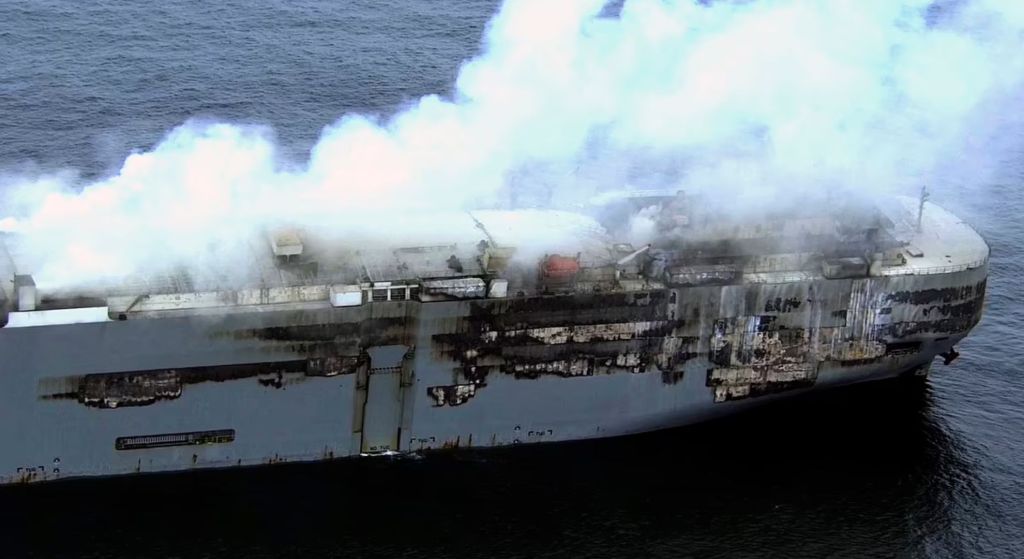
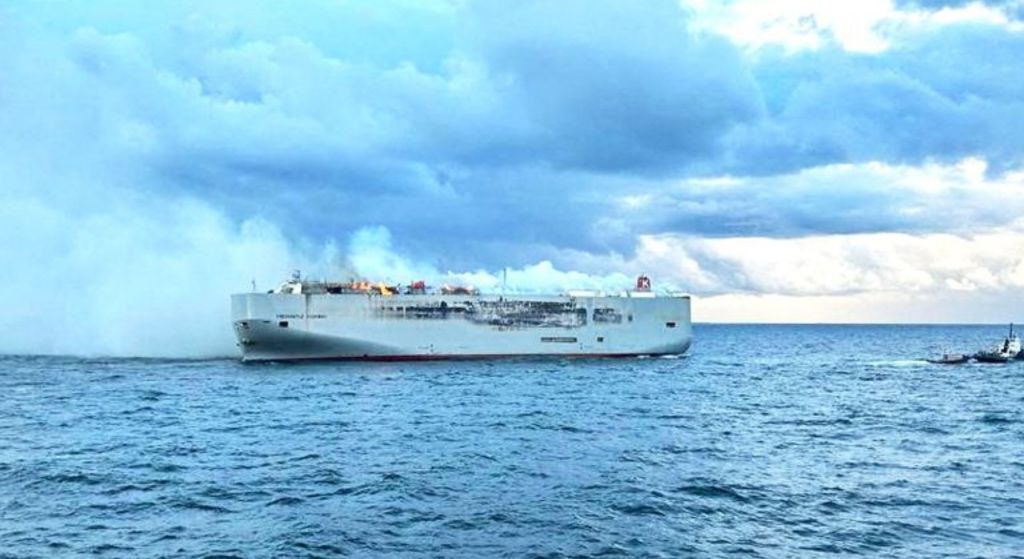
On July 25, the Fremantle Highway, a cargo ship transporting 3,784 vehicles, including 498 electric cars, was engulf in flames from Bremerhaven, Germany, to Singapore. The fire, which started in an electric car’s battery, quickly spread throughout the vessel, causing extensive damage. The crew of 21, all Indian nationals, and two additional individuals were safely evacuate as the flames grew increasingly uncontrollable.
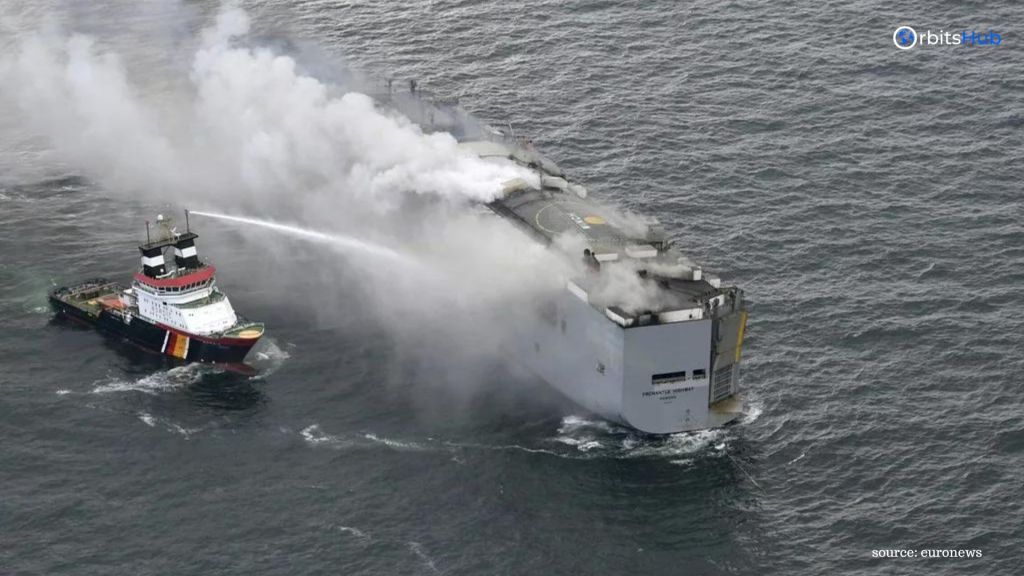
The ship remained adrift in the North Sea for a week, near busy shipping lanes and the shallow Wadden Sea, a protected UNESCO World Heritage-listed migratory bird habitat. Authorities were cautious about spraying water onto the ship, fearing it could destabilize the vessel and potentially lead to a catastrophic environmental disaster.
Salvage Operations and Environmental Concerns
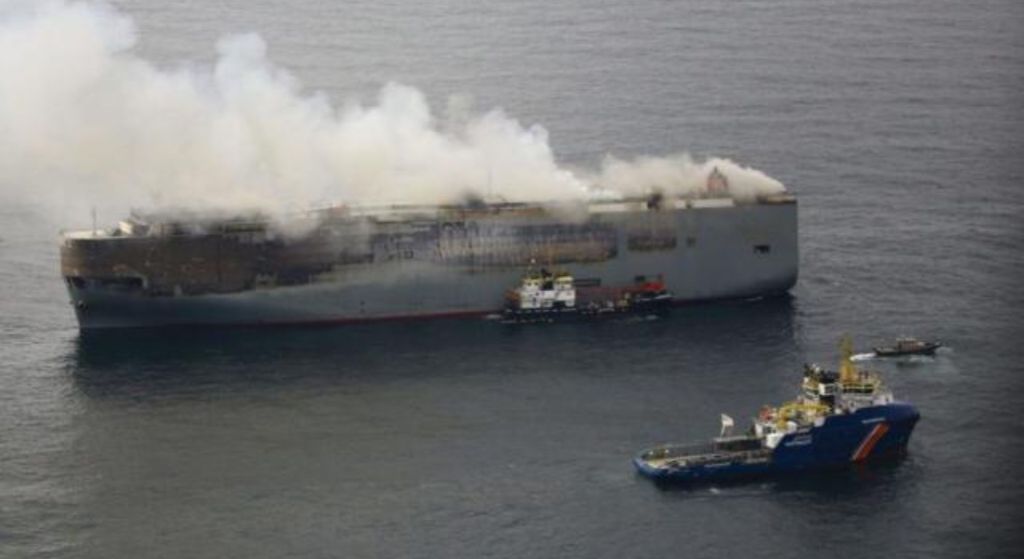
After a week of intense firefighting, tugboats finally towed the burnt-out Fremantle Highway to the northern port of Eemshaven in the Netherlands. The decision to salvage the ship in Eemshaven was based on its proximity to the vessel’s location and the deteriorating weather conditions. The Dutch Ministry of Infrastructure and Water Management organized the effort to prevent additional damage to the environment and protect the neighboring habitats.
Accompanying the salvage operation was a boat equip with special booms to handle potential oil spills. This precautionary measure aimed to mitigate any environmental consequences from the salvage process. Experts from salvage companies and water authorities inspected the ship, confirming the fire was no longer burning. However, the flames, though less intense, still pose a risk to nearby natural sites.
The Impact on Germany’s Wadden Sea
The Wadden Sea, a unique ecosystem shared by the Netherlands and Germany, is one of the world’s most important areas for migratory birds. The fire on the Fremantle Highway raised concerns among German authorities, who closely monitored the situation. Christian Meyer, the environment minister of Germany’s Lower Saxony state, thanked Dutch authorities for their swift decision-making in salvaging the ship. However, the incident highlighted the need for stricter regulations and alternative routes for vessels carrying hazardous materials, including extensive car transporters.
The Human Cost and Investigation
Tragically, one crew member lost their life in the fire on the Fremantle Highway. Others sustained injuries during the evacuation and were promptly take to hospitals in the northern Netherlands for treatment. Authorities are still trying to figure out what sparked the fire, but they believe it may have been an electric car’s battery.
The incident has prompted concerns regarding the safety protocols aboard cargo ships, particularly those carrying potentially hazardous materials. Investigations into the cause of the fire are ongoing, with maritime authorities collaborating closely to prevent similar incidents in the future. Efforts are also underway to support the affected crew members and their families during this difficult time.
The Challenge of Electric Vehicle Fires at Sea
Electric cars on the cargo ship added complexity to the firefighting efforts. Electric vehicle fires pose unique challenges, as suppressing and extinguishing these fires can be difficult due to the nature of lithium-ion battery technology. The Fremantle Highway carried many electric vehicles, making it even more challenging to control the fire. The incident highlights the importance of understanding and addressing the safety concerns of transporting electric vehicles by sea.
Environmental Consequences and Preventive Measures
The fire on the Fremantle Highway endangered human lives and posed a significant threat to the environment. The potential release of hazardous materials, including oil and other pollutants, could have severe consequences for marine life and the ecosystem’s delicate balance. Salvage experts, salvage companies, and water authorities work together to limit further damage and develop strategies to prevent similar incidents.
Emergency response teams swiftly mobilized to contain the blaze and prevent its spread to nearby residential areas. Evacuation protocols were enacted to ensure the safety of residents while firefighters battled tirelessly to bring the inferno under control. Additionally, environmental agencies conducted thorough assessments to gauge the extent of ecological damage and implemented measures to mitigate long-term repercussions on the surrounding habitats.
Lessons Learned: Strengthening Safety Measures
The cargo ship fire off the Dutch coast is a wake-up call for the maritime industry to reassess safety measures when transporting hazardous materials, especially electric vehicles. The increasing popularity of electric cars makes it all the more important to address the unique dangers they pose when transported. From enhanced fire suppression systems to improved battery containment strategies, the industry must prioritize safety. And develop comprehensive guidelines to mitigate the potential impact of such incidents.

Catastrophe at Sea: The Fremantle Highway Incident
The Fremantle Highway fire was a maritime disaster that unfolded in July 2023. A cargo ship fire in the North Sea destroyed hundreds of electric cars and thousands of other vehicles. The blaze raged for days, posing significant risks to the crew, the environment, and nearby communities. The incident highlighted the challenges of firefighting on a large-scale marine vessel, mainly when dealing with the complexities of electric vehicle fires.
Key points:
- Massive cargo ship fire
- Thousands of vehicles, including electric cars
- Occurred in the North Sea
- Days-long firefighting effort
- Significant risks to crew, environment, and communities
Ticking Time Bomb: The Dangers of Shipping Electric Cars
The Fremantle Highway incident underscored the potential hazards associated with shipping electric vehicles. Lithium-ion batteries, while powering the electric vehicle revolution, can be volatile when damaged or overheated. The fire on the Fremantle Highway raised concerns about the safety protocols for transporting these vehicles by sea. Experts and regulators are looking into the industry’s procedures to ensure this kind of thing doesn’t happen again.
Key points:
- Electric vehicles powered by lithium-ion batteries
- Battery fires can be intense and challenging to extinguish
- Safety concerns for shipping electric vehicles
- Need for improved transportation protocols
A Delicate Balance: Protecting the Wadden Sea
The Wadden Sea, a UNESCO World Heritage site known for its incredible biodiversity, was close by when the Fremantle Highway fire broke out. This fragile environment was in grave danger from the possibility of oil leaks and other contaminants. Authorities and environmental groups worked tirelessly to contain the damage and protect the Wadden Sea. The tragedy highlights how maritime habitats are susceptible to calamities caused by humans.
Key points:
- Fremantle Highway near the Wadden Sea
- Sited on the UNESCO World Heritage List, the Wadden Sea
- Risk of oil spills and pollution
- Efforts to protect the marine ecosystem
Human Toll and Global Implications
The Fremantle Highway fire tragically resulted in the loss of life and injuries among the crew. Beyond the human cost, the incident had far-reaching implications for the global shipping industry. It sparked discussions about emergency response plans, crew training, and the transportation of hazardous materials. As the world transitions to electric vehicles, ensuring the safe transportation of these vehicles by sea is a critical challenge.
Key points:
- Loss of life and injuries
- Global impact on the shipping industry
- Review of emergency response plans
- Importance of crew training
- Challenges of transporting electric vehicles by sea
Charting a Safer Course: Preventing Future Disasters
In the aftermath of the Fremantle Highway fire, the shipping industry is pressured to implement stricter safety measures. This includes improving fire suppression systems, enhancing crew training, and developing robust emergency response plans. Additionally, there is a growing focus on the safe transportation of electric vehicles, including developing specialized containers and cargo ships.
Key points:
- Need for stricter safety measures
- Improved fire suppression systems
- Enhanced crew training
- Robust emergency response plans
- Safe transportation of electric vehicles
Beyond the Horizon: The Future of Maritime Safety
The Fremantle Highway fire serves as a wake-up call for the maritime industry. Environmental preservation and worker safety must be top priorities in the ever-changing global supply chain. By reflecting on what has happened and making the appropriate adjustments, we can create a marine future that is both more robust and more sustainable.
Key points:
- The maritime industry needs to prioritize safety
- Importance of environmental protection
- Learning from the Fremantle Highway fire
- Building a resilient and sustainable maritime future
Frequently Asked Questions
1. What caused the fire on the Fremantle Highway cargo ship?
The fire on the Fremantle Highway cargo ship was believed to have been caused by an electric car’s battery.
2. How many electric cars were on board during the fire incident?
The number of electric vehicles on board during the fire incident is not specified.
3. What were the consequences of the cargo ship fire?
The cargo ship fire posed a risk to the surrounding areas, endangered human lives, and had severe environmental impacts, including the potential release of hazardous materials and harm to marine life and ecosystems.
4. What measures were taken to salvage the ship and mitigate environmental damage?
Tugboats towed the burnt-out Fremantle Highway to the northern port of Eemshaven in the Netherlands. Special booms were used to handle potential oil spills, and experts inspected the ship to confirm the fire was no longer burning.
5. What challenges did the electric vehicles pose in firefighting efforts?
Electric vehicle fires can be difficult to suppress and extinguish due to the nature of lithium-ion battery technology. The presence of a large number of electric vehicles on the cargo ship added complexity to the firefighting efforts.
6. What preventive measures should be taken to prevent electric vehicle fires on cargo ships?
Proper handling and storage protocols should follow to avoid electric vehicle fires on cargo ships. Enhancing fire suppression systems and improving battery containment strategies are essential safety measures.
7. What can we take away from this experience?
The incident highlights the need for the maritime industry to reassess safety measures. And develop comprehensive guidelines for transporting hazardous materials, especially electric vehicles. Collaboration between industry stakeholders, government agencies, and salvage organizations is crucial in implementing effective safety protocols.
The fire on the Fremantle Highway highlighted the environmental and safety risks of transporting electric vehicles by sea. This incident highlights the need for the maritime industry, government agencies, and salvage organizations to work together to implement comprehensive safety protocols. As the salvage operation continues and investigations into the cause of the fire progress, it is crucial to learn from this incident. And implement preventive measures to protect the environment, human lives, and the delicate ecosystems that depend on our collective stewardship.