In an escalating display of military activity, China conducted a series of large-scale air and naval operations near Taiwan, ratcheting up tensions in the already volatile Taiwan Strait region. According to Taiwan’s Ministry of National Defense (MND), the Chinese military deployed 38 warplanes and 11 naval vessels near the self-governing island on Friday, marking one of the most significant incursions in recent memory.
Aerial Provocations
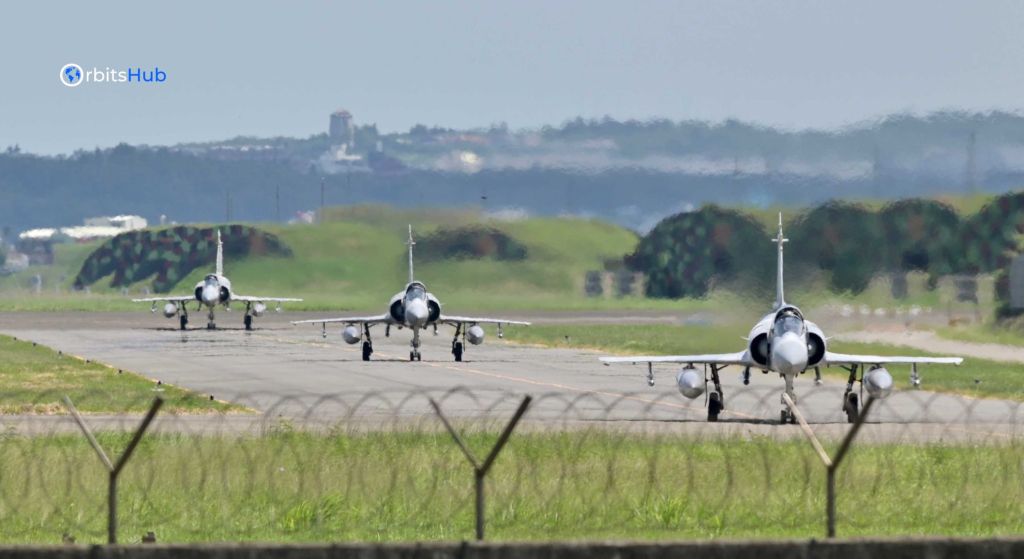
Taiwan’s defence authorities said that 19 of 38 military aircraft crossed the Taiwan Strait median line, a symbolic border between Taiwan and mainland China. The aerial contingent included five SU-30s, two J-16 multirole combat aircraft, and a long-endurance TB-001 Scorpion drone that could carry explosives.
China’s pressure on Taiwan and the Scorpion drone’s uncommon orbit of the island highlighted rising tensions. Taiwan quickly scrambled fighter jets, deployed navy assets, and activated coastal missile defence systems to monitor the situation.
Naval Posturing: Chinese Military Activity
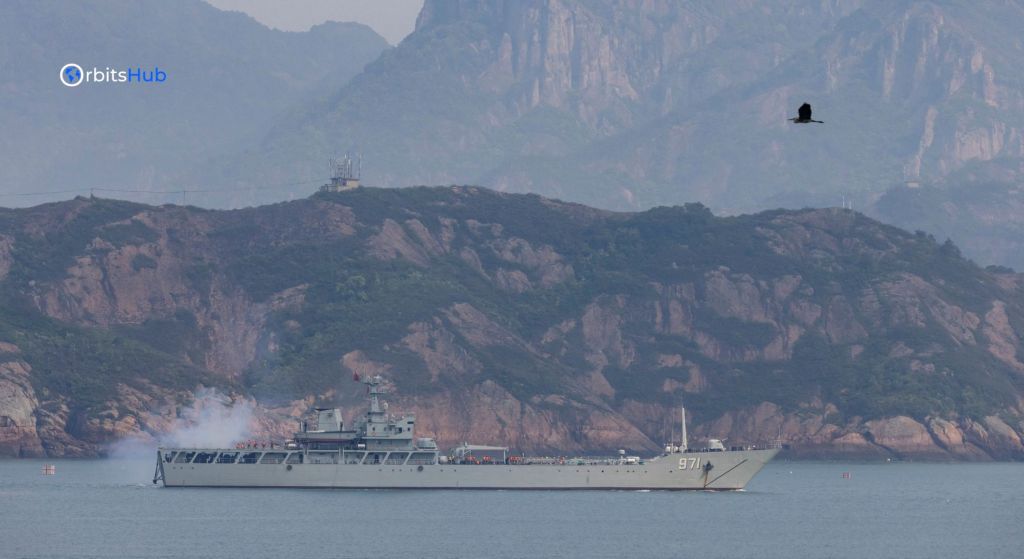
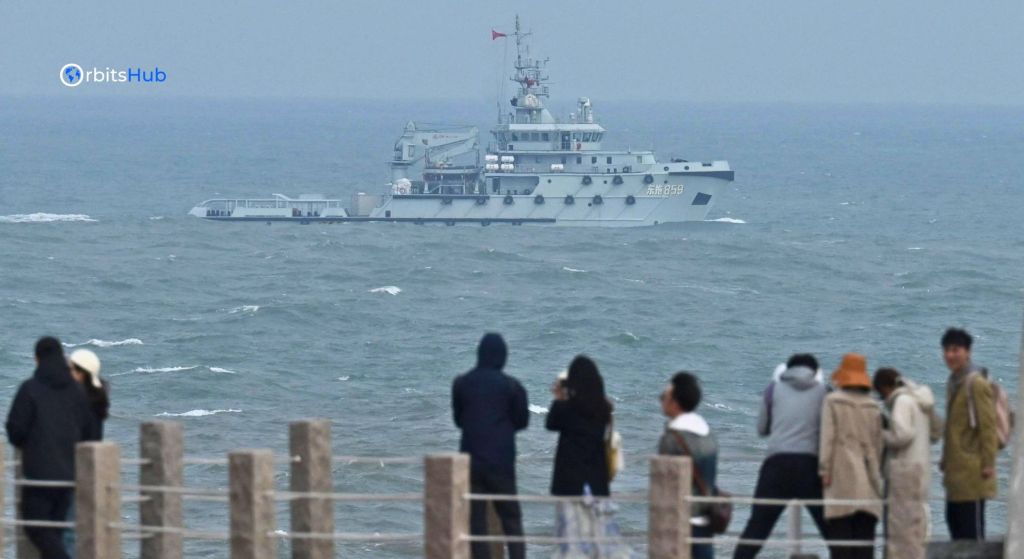
Compounding the aerial provocations, the Chinese military also dispatched 11 naval vessels to patrol the waters surrounding Taiwan. These warships were observed operating in the area from 6 a.m. on Thursday until 6 a.m. on Friday, further intensifying the sense of unease and heightening concerns about potential military confrontation.
U.S. Involvement and Beijing’s Rebuke
The situation took a further complicated turn when the Chinese People’s Liberation Army (PLA) issued a stern rebuke over the flight of a U.S. Navy P-8A Poseidon anti-submarine patrol aircraft through the Taiwan Strait on Thursday. Beijing labelled the American flight a “provocation” and claimed it had scrambled its fighter jets to monitor the U.S. aircraft’s movements.
The PLA’s Eastern Theater Command accused the U.S. of disrupting Taiwan Strait peace and security. In response, the U.S. 7th Fleet asserted that its operations were conducted by international law and demonstrated America’s commitment to a “free and open Indo-Pacific.”
Historical Context and Territorial Disputes: Chinese Military Activity
1949, the Communist Party seized the mainland, and the Kuomintang fled to Taiwan, starting the China-Taiwan territorial conflict. Beijing has consistently maintained that Taiwan is an inalienable part of its territory and has vowed to unify the island with the mainland by force if necessary.
Nationalist leader Xi Jinping has vowed to keep Taiwan, the India-China border, and vast areas of the South China Sea.
Strategic Motivations and Escalating Tensions
Analysts say China’s new naval vessel operations are part of a larger strategy to push Taiwan, diminish its military, and weaken its political will. Taiwan’s President Tsai Ing-wen and U.S. House Speaker Kevin McCarthy’s contentious meeting in California earlier this month has raised tensions.
Beijing has opposed official interactions between Taiwan and other governments as a threat to its “One China” policy and territorial integrity. Shortly after the McCarthy-Tsai meeting, large-scale exercises simulating a Taiwan blockade were perceived as retaliation and a message to Taipei and Washington.
Escalating Risks and Potential for Conflict
U.S. military leaU.S. are concerned about conflict in the Taiwan Strait due to China’s rapid military buildup and assertiveness toward the island. They warn that China’s tremendous military expansion and unrelenting determination to rule Taiwan have increased the likelihood of a conflict.
A miscalculation or unintentional escalation remains a significant threat as tensions rise. Both sides have threatened to defend their positions with force, raising the possibility of a military conflict that may destabilize the region and the world.
Taiwan’s Defiance and Call for Dialogue: Chinese Military
Taiwan has defended its sovereignty and democracy despite Beijing’s pressure. In his inauguration speech this month, President Lai Ching-te called on China to “cease their political and military intimidation against Taiwan” and join in regional peace and security negotiations.
Lai’s predecessor, Tsai Ing-wen, opposed China’s unification and advocated Taiwan’s independence. Despite zero diplomatic connections, Taiwan’s capacity to endure Chinese pressure has won over Western nations, particularly the U.S., its closest U.S. military and political ally.
International Implications and Calls for Restraint
Many nations and organizations have called for calm and diplomacy to settle Taiwan Strait concerns. The U.N. has restated its support for a peaceful Taiwan resolution, sovereignty, territorial integrity, and non-interference in internal affairs.
Japan and South Korea worry about Taiwan Strait military action disrupting maritime security commerce lines and threatening regional security.
Diplomatic Efforts and Prospects for Resolution: Chinese Military
Although tensions are high, diplomatic efforts to alleviate the situation and facilitate communication between China and Taiwan continue. While supporting Taiwan’s security, the U.S. has urged alU.S.rties to peacefully restrain and have meaningful discussions to resolve their disputes.
The E.U. and organizations like ASEAN have also called for a peaceful Taiwan resolution, emphasizing regional stability and international law.
Beijing’s insistence on sovereignty over the island and Taipei’s defence of autonomy and democracy make a sustainable agreement unlikely.
Navigating a Delicate Balance: Chinese Military
China’s military actions near Taiwan‘s airspace and territorial waters have rekindled the dispute. As tensions rise, the international community must balance sovereignty and territorial integrity with discussion and peaceful resolution. Geopolitics in the Taiwan Strait continue to threaten regional stability and global security. Parties must maintain calmness, politeness, and a peaceful conclusion that respects stakeholder rights and ambitions, as the world watches.
Are you looking to navigate the complexities of maritime and aviation consultancy? Explore orbitshub.com today! Discover how OrbitsHub‘s expert services can streamline your operations and elevate your business. Visit now to learn more and take your first step towards optimized solutions in the maritime and aviation industries.