The Impact of the F-111 Aardvark
The F-111 Aardvark, an iconic symbol of aviation history, was a pioneering aircraft that significantly influenced military strategy and design. Developed in the 1960s by General Dynamics, the F-111 was one of the first aircraft to incorporate variable-sweep wing technology, enabling it to perform high-speed, low-altitude penetration and long-range bombing missions. Over its decades-long service, the F-111 Aardvark proved its worth in various combat situations, showcasing its versatility and adaptability. This delves into the profound impact of the F-111 Aardvark on modern aviation and military operations.
The Development and Design Innovations of the F-111 Aardvark
The F-111 Aardvark was born out of a need for a versatile aircraft that could meet the demands of the U.S. Air Force and the U.S. Navy. The development process faced numerous challenges, but the result was a groundbreaking aircraft that set new standards in military aviation.
Variable-Sweep Wing Technology
One of the most significant innovations introduced with the F-111 Aardvark was its variable-sweep wing technology. This feature allowed the wings to be adjusted in flight, providing optimal performance across a wide range of speeds and altitudes. When thoroughly swept back, the wings reduced drag for supersonic flight, while the extended position offered more excellent lift for takeoff, landing, and low-speed operations. This versatility made the F-111 suitable for high-speed intercept missions and precision low-altitude strikes.
Twin-Engine Design and Terrain-Following Radar
The F-111 Aardvark was equipped with two powerful Pratt & Whitney TF30-P-100 after-burning turbofan engines, which provided the necessary thrust for its varied missions. Additionally, the aircraft featured a sophisticated terrain-following radar system, allowing it to fly at very low altitudes, hugging the earth’s contours to avoid detection by enemy radar. This combination of speed, power, and stealth capabilities made the F-111 a formidable adversary in combat scenarios.
Operational Impact and Combat Performance
The operational history of the F-111 Aardvark is a testament to its design excellence and combat effectiveness. Deployed in various conflicts, the F-111 demonstrated its ability to execute complex missions with precision and reliability.
Role in the Vietnam War
The F-111 Aardvark first saw combat during the Vietnam War, where it was employed in night bombing raids and deep penetration strikes against heavily defended targets. Itsds was particularly useful for avoiding North Viet and was beneficial for preventing North Vietnamese air defenses, such as named air defenses. The aircraft’s payload capacity and range enabled it to carry out long-distance missions, striking targets previously considered out of reach.
Contribution to Operation El Dorado Canyon
Another significant deployment of the F-111 Aardvark occurred during Operation El Dorado Canyon in 1986 when the U.S. conducted airstrikes against Libya in response to terrorist attacks. The F-111s were chosen for this mission due to their long-range capabilities and precision strike ability. The operation’s success highlighted the F-111’s role as a strategic asset in modern warfare, capable of delivering powerful blows with minimal collateral damage.
The Legacy of the F-111 Aardvark
The F-111 Aardvark’s legacy extends beyond its operational history. Its design innovations and combat achievements have impacted the development of subsequent military aircraft and strategies.
Influence on Modern Aircraft Design
The variable-sweep wing technology pioneered by the F-111 influenced the design of later aircraft, such as the B-1 Lancer and the Panavia Tornado. The concept of an aircraft that could adapt to different mission profiles became a key consideration in future military aircraft designs, emphasizing versatility and multi-role capabilities.
End of Service and Continued Impact
The F-111 Aardvark was retired from service in the 1990s, but its impact on military aviation endures. Modern aircraft owe much to the knowledge gained from its creation and use in the air. The F-111’s ability to quickly adapt to changing combat situations is a testament to its speed, stealth, and versatility.
Technological Breakthroughs Introduced by the F-111 Aardvark
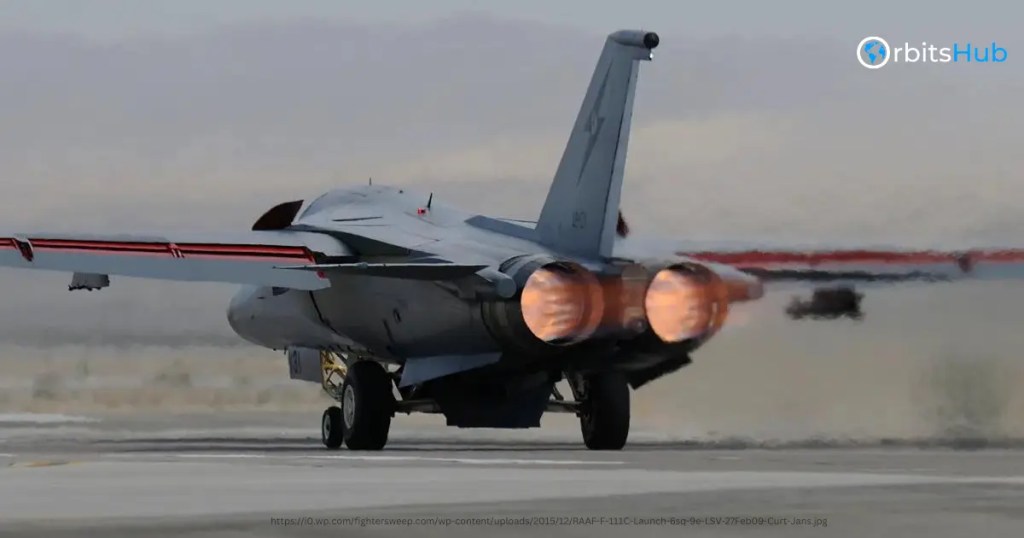
- Variable-Sweep Wing Technology: The F-111 Aardvark was the first operational aircraft to feature variable-sweep wing technology. This allowed it to adjust wing positions in flight, optimizing performance across different speeds and altitudes. It could switch between high-speed, low-altitude penetration and high-altitude, long-range bombing, making it a versatile asset in various missions.
- Advanced Terrain-Following Radar: Another breakthrough was its terrain-following radar, which enabled the F-111 to fly at extremely low altitudes, evading enemy radar and making it difficult to detect. To ensure safe and quiet operations, this radar system automatically altered the aircraft’s altitude to follow the contours of the landscape.
- Integrated Avionics Suite: The F-111 was equip with an advanced avionics suite, integrating navigation, communication, and targeting systems. This suite provided pilots with real-time data, improving mission accuracy and reducing the likelihood of human error. The integration of these systems was a significant step forward in aircraft technology.
Comparing the F-111 Aardvark to Its Contemporaries
- Versatility vs. Specialization: Unlike many of its contemporaries, the F-111 Aardvark was design as a multi-role aircraft capable of performing various missions. While aircraft like the F-4 Phantom II were primarily fighters, the F-111 excelled in strike and reconnaissance, offering unparalleled versatility.
- Speed and Range: The F-111 boasted superior speed and range compared to many of its counterparts. Its twin-engine design and variable-sweep wings allowed it to achieve supersonic speeds while carrying a significant payload over long distances. This made it a valuable asset in strategic bombing missions.
- Technological Edge: Regarding technology, the F-111 was ahead of its time. Its terrain-following radar and integrated avionics set it apart from other aircraft of the era, giving it an edge in low-altitude, all-weather operations. While contemporaries like the MiG-21 and F-104 Starfighter were formidable in their own right, they lacked the advanced systems that made the F-111 so effective.
The Strategic Importance of the F-111 in Cold War Context
- Deterrence Role: During the Cold War, the F-111 Aardvark was crucial in the U.S. deterrence strategy. Its ability to deliver nuclear and conventional payloads deep into enemy territory made it a vital component of the U.S. military’s strategic bomber force. The presence of the F-111 was a significant factor in maintaining a balance of power.
- Flexibility in Conflict Scenarios: The F-111’s versatility allow it to be deployed in various conflict scenarios, from deep-strike missions in Vietnam to precision bombing in Libya. Its adaptability made it an asset in conventional and unconventional warfare, providing the U.S. with a flexible response option during the tense periods of the Cold War.
- Psychological Impact: Beyond its physical capabilities, the F-111 Aardvark also had a psychological impact. Its advanced technology and perceived invincibility contributed to its role as a deterrent, influencing the strategic calculations of potential adversaries. The mere presence of the F-111 in a theater of operations could shift the balance of power and deter aggression.
Challenges Faced During the Development of the F-111 Aardvark
- Technical Hurdles: The development of the F-111 was mark by numerous technical challenges. Integrating the variable-sweep wing technology into a functional aircraft was a complex task that required extensive research and testing. The initial prototypes faced wing strength and stability issues, necessitating design modifications and delays.
- Cost Overruns: The F-111 program was plagued by budget overruns, mainly due to the project’s ambitious nature. Developing an aircraft with such advanced capabilities was expensive, and the program’s costs quickly escalated beyond initial estimates. This led to scrutiny and criticism from both the public and government officials.
- Inter-Service Rivalry: The F-111 was initially intend to serve the U.S. Air Force and Navy, leading to conflicting requirements. The Navy eventually abandoned the program due to concerns about the aircraft’s weight and carrier compatibility, which complicated the development process. This inter-service rivalry added another layer of complexity to an already challenging project.
The Cultural and Symbolic Significance of the F-111 Aardvark
- Representation of Technological Prowess: The F-111 Aardvark symbolized American technological advancement during the Cold War. Its cutting-edge features and successful combat record proved the United States’ ability to innovate and maintain a technological edge over its adversaries.
- Cultural Icon: The F-111 appeared in various forms of media, including films, books, and documentaries, solidifying its status as a cultural icon. It was often portray as a symbol of American military strength and ingenuity, contributing to its enduring legacy in popular culture.
- Enduring Legacy: Even after its retirement, the F-111 Aardvark holds a place in the collective memory of aviation enthusiasts and military historians. Its design and operational achievements are still studied and admired, making it a lasting symbol of a pivotal era in military aviation history. The F-111’s impact extends beyond its operational life, influencing aircraft design and how military power is perceive in a broader cultural context.
The F-111 Aardvark was a revolutionary plane in military aviation that changed the game. From its innovative variable-sweep wing design to its impressive combat record, the F-111 left an indelible mark on the history of aviation. Its legacy lives on in the aircraft that follow, and its influence is still felt in the strategies employed by modern air forces.
Explore more about aviation and maritime advancements by visiting Orbitshub, your trusted maritime and aviation consultancy, which is here to provide expert insights and services tailored to your needs.