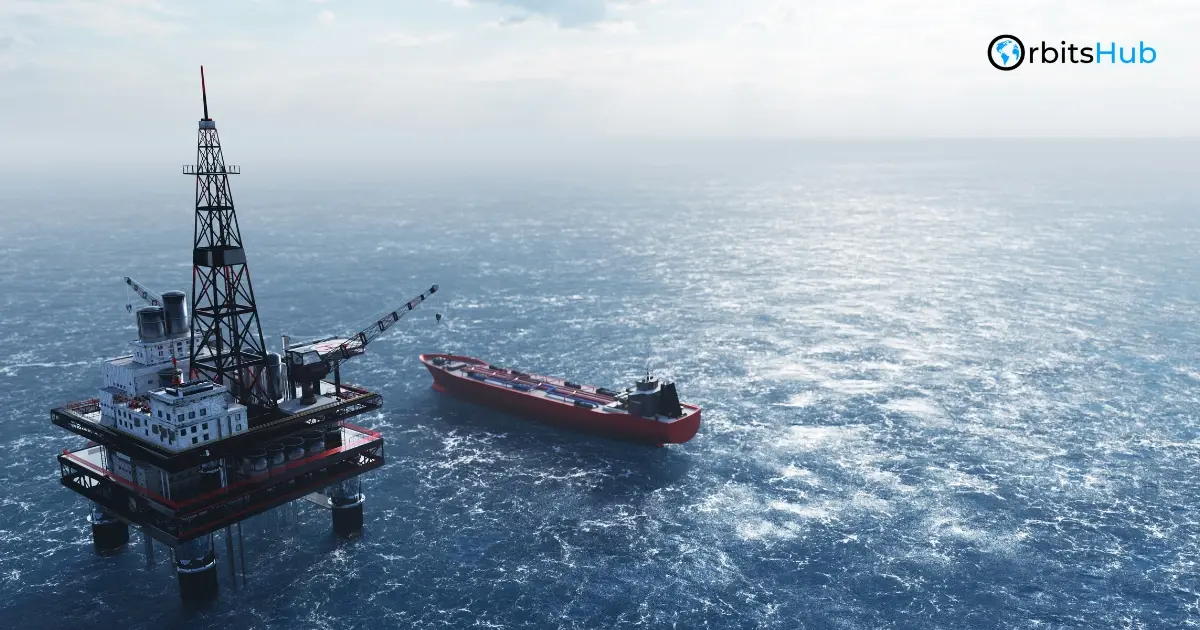
A revolution is quietly unfolding beneath the waves in the vast expanse of our planet’s oceans. Deep offshore technology is pushing the boundaries of what’s possible, unlocking resources and secrets that have long remained hidden in the murky depths. This isn’t just a tale of engineering prowess; it’s a story of human ingenuity, perseverance, and our unquenchable thirst for discovery.
As we dive into this narrative, picture yourself standing on the deck of a massive offshore platform, the salty sea breeze whipping through your hair. The horizon stretches endlessly in all directions, and a marvel of modern engineering lies beneath your feet. This is the frontier of deep offshore technology, where every day brings new challenges and triumphs.
The Birth of a Revolution
The journey of deep offshore technology began decades ago when visionaries first dared to dream beyond the shoreline. As a pioneering offshore engineer, Dr. Maria Rodriguez once said, “The ocean is not a barrier, but a bridge to our future.” This philosophy has driven the industry forward, pushing the limits of what we thought possible.
In the early days, deep offshore technology was in its infancy. Platforms were simple structures, barely able to withstand the relentless assault of waves and wind. But as our understanding grew, so did our ambition. Today, deep offshore technology encompasses a wide array of sophisticated systems, from floating production units to subsea robots that can operate in the crushing pressures of the deep ocean.
Riding the Waves of Innovation
AUV Applications in Deep Offshore Technology
This donut chart illustrates the distribution of AUV applications in deep offshore technology. The chart shows the relative importance and usage of various AUV tasks, highlighting how these advanced technologies are utilized across different aspects of marine operations.
Innovation in deep offshore technology isn’t just about going more profound; it’s about doing it more innovatively, safer, and more efficiently. One of the most exciting developments in recent years has been the advent of digital twins. These virtual replicas of offshore installations allow engineers to monitor, analyze, and optimize operations in real time, all from the comfort of a control room thousands of miles away.
“Deep offshore technology is rewriting the rules of what’s possible in the marine environment,” says Dr. James Chen, a leading researcher in offshore robotics. “We’re not just adapting to the ocean; we’re learning to work in harmony with it.”
This harmony is evident in the latest autonomous underwater vehicles (AUVs) generation. These sleek, unmanned submersibles are equipped with advanced sensors and AI, allowing them to navigate the treacherous underwater terrain with unprecedented precision. Deep offshore technology has allowed these mechanical explorers to inspect pipelines, map the seafloor, and even assist in environmental monitoring.
The Power Beneath the Waves
Energy production remains one of the primary drivers of deep offshore technology. As easily accessible oil and gas reserves dwindle, the industry has turned its gaze to ever-deeper waters. This push has spawned a new generation of floating production, storage, and offloading (FPSO) vessels that are engineering marvels.
These floating behemoths are essentially self-contained cities at sea, capable of extracting, processing, and storing vast quantities of oil and gas. But deep offshore technology isn’t just about fossil fuels. The same expertise that allows us to drill in ultra-deep waters is now being applied to harness the power of the ocean itself.
Offshore wind farms are pushing further to sea, taking advantage of more robust, consistent winds. Meanwhile, pioneering companies are developing technology to tap into the immense potential of ocean currents and waves. As Sarah Thompson, CEO of OceanPower Inc., puts it, “Deep offshore technology is the key to unlocking the blue economy. We’re not just extracting resources; we’re harnessing the very essence of the ocean.”
Guardians of the Deep
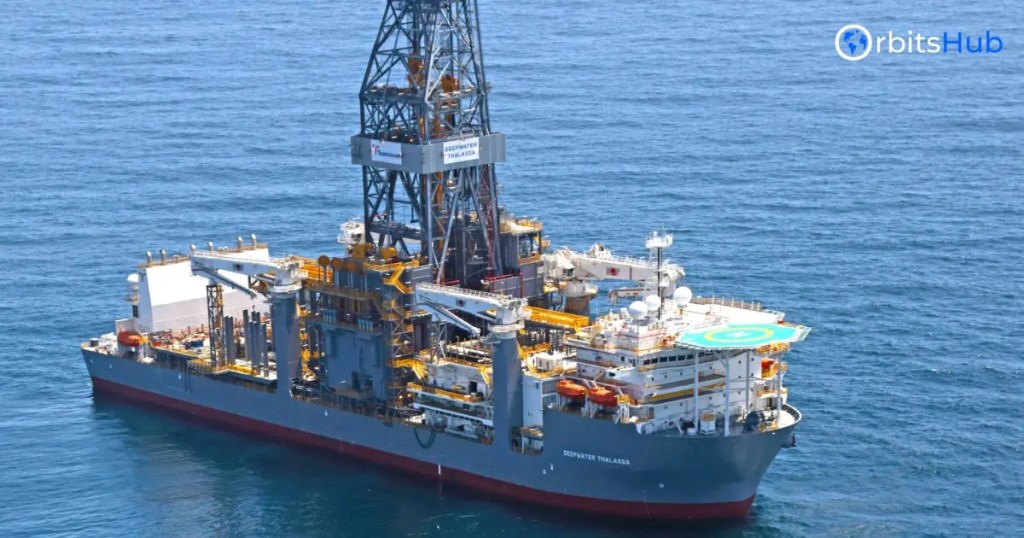
With great power comes great responsibility, and nowhere is this more evident than deep offshore technology. As we venture further into the ocean’s realm, the need for environmental stewardship has never been more critical.
Advanced sensors and monitoring systems, born from deep offshore technology, are now being used to track marine life, study ocean currents, and measure the impacts of climate change. Subsea observatories, bristling with high-tech instruments, provide scientists with unprecedented insights into the health of our oceans.
“Deep offshore technology has given us eyes and ears in places we could only dream of reaching before,” explains Dr. Elena Kowalski, a marine biologist. “We’re not just observers anymore; we’re active participants in the ocean ecosystem.”
This participation extends to conservation. Deep offshore technology creates artificial reefs, providing new habitats for marine life in areas damaged by human activity. Meanwhile, advanced clean-up systems are being developed to tackle the growing problem of ocean plastic, using sophisticated filtration and collection methods that were once the stuff of science fiction.
The Human Element
Behind every breakthrough in deep offshore technology are the men and women who dare to dream big. Human ingenuity drives the industry forward, from the roughnecks working on drilling platforms to the engineers designing the next generation of subsea systems.
Take, for example, the story of Carlos Mendoza, a ROV (Remotely Operated Vehicle) pilot with over two decades of experience. “When I started, we were basically flying blind,” he recalls. “Now, with deep offshore technology, I can ‘see’ better underwater than I can on land. It’s like having superpowers.”
This enhanced capability doesn’t just make the job easier; it makes it safer. Deep offshore technology has revolutionized safety protocols, from advanced weather prediction systems to automated emergency shut-off valves. The result is an industry that continues to improve its safety record year after year despite operating in one of the most challenging environments on Earth.
The Next Frontier
As we look to the future, the potential of deep offshore technology seems limitless. Plans are underway for the next generation of ultra-deepwater drilling systems capable of reaching depths once thought impossible. But even more exciting are the possibilities that lie beyond resource extraction.
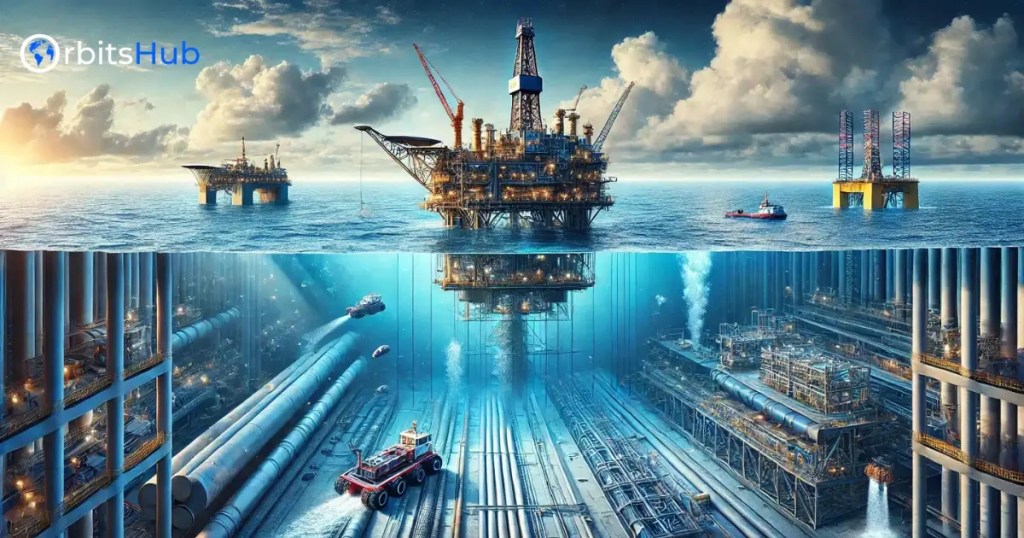
Cooled by the frigid waters of the deep ocean, underwater data centers could revolutionize the internet as we know it. Massive desalination plants, powered by ocean thermal energy conversion, could provide fresh water to water-stressed regions around the globe. And as we set our sights on the stars, deep offshore technology offers valuable lessons for future off-world colonies.
“The challenges we face in the deep ocean are not dissimilar to those we’ll encounter in space,” notes Dr. Yuki Tanaka, an aerospace engineer turned ocean explorer. “The innovations in deep offshore technology today could very well be laying the groundwork for humanity’s expansion beyond Earth tomorrow.”
Deep Offshore Technology by the Numbers
To truly appreciate the scale and impact of deep offshore technology, let’s look at some revealing statistics:
Deep Offshore Technology Trends
This chart illustrates the growth trends in offshore wind capacity and the underwater robotics market. The offshore wind capacity is projected to grow from 29.1 GW in 2020 to 234 GW by 2030. Meanwhile, the underwater robotics market is expected to reach $7.4 billion by 2025.
The deep offshore industry is vast and rapidly growing, with milestones like the deepest oil well (3,400m) and underwater pipeline (2,800m) in the Gulf of Mexico, offshore oil making up 30% of global production, and the offshore wind market projected to expand to 234 GW by 2030. The sector employs over 200,000 people and the underwater robotics market is set to reach $7.4 billion by 2025, underscoring its crucial role in energy and ocean exploration.
As we stand on the cusp of this new era, one thing is clear: the story of deep offshore technology is far from over. With each passing day, we’re pushing further, diving more profoundly, and unlocking more of the ocean’s secrets. It’s a journey of discovery that promises to reshape our world in ways we can only begin to imagine.
In the words of Captain Jacques Cousteau, “The sea, once it casts its spell, holds one in its net of wonder forever.” Thanks to deep offshore technology, we can now cast our net of wonder broader and deeper than ever before. The ocean, with all its mysteries and marvels, awaits. Are you ready to dive in?
Frequently Asked Questions
A: Current deep offshore technology can operate at depths exceeding 3,000 meters (9,800 feet), with some advanced systems designed for up to 3,500 meters (11,500 feet).
A: Key challenges in deep offshore technology include extreme conditions, equipment reliability, eco-friendly methods, safety, economic viability, and advancements for ultra-deep water.