A military airlift aircraft that exemplifies human engineering and creativity is the Boeing C-17 Globemaster III. With its unparalleled airlift capability, international range, and remarkable ability to land on small airfields, the C-17 has become an indispensable asset for the United States Air Force (USAF) and allied nations worldwide. In this article, we will delve into the design, features, and performance of the C17 Globemaster while also exploring its global footprint, technological advancements, and prospects.

Design and Features
Dimensions and Capabilities
The C-17 Globemaster III is an impressive military transport vehicle, measuring 53 meters in length, 16.8 meters in height, and boasting a wingspan of 51.75 meters. This high-wing, four-engine aircraft has a propulsive lift system, which utilizes engine exhaust to generate lift and enables safe landings on short runways. With this capability, the C-17 can touch down in less than 3,000 feet, making it highly versatile in various operational scenarios.
Cargo Systems
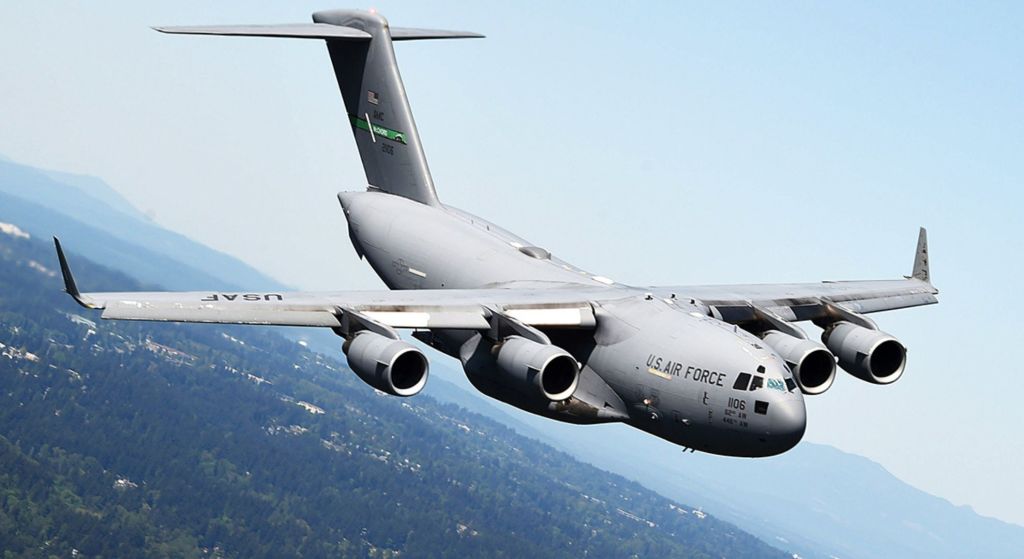
The C-17’s sophisticated cargo system is one of its most distinctive features; it enables the carriage of various vehicles, palletized goods, paratroopers, airdrop cargoes, and aeromedical evacuees, among other things. Huge-wheeled and tracked vehicles, tanks, AH-64 Apache helicopters, artillery, and the Patriot missile system can all fit in the spacious cargo compartment. The C-17 has 18 pallet spots, four on the ramp, with a maximum cargo capacity of 170,900 pounds. Additionally, the plane can carry up to 54 ambulatory patients and 36 litters for medical evacuation missions thanks to its low-altitude parachute extraction system.
Cockpit and Avionics
The state-of-the-art cockpit of the C-17 Globemaster III is a marvel of modern technology. It features a fully integrated electronic cockpit with four Honeywell multifunction cathode-ray tube displays, two full-capability head-up displays (HUDs), and advanced cargo systems. The digital avionics system provides pilots with crucial flight information and enables efficient mission planning and execution. The aircraft also incorporates a quadruple-redundant electronic flight control system, ensuring safety and reliability. In recent years, the C-17’s avionics have undergone upgrades, including new mission computers, displays, and software for enhanced performance.
Deployments and Notable Missions of the C-17 Globemaster III
- Specific historical events: The C-17’s involvement in conflicts like the Iraq War or Afghanistan could be explored, showcasing its ability to deliver critical supplies and personnel to war zones.
- Humanitarian missions: The C-17’s role in disaster relief efforts worldwide could be another interesting point. Examples include humanitarian missions following earthquakes, floods, or other natural disasters.
- Medical Evacuation: Highlighting the C-17’s capabilities for medical evacuations would demonstrate its importance in saving lives during wartime or transporting critically ill patients from remote areas.
The Future of the C-17 Globemaster III: Modernization and Potential Successors
- Modernization programs: Discuss the Mission Execution Excellence Program (MEEP) mentioned in the blog and explore other initiatives to enhance fuel-efficiency, avionics, and overall performance.
- Potential Successors: Briefly explore discussions or plans for developing future military transport aircraft that might eventually succeed the C-17. This could spark reader interest in the evolution of airlift capabilities.
Performance and Capabilities
Engine and Thrust
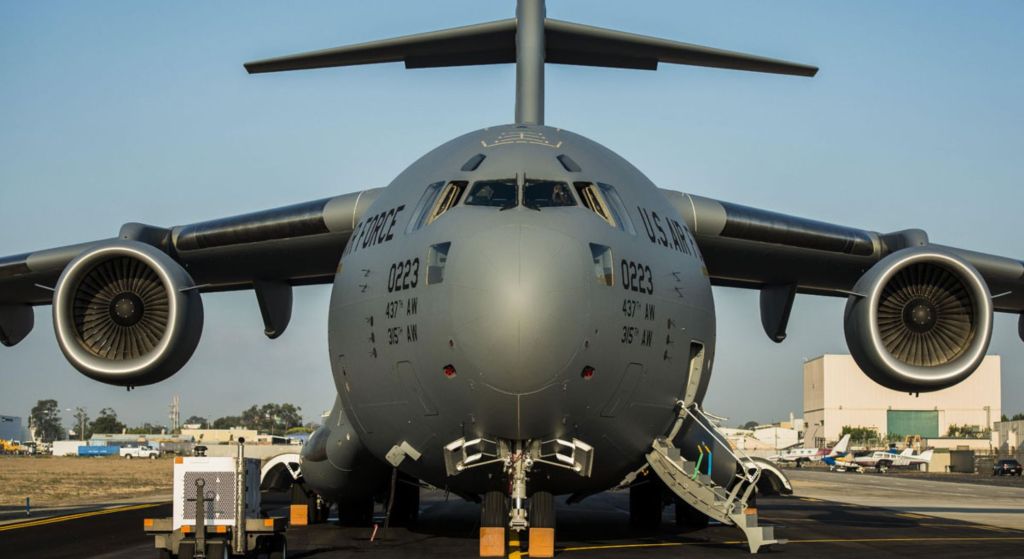
Powering the C-17 Globemaster III are four Pratt & Whitney PW2040 turbofan engines, each capable of delivering 40,440 pounds of thrust. These engines are seamlessly integrated into the aircraft’s wings and provide the necessary propulsion. The C-17’s engines have thrust reversers, enabling rapid deceleration and descent maneuvers. The aircraft also features speed brakes and large flaps extending into the exhaust stream, allowing for steep approaches and low landing speeds.
The Pratt & Whitney PW2040 turbofan engines on the C-17 Globemaster III are renowned for their reliability and efficiency, ensuring optimal performance during various missions. The advanced thrust reversers facilitate quick deceleration and enhance the aircraft’s versatility in tactical operations. Additionally, the C-17’s innovative design incorporates cutting-edge aerodynamics, using speed brakes and strategically positioned flaps to optimize control during descent, enabling the aircraft to operate effectively in diverse environments and challenging landing conditions.

Speed and Range
With its impressive cruising speed of Mach 0.74 to 0.77, the C-17 can swiftly transport personnel and cargo over vast distances. The aircraft has a range of 2,400 nautical miles (4,448 kilometers) without in-flight refueling while carrying a payload of 160,000 pounds. However, with aerial refueling, the C-17 can achieve intercontinental non-stop flights, reaching altitudes of up to 45,000 feet. This remarkable range and endurance make the C-17 an invaluable asset for long-range missions and strategic airlift operations.
Global Footprint
United States Air Force
The C-17 Globemaster III has been a cornerstone of the United States Air Force since its first delivery in 1993. Over the years, the USAF has acquired a fleet of 275 C-17 aircraft, utilizing them for various missions ranging from troop and cargo transport to medical evacuation and humanitarian relief efforts. The aircraft’s unparalleled capabilities have greatly enhanced the USAF’s operational readiness and global reach.
Allied Nations
In addition to the USAF, numerous allied nations have recognized the immense value of the C-17 Globemaster III and have incorporated it into their military fleets. Several countries have purchased C-17 aircraft to enhance their airlift capabilities, including the UAE, Canada, Australia, India, Kuwait, and Qatar. Moreover, in partnership with Boeing, the 12-nation Strategic Airlift Capability program has further expanded the global fleet of C-17s, ensuring a robust and collaborative approach to strategic airlift operations.
International Training and Support
Recognizing the importance of training and support for optimal utilization of the C-17 Globemaster III, Boeing has established training centers and contracts with various nations. For instance, in 2016, Boeing partnered with Mahindra Defence Systems to open a C-17 training center for the Indian Air Force (IAF). Additionally, under the NATO Strategic Airlift Capability (SAC) program, Boeing signed an $8 million contract to train C-17 aircrews from multiple nations at its international training center (ITC) in the United Kingdom. These initiatives highlight the commitment to maintaining the highest standards of proficiency and safety across the global C-17 fleet.
Technological Advancements and Future Prospects
Mission Execution Excellence Program
To further enhance the efficiency and capabilities of the C-17 Globemaster III, the Department of the Air Force has launched the pilot Mission Execution Excellence Program (MEEP). This program incentivizes optimized flying practices, focusing on fuel efficiency and operational excellence. To improve preparation, MEEP recommends six energy-saving methods, including fuel planning and auxiliary power unit reduction. Joint Base Charleston, South Carolina, and Travis Air Force Base, California, started the aviation fuel savings and mission performance initiative.
Continued Sustainment and Support
Boeing and its global partners remain committed to the long-term sustainment and support of the C-17 fleet. Boeing won a $23.8 billion US Department of Defense follow-on contract to maintain the C-17 for ten years in September 2021. This contract ensures the critical sustainment activities of the fleet, guaranteeing its operational readiness and longevity. To confirm its standing as a leading military transport, the C-17 Globemaster III will benefit from avionics and technology advances.
Boeing’s ongoing investment in research and development will enhance the C-17’s capabilities, ensuring it remains a versatile and reliable asset for military operations worldwide. The collaboration with global partners underscores a commitment to continuous improvement, enabling the C-17 to adapt to evolving mission requirements and maintain its status as a cornerstone of strategic airlift capability.

FQA’s
1. What is a C17 Globemaster?
A1: The C17 Globemaster is a large military transport aircraft the United States Air Force uses.
2. What is the purpose of the C17 Globemaster?
The C17 Globemaster is designed to transport troops, cargo, and vehicles over long distances. Both domestically and internationally.
3. How much cargo can the C17 Globemaster carry?
The C17 Globemaster can carry up to 170,900 pounds (77,519 kg) of cargo, including vehicles, supplies, and personnel.
4. How fast can the C17 Globemaster fly?
The C17 Globemaster can cruise at 518 mph (833 km/h) and reach 590 mph (950 km/h).
5. What is the range of the C17 Globemaster?
With a full payload, the C17 Globemaster can fly nonstop for nearly 8,000 miles (12,874 km) with aerial refuelling.
6. How many people can the C17 Globemaster accommodate?
The C17 Globemaster can accommodate up to 102 fully equipped troops or 36 463L pallets used to transport cargo.
7. How many C17 Globemaster aircraft are currently in service?
Most of the 275 C17 Globemasters in service worldwide in 2021 are operated by the US Air Force.
The C17 Globemaster III represents the pinnacle of military transport aviation, embodying unparalleled airlift capability, global reach, and operational excellence. For the US Air Force and allies, its unique cargo systems, cutting-edge avionics, and excellent performance are crucial. The CNUM0 Globemaster III will spearhead strategic airlift missions, transporting personnel and goods to remote regions. This is because to its adaptability.