Demystifying Space Terminology: A Primer
Before we embark on our journey into the realm of geostationary and geosynchronous orbits, it is crucial to establish a common lexicon. In the vast expanse of space terminology, these terms often evoke confusion, and their precise definitions are essential to our understanding. A geosynchronous orbit is one in which a satellite’s orbital period precisely matches the rotation period of the Earth, ensuring that the satellite remains in a fixed position relative to the planet’s surface. Conversely, a geostationary orbit is a specialized subset of geosynchronous orbits, where the satellite not only shares Earth’s rotational period but also maintains a constant position above the equator, appearing motionless from the planet’s surface.
Geosynchronous: The Rhythm of Earth’s Rotation
Orbiting in Perfect Harmony with Our Planet
Geosynchronous satellites have achieved a harmonious dance with our planet, their orbits synchronized with Earth’s rotation like a perfectly choreographed duet. These satellites, ranging from weather monitoring platforms to communication relays, maintain a fixed position relative to a specific point on the Earth’s surface, perpetually hovering above the same longitudinal coordinate. This celestial synchronicity is a feat of awe-inspiring precision, defying the vastness of space and the relentless pull of gravity.
The Elegant Mathematics Behind the Synchronicity
The synchronization of geosynchronous satellites with Earth’s rotation is governed by a delicate interplay of orbital mechanics and celestial mathematics. Kepler’s laws of planetary motion, coupled with Newton’s theories of gravitation, provide the foundations for calculating the precise altitude and velocity required for a satellite to remain in lockstep with our planet’s rotation. At an altitude of approximately 35,786 kilometers (22,236 miles) above the equator, these satellites orbit the Earth with a period of precisely 23 hours, 56 minutes, and 4 seconds, matching the planet’s rotational period with exquisite precision.
Geostationary: The Art of Eternal Hovering
Defying Gravity, Frozen in Space
Among the celestial dancers, geostationary satellites occupy a truly unique position, appearing frozen in the heavens above a specific point on the Earth’s equator. These satellites, operating at the same altitude as their geosynchronous counterparts, but with the added constraint of maintaining a zero inclination and zero eccentricity orbit, defy gravity’s relentless pull, hovering eternally above a fixed longitudinal coordinate. From our terrestrial vantage point, these satellites appear motionless, their positions etched into the celestial canvas like immutable beacons guiding our technological endeavors.
The Strategic Advantages of a Geostationary Perch
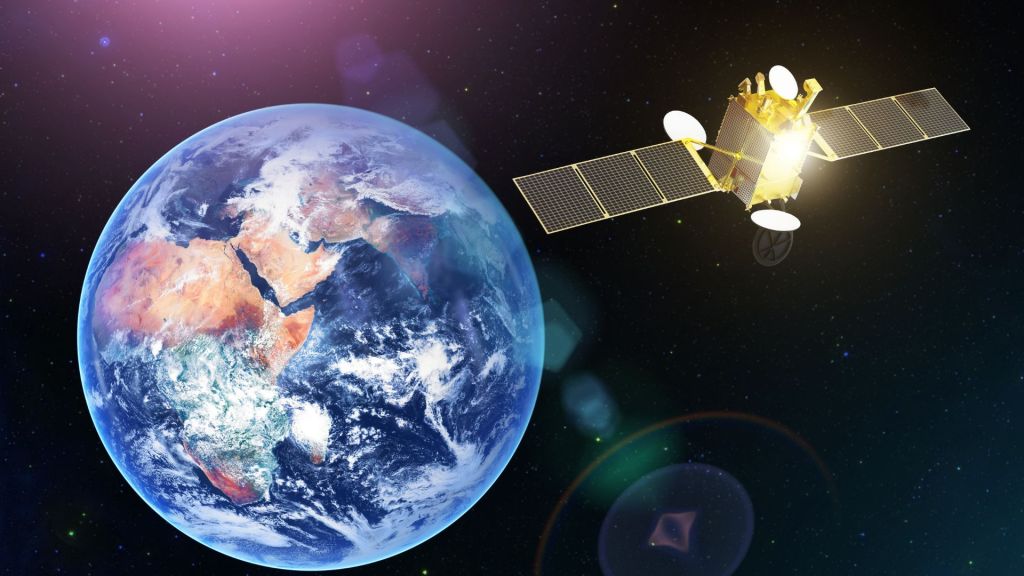
The ability to remain stationary above a specific point on Earth’s equator bestows geostationary satellites with a strategic advantage that has revolutionized various industries. This unique vantage point allows for uninterrupted coverage of entire continents and vast swaths of the planet’s surface, facilitating seamless communication, weather monitoring, and navigation services. Geostationary satellites act as celestial sentinels, their unwavering gaze enabling real-time data collection, broadcast transmission, and a myriad of other applications that have become integral to our modern lives.
Applications and Marvels of Geostationary Satellites
Communications: Bridging the Global Divide
One of the most profound applications of geostationary satellites lies in the realm of global communications. These celestial marvels have bridged the geographical divide, enabling instantaneous information transfer across continents and oceans. From television broadcasting to internet connectivity, geostationary satellites have revolutionized the way we communicate, disseminate information, and stay connected with the world around us. Their ability to provide continuous coverage to vast regions has transformed the global village into a seamless tapestry of interconnected societies.
Weather Forecasting: Unraveling Nature’s Mysteries
Geostationary satellites have also become indispensable allies in our quest to understand and predict the intricate patterns of Earth’s weather systems. Perched high above the planet, these celestial sentinels continuously monitor atmospheric conditions, capturing real-time data on cloud formation, wind patterns, and temperature fluctuations. This invaluable information serves as the foundation for advanced weather forecasting models, enabling meteorologists to issue timely warnings and predictions, safeguarding lives and property from the whims of nature’s fury.
Navigation: Finding Our Way in the Cosmos
In the age of global exploration and interconnectivity, geostationary satellites have emerged as beacons guiding our journey across the vast expanse of land, sea, and air. Satellite navigation systems, such as the Global Positioning System (GPS), rely on a constellation of satellites, including geostationary and geosynchronous orbiters, to triangulate precise locations and provide accurate positioning data. This celestial cartography has revolutionized navigation, enabling seamless travel, efficient logistics, and even precision agriculture, where every inch of arable land is optimized for maximum yield.
The Geosynchronous Realm: Exploring the Wider Orbit
Versatility in Motion: Varied Inclinations and Eccentricities
While geostationary satellites are bound to the equatorial plane, their geosynchronous counterparts enjoy a greater degree of freedom in their orbital trajectories. Geosynchronous satellites can have varying inclinations, allowing them to traverse different latitudes and provide coverage to regions beyond the equatorial belt. Additionally, these satellites can exhibit slight eccentricities in their orbits, resulting in elliptical paths that oscillate around the Earth’s surface. This versatility broadens the range of applications for geosynchronous satellites, from regional communications to specialized scientific missions.
Polar Orbits: Mapping the Earth from Pole to Pole
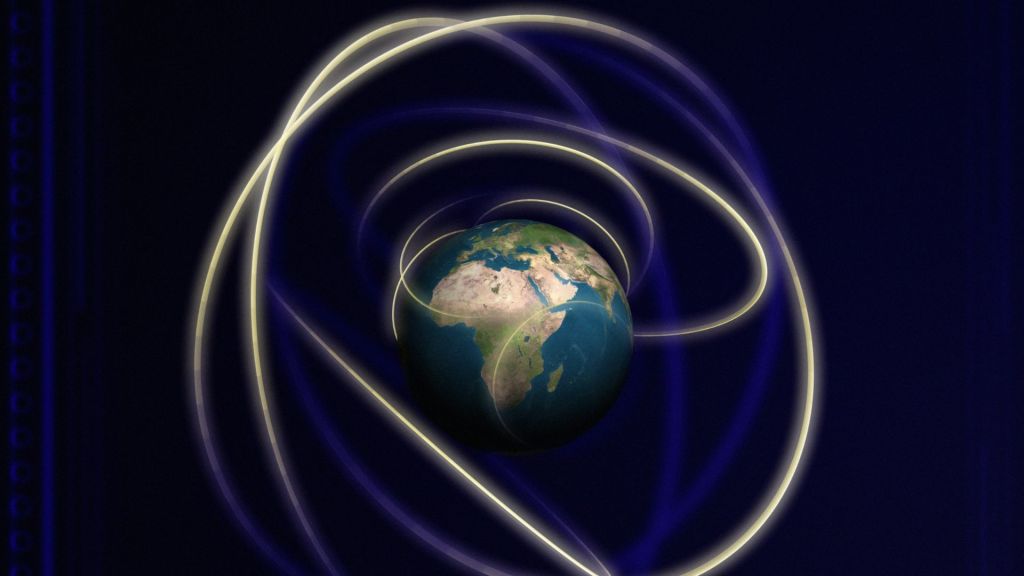
Among the diverse family of geosynchronous orbits, polar orbits hold a special significance. These orbits are highly inclined, allowing satellites to pass over the Earth’s polar regions with each revolution. Polar-orbiting satellites play a crucial role in Earth observation, environmental monitoring, and scientific research. By capturing data from a unique vantage point, they provide invaluable insights into the dynamics of our planet’s climate, ecosystems, and natural resources, enabling informed decision-making and fostering a deeper understanding of our fragile world.
Challenges and Considerations of Geostationary Orbits
The Precious Real Estate of the Geostationary Belt
While the benefits of geostationary orbits are undeniable, they come with their own set of challenges and considerations. The geostationary belt, a narrow orbital region above the Earth’s equator, is a finite resource, akin to precious real estate in the celestial realm. As the demand for geostationary satellites continues to grow, this orbital corridor becomes increasingly crowded, leading to potential conflicts and interference between satellites vying for the same coveted positions.
Orbital Debris: The Specter of Space Junk
The ever-increasing population of satellites in Earth’s orbit has given rise to a growing threat – orbital debris. These fragments of defunct satellites, spent rocket stages, and other man-made objects litter the orbital paths, posing a significant risk to operational spacecraft. Even the smallest piece of debris, traveling at immense velocities, can inflict catastrophic damage upon impact. As the geostationary belt becomes more congested, the specter of space junk looms larger, necessitating proactive measures to mitigate and manage this celestial hazard.
Fuel Consumption: The Eternal Balancing Act
Maintaining a precise geostationary orbit is a delicate dance that requires a constant expenditure of fuel. Subtle gravitational perturbations from the Sun, Moon, and even the Earth’s own oblateness can gradually nudge a satellite off its intended course. To counteract these forces, periodic orbital maneuvers are necessary, consuming precious onboard fuel reserves. Satellite operators must strike a careful balance between prolonging a spacecraft’s operational lifespan and ensuring its accurate positioning, a dance that ultimately determines the satellite’s overall mission duration and cost-effectiveness.
Launch Vehicles and the Journey to Space
Rocket Science 101: Propelling into Orbit
Launching a satellite into its designated geostationary or geosynchronous orbit is a feat of engineering prowess and technological mastery. Powerful launch vehicles, equipped with multi-stage rocket engines, must overcome the Earth’s gravitational pull and accelerate payloads to astonishing velocities. The principles of rocket propulsion, rooted in Newton’s laws of motion, govern the intricate dance of thrust, acceleration, and trajectory that ultimately enable a satellite to achieve its intended orbit.
Reusability and Cost Reduction: The SpaceX Revolution
In the realm of launch vehicles, a paradigm shift is underway, driven by the visionary efforts of companies like SpaceX. By pioneering reusable rocket technology, SpaceX has ushered in a new era of cost-effective space exploration and satellite deployment. Their innovative approach, which involves recovering and refurbishing rocket boosters for subsequent launches, has the potential to substantially reduce the financial barriers to accessing geostationary and geosynchronous orbits, opening new frontiers for commercial and scientific endeavors.
The Future of Satellite Technology
Mega-Constellations: Blanketing the Earth with Connectivity
As we peer into the future of satellite technology, one ambitious endeavor stands out – the deployment of mega-constellations. These vast networks of thousands of satellites, operating in low Earth orbit, aim to provide global internet connectivity and revolutionize the way we communicate and access information. While these constellations do not directly involve geostationary or geosynchronous orbits, they represent a paradigm shift in satellite-based services, promising to bridge the digital divide and bring the world closer together through a seamless web of connectivity.
Quantum Communications: The Next Frontier of Security
Beyond the realm of traditional satellite communications, a new frontier is emerging – quantum communications. By leveraging the principles of quantum mechanics, researchers are exploring the possibility of transmitting secure, encrypted data via satellites, harnessing the phenomena of quantum entanglement and superposition. This cutting-edge technology could revolutionize secure communications, rendering messages virtually unbreakable and impervious to interception or decryption. As our reliance on satellite-based communications grows, the development of quantum-enabled satellites could usher in a new era of unparalleled data security and privacy.
Navigating the Celestial Highways

The Dance Continues: Humanity’s Cosmic Odyssey
As we stand in awe of the celestial dance performed by geostationary and geosynchronous satellites, we are reminded of humanity’s insatiable quest for knowledge and exploration. These orbital marvels have not only redefined our understanding of the cosmos but have also reshaped our terrestrial existence, enabling unprecedented connectivity, navigation, and environmental monitoring.
Yet, our cosmic odyssey is far from over. With each technological breakthrough and scientific discovery, we inch closer to unveiling the universe’s deepest secrets and pushing the boundaries of what is possible. The future holds the promise of new frontiers, from mega-constellations that blanket the Earth with connectivity to quantum communications that defy the limits of conventional security.
As we navigate these celestial highways, let us embrace the spirit of curiosity and innovation that has propelled us to the stars. For in the eternal dance of satellites, we catch a glimpse of our own resilience, our determination to transcend boundaries, and our unwavering pursuit of knowledge that knows no bounds.