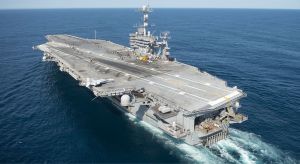
In the Red Sea, tensions are high between the US Navy and the Houthi rebels of Yemen. The Houthis claimed to have launched a second attack on the USS Eisenhower, a Nimitz-class aircraft carrier. This comes just a day after a similar claim of an attack on the same vessel.
Understanding the Situation: USS Eisenhower
The Houthi rebels, also known as Ansar Allah, are a Zaidi Shia group controlling large parts of Yemen. The ongoing civil war in Yemen has pitted the Houthis against the Yemeni government, backed by a Saudi-led coalition that includes the United States. The United States Navy keeps a presence in the Red Sea to enhance regional stability and guarantee freedom of navigation.
These recent attacks are seen as retaliation for a joint US-British airstrike on Houthi installations in Yemen. The Houthis claim their attacks target American interests in solidarity with Palestinians during the Israeli-Palestinian conflict.
What Happened to USS Eisenhower During the Second Attack?
The Houthi spokesperson, Yahya Saree, claimed they used “several drones” to target the USS Dwight D. Eisenhower, achieving a “direct hit.” However, the US Central Command (CENTCOM) paints a different picture.

CENTCOM acknowledges engaging and destroying multiple Houthi projectiles in the Red Sea. This included shooting down a Houthi drone and witnessing two others fall without causing any damage. Additionally, they destroyed two anti-ship ballistic missiles aimed at the destroyer USS Gravely. Notably, CENTCOM reported no damage or injuries on any US vessel, military or civilian.
The contrasting narratives highlight the ongoing information war alongside the physical conflict. While the Houthis claim successful attacks, the US Navy maintains its defensive capabilities were effective.
Why Does This Matter?
The attempted attacks on the USS Eisenhower raise concerns about the security situation in the Red Sea, a crucial waterway for global trade. Disruptions to Red Sea shipping lanes could have significant economic consequences, impacting the movement of goods and energy resources.
Furthermore, these incidents heighten tensions between the US and Iran, a key backer of the Houthis. An escalation could lead to a broader regional conflict with unpredictable ramifications.
Debunking Disinformation: Separating Fact from Fiction
The rapid spread of information online, mainly through social media, can make it challenging to distinguish fact from fiction. In the case of the alleged attacks on the USS Eisenhower, reports and videos were circulating online claiming significant damage to the aircraft carrier. The US Navy and independent fact-checking organizations later debunked these claims.
Here’s how to stay informed during such situations:
- Seek information from credible sources: Rely on established news outlets with a history of responsible reporting. Official statements from government and military bodies can also be helpful.
- Be wary of sensational headlines and visuals: Exaggerated claims and dramatic visuals can be misleading—Cross-check information with multiple sources before accepting it as accurate.
- Fact-checking websites: Use reputable fact-checking websites that research and verify information circulating online. These resources can be really helpful when it comes to finding and disproving false information.
If we maintain vigilance and learn to evaluate information critically, we may avoid becoming entangled in online information battles.

The Ripple Effect: Potential Economic Impact of Red Sea Disruptions
The Red Sea is an essential passageway for the everyday international transportation of many tons of cargo and millions of barrels of oil. Any disruption to this critical waterway can have significant economic consequences:
- Increased Shipping Costs: Insurance premiums for ships travelling through the Red Sea could rise due to perceived security risks. This would translate to higher transportation costs for goods, impacting consumers worldwide.
- Supply Chain Disruptions: Delays or blockages in the Red Sea could disrupt global supply chains, leading to shortages of essential goods and impacting industries that rely on timely deliveries.
- Energy Price Fluctuations: The Red Sea is a crucial route for oil transportation. Disruptions could lead to fluctuations in global oil prices, impacting energy costs for consumers and businesses alike.
Navigating Uncertain Seas: USS Eisenhower
The situation in the Red Sea remains fluid. The Houthis may continue attempts to target USS Eisenhower, and the US Navy will likely strengthen its defensive posture. Open communication and diplomatic efforts are crucial to de-escalate tensions and prevent further conflict.
Are you considering exploring the complexities of maritime security and risk mitigation? OrbitsHub, a leading marine and aviation consultancy services company, can help. The ever-shifting dynamics of the skies and seas can be better navigated with the help of our skilled team’s full range of services.