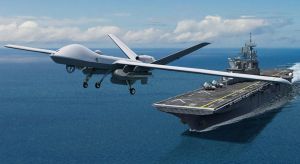
The recent US clearance to sell 31 MQ-9B drones to India was a significant step forward in national security and defense. With their advanced capabilities, these cutting-edge drones are set to revolutionize India’s surveillance and reconnaissance capabilities. In this article, we delve into the details of this landmark deal, shedding light on its implications and the strategic advantages it brings.
What Are MQ-9B Drones?
The MQ-9B drones, developed by General Atomics Aeronautical Systems, Inc., come in SkyGuardian and SeaGuardian variants. These High Altitude Long Endurance (HALE) uncrewed aerial vehicles (UAVs) are equipped with nine hardpoints, allowing them to carry an array of sensors, laser-guided bombs, and air-to-ground missiles. Let’s explore why these drones are garnering global attention.
Enhanced Maritime Security
- Maritime Domain Awareness: The MQ-9B drones will significantly enhance India’s maritime domain awareness. With their extended endurance capabilities, they can patrol vast sea lanes, providing real-time intelligence on naval activities, potential threats, and illegal maritime activities.
- Surveillance Precision: These drones offer unparalleled surveillance precision. From tracking suspicious vessels to monitoring coastal borders, the MQ-9B’s sensors and imaging systems provide high-resolution data, enabling swift responses to emerging situations.
- Strategic Deployment: The Indian Navy will receive 15 SeaGuardian drones, bolstering its ability to safeguard maritime interests. Meanwhile, the Army and the Indian Air Force will each acquire eight SkyGuardian drones for land-based operations.

Key Features
- Endurance: The MQ-9B’s extended flight endurance allows it to remain airborne for up to 40 hours, covering vast distances without refueling.
- Versatility: Whether conducting reconnaissance, surveillance, or search-and-rescue missions, these drones adapt seamlessly to diverse scenarios.
- Cost-Effective: Compared to manned aircraft, the operational costs of MQ-9B drones are significantly lower, making them an efficient choice for long-duration missions.
Geostrategic Significance
- Indo-Pacific Region: As a significant player in the Indo-Pacific, India’s security interests extend across vast oceanic expanses. The MQ-9B drones will enhance India’s ability to monitor critical sea routes, safeguard trade, and respond swiftly to threats.
- US-India Partnership: The sale of drones is a prime example of strengthening the strategic partnership between the US and India. It reflects mutual trust and shared objectives in maintaining regional stability and countering common challenges.
International Reactions and Diplomatic Implications
This section could explore how different nations, particularly neighbouring countries and other major global powers, react to India’s acquisition of MQ-9B drones. It might discuss potential diplomatic discussions or tensions that arise, as well as any supportive or critical statements from international leaders. This analysis could provide insights into how such military enhancements influence global geopolitics and India’s foreign relations.
Future Developments in Drone Technology and Defense Strategy
This section could discuss anticipated advancements in drone technology and how they might influence future military strategies. It could explore new features or capabilities that may be integrated into future versions of drones like the MQ-9B. Additionally, this could include speculation on how India plans to incorporate these advancements into its overall defence strategy, possibly touching on collaborations with tech companies or other nations to develop or procure next-generation drone technologies.
The Technological Advancements of MQ-9B Drones
The MQ-9B drones represent a leap forward in unmanned aerial technology. Let’s explore their key features and how they compare to earlier drone models:
Long Endurance: The MQ-9B drones are highly suitable for long-term surveillance missions due to their increased altitude capability of up to 40 hours compared to their predecessors.
Sensor Suite: These drones are equipped with state-of-the-art sensors, including synthetic aperture radar (SAR), electro-optical/infrared (EO/IR) cameras, and signals intelligence (SIGINT) systems. This comprehensive suite enhances their reconnaissance capabilities.

Autonomous Operations: The MQ-9B’s advanced autopilot system allows it to operate autonomously, reducing the need for constant human intervention.
Challenges and Ethical Considerations
While the acquisition of MQ-9B drones brings undeniable advantages, it also raises important questions:
Privacy Concerns: How do we balance the need for security with citizens’ right to privacy? The extensive surveillance capabilities of these drones must be carefully regulated to prevent misuse.
Collateral Damage: In armed operations, there’s always a risk of unintended civilian harm. Ensuring precision strikes and minimizing collateral damage is crucial.
For responsible and effective deployment, India must address these problems as it integrates these cutting-edge drones into its defense policy.
FAQ’s
1. What is an MQ-9B drone?
The MQ-9B is an uncrewed aerial vehicle (UAV) developed by General Atomics Aeronautical Systems. It’s a multi-role, long-endurance aircraft designed for intelligence, surveillance, reconnaissance, and strike missions.
2. What are the key features of the MQ-9B drone?
The MQ-9B boasts a range of features, including long endurance capabilities (over 40 hours), the ability to operate in all weather conditions, satellite communication for beyond-line-of-sight operations, and the flexibility to carry a variety of mission payloads.
India’s defense capabilities are transform by 31 MQ-9B-arm drones. Flying these powerful UAVs will increase maritime security and India’s global responsibility. As India uses these cutting-edge drones to protect its interests and promote regional stability, the future is bright.