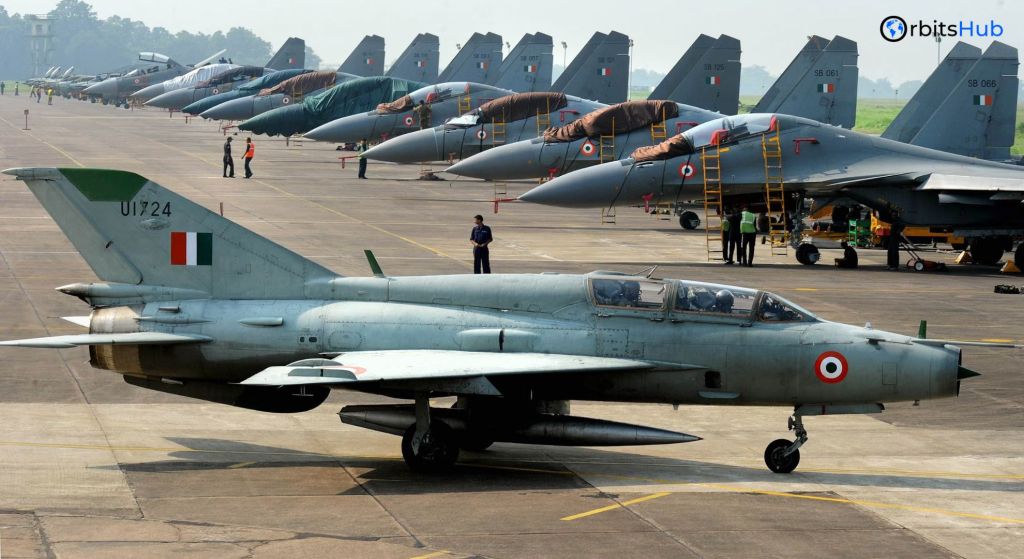
India, a nation with a rich strategic heritage, boasts a formidable air force that is pivotal in safeguarding its vast airspace. At the heart of this aerial defence network lie its fighter jets – marvels of aeronautical engineering designed for dominance in the skies. But with numerous contenders vying for the title of “India’s Finest Fighter Aircraft,” which one truly stands out?
Contenders in the Arena: A Look at India’s Fighter Fleet
India’s fighter aircraft portfolio is a fascinating blend of indigenous creations and strategic acquisitions. Here’s a glimpse at some of the key players:
- HAL Tejas: This single-engine, lightweight fighter aircraft is a shining example of India’s domestic aeronautical prowess. Known for its agility and advanced avionics, the Tejas is a potent force suited for various missions.
- Sukhoi Su-30MKI: A formidable product of Indo-Russian collaboration, the Su-30MKI is a multi-role combat aircraft renowned for its long-range, heavy firepower and all-weather operational capability.
- Dassault Rafale: This French-made marvel of technology boasts exceptional manoeuvrability, cutting-edge sensor fusion, and a diverse weapons package, making it a potent weapon in any aerial engagement.
These are just a few aircraft that contribute to India’s airpower. However, to determine the “finest,” we must delve deeper into the qualities that define aerial superiority.
Decoding Dominance: Key Factors that Define a Top-Tier Fighter
Several crucial aspects differentiate a top-tier fighter aircraft from its counterparts. Here are some of the most significant ones:
- Manoeuvrability: The ability to perform tight turns, rapid climbs, and swift dives is essential for outmanoeuvring enemy aircraft in a dogfight.
- Payload Capacity: The amount and variety of weaponry a fighter can carry define its offensive and defensive capabilities. This includes air-to-air missiles, air-to-ground munitions, and electronic warfare equipment.
- Sensor Fusion: Advanced radars, electronic warfare suites, and integrated data links allow pilots to gain superior situational awareness, detect and track threats effectively, and ensure precise targeting.
- Range and Endurance: The ability to cover long distances and stay airborne for extended periods is crucial for patrolling vast swathes of airspace and undertaking long-range missions.
- Operational Cost: While raw performance is vital, the cost of acquiring, maintaining, and operating a fighter jet is also a significant consideration.
We can identify the potential frontrunner by analyzing these factors about India’s current fighter fleet.
Unveiling the Contender: A Case for the Modern Marvel
Considering all the factors above, a strong case can be made for the Dassault Rafale as India’s finest fighter aircraft. Here’s why:
- Unmatched Maneuverability: The Rafale boasts exceptional agility thanks to its advanced fly-by-wire flight control system and robust engines, allowing it to outmanoeuvre most adversaries in close-quarters combat.
- Diverse Payload: The Rafale can be equipped with a wide range of weaponry, including Meteor air-to-air missiles with beyond-visual-range (BVR) capabilities, SCALP cruise missiles for long-range strikes, and SPECTRA electronic warfare pods for disrupting enemy radars.
- Cutting-Edge Sensor Suite: The Rafale’s integrated RBE2 Active Electronically Scanned Array (AESA) radar offers superior detection and tracking capabilities. At the same time, its SPECTRA electronic warfare suite enhances situational awareness and disrupts enemy communications.
- Impressive Range and Endurance: The Rafale boasts a combat range of over 700 km. It can stay airborne for extended periods, making it ideal for patrolling vast swathes of Indian airspace and undertaking long-range missions.
However, Rafale’s high acquisition cost is a point of consideration. This is where indigenous efforts like the Tejas come into play. As the Tejas undergoes further development and integration of advanced technologies, it has the potential to become a more cost-effective option while maintaining significant combat capability.
The Future of Indian Fighter Jets: Indigenous Development and Strategic Acquisitions
This section can delve into India’s plans for fighter jets. You can discuss:
- Focus on indigenous development: Explore India’s efforts to develop advanced fighters like the Advanced Medium Combat Aircraft (AMCA) and how these projects aim to reduce dependence on foreign acquisitions.
- Strategic partnerships and technology transfer: Discuss India’s collaborations with foreign countries to acquire advanced technologies and integrate them into domestic platforms.
- Balancing cost and capability: Analyze the challenges of achieving a balance between acquiring cutting-edge foreign fighters and ensuring the affordability of a large fighter fleet.
Beyond Fighter Jets: A Holistic View of Airpower
This section can broaden the perspective by discussing how fighter jets function within a larger airpower ecosystem. You can explore:
- Importance of supporting platforms: Highlight the crucial role of Airborne Warning and Control Systems (AWACS), Unmanned Aerial Vehicles (UAVs), and transport aircraft in supporting fighter operations.
- Networked warfare and information dominance: Explain how fighter jets operate within a network of sensors and communication systems for real-time information sharing and coordinated attacks.
- Investment in infrastructure and training: Emphasize the significance of having robust airbases, well-trained personnel, and effective maintenance practices to maximize fighter jets’ effectiveness.
India’s fighter aircraft show its airspace security commitment. While the Rafale is impressive, the future lies in a mix of indigenous development and tactical acquisitions. With projects like the AMCA, India seeks self-reliance and collaborations to acquire cutting-edge technologies. Remember that airpower is a coordinated ecosystem, not just fighter jets. Supporting platforms, information dominance, and robust infrastructure are equally important. By embracing a holistic strategy, India can keep its skies filled with powerful and efficient fighter jets.
Are you ready to elevate your understanding of aviation technology and explore new horizons in the maritime and aviation sectors? Visit Orbitshub today and discover how our consultancy services can empower your operations. Let’s embark on a journey of innovation and excellence together.