On the 14th of February, 2024, Ukraine’s military announced a significant victory in the ongoing conflict with Russia. With the use of advanced naval drones, the military forces of Ukraine managed to sink a sizeable Russian landing ship, the Caesar Kunikov, in the Black Sea. The blog ” Russian Ship Sunk Caesar Kunikov: Ukraine Russian Ship” will explain fully.
Contextualizing the Conflict: The Russia-Ukraine War
The Russia-Ukraine conflict has been a prolonged and highly contentious issue. Their conflict dates back to 2014 when Russia annexed Crimea, a region that was formerly part of Ukraine. Russia invaded Ukraine in full force on February 24, 2022, because of this action. This was a significant change in the way the world works.
The Caesar Kunikov: An Overview of the Russian Ship
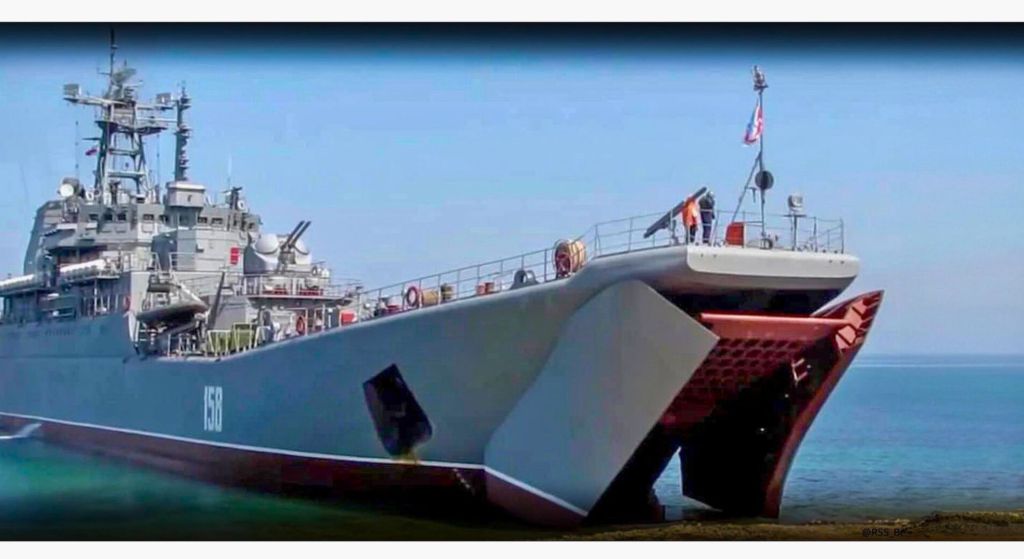
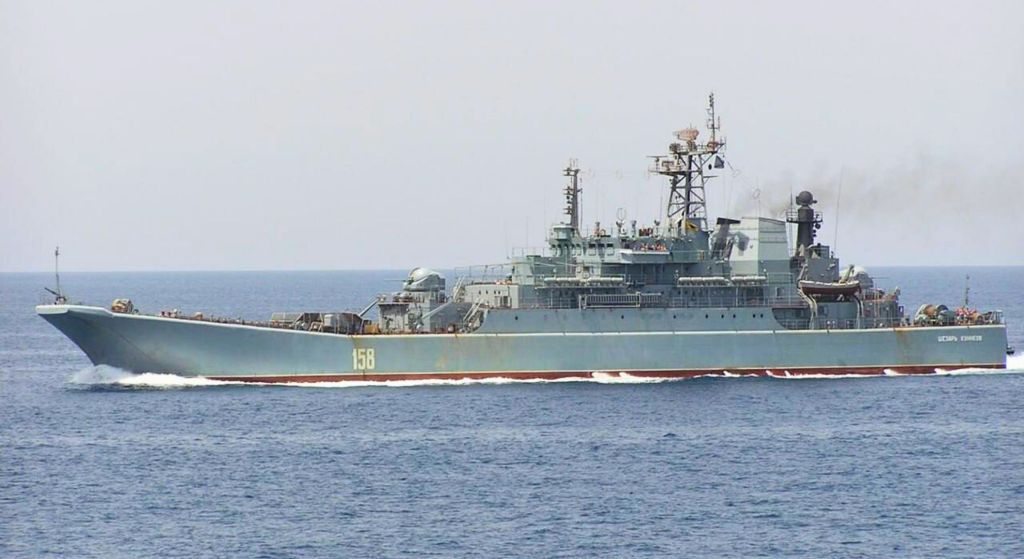
The Caesar Kunikov, a Ropucha-class landing ship, was a valuable asset in the Russian naval fleet. This amphibious ship could carry up to 87 crew members and could transport tanks, troops, and other cargoes to support amphibious assaults. The boat could open doors at its bow to land on shores without needing to dock.
The Attack: Details of the Ukrainian Operation
According to Ukraine’s Military Intelligence, also known as GUR, their special operations unit “Group 13” was responsible for the attack on the Caesar Kunikov. The operation was meticulously planned over an extended period, with tracked routes and data collected.
Using advanced Magura V5 sea drones, Ukraine launched the attack that led to the sinking of the Russian warship. The drones, which resemble sleek black speedboats, were unveiled last year. The top speed is 42 knots, 50 mph, and they can carry 700 pounds.
The Impact: Consequences of the Russian Ship Sunk
The sinking of the Caesar Kunikov was not just a military victory for Ukraine but also dealt a significant blow to Russia’s Black Sea fleet. In addition to the loss of the ship, the operation reportedly destroyed a considerable amount of ammunition that the ship was transporting.
This event has had repercussions on the waterfront as well. Ukraine has pushed back Russian naval forces from the coast, allowing them to increase crucial grain and other goods exports through their southern ports.
Russian Reaction: Moscow’s Response to the Incident
Following the sinking of the Caesar Kunikov, the Kremlin declined to comment, directing questions to the Russian military. The Russian army, in turn, reported that it had downed six Ukrainian drones over the Black Sea overnight but made no reference to Ukraine’s claims about the sinking of the Caesar Kunikov.
Interpreting the Silence: Analyzing Russia’s Non-Confirmation
The silence from Russia regarding the incident has been interpreted in various ways. While some consider it an attempt to downplay the loss, others view it as a tactic to avoid further escalation of the conflict. Despite the ambiguity surrounding Russia’s response, the sinking of the Caesar Kunikov has been widely regarded as a significant victory for Ukraine.
The Legacy of Caesar Kunikov
The Russian vessel was named after Caesar Kunikov, a World War II hero of the Soviet Union. Caesar Kunikov was known for his heroic exploits and died on February 14th, 1943, coincidentally the same day as the Ukrainian drone strike that led to the sinking of the ship named in his honor.
The Use of Drones: Unmanned Weapons in Modern Warfare
The successful use of drones in the attack on Caesar Kunikov highlights the growing importance of unmanned weapons systems in modern warfare. These high-tech devices provide a significant advantage in conflict scenarios, allowing for precise strikes with minimized human risk.
Drones offer enhanced surveillance capabilities, enabling military forces to gather crucial intelligence and monitor enemy movements without harming personnel. Their versatility in various terrains and missions, from surveillance to targeted airstrikes, makes them indispensable assets on the battlefield. As technology advances, the role of unmanned systems is likely to expand further, shaping the future landscape of warfare.
The Future of the Russia-Ukraine Conflict
The sinking of the Caesar Kunikov marks a significant moment in the ongoing Russia-Ukraine war. As the war nears its second anniversary, this event underscores the resilience and resourcefulness of Ukraine’s military forces. However, the world watches with bated breath, uncertain about the conflict and its resolution.
FAQ’s
1. How did Ukraine sink the Russian warship Caesar Kunikov?
Ukraine claimed to have used high-tech naval drones, specifically the Magura V5 sea drones, to sink the Caesar Kunikov in the Black Sea.
2. What type of warship was the Caesar Kunikov?
The Caesar Kunikov was a Ropucha-class landing ship capable of carrying tanks, troops, and other cargo to support amphibious assaults.
3. Was the sinking of the Russian warship confirmed by Russian authorities?
Russian authorities have not confirmed the sinking of the Caesar Kunikov, and the Kremlin declined to comment on the claim.
4. What impact did the sinking of the Caesar Kunikov have on the Russian Black Sea fleet?
If confirmed, the sinking of the Caesar Kunikov would be another embarrassing blow for the Russian Black Sea fleet and a significant success for Ukraine.
5. What role did advanced unmanned weapons systems play in the sinking of the Russian warship?
A new generation of unmanned weapons systems, including the Magura V5 drone, has become a centerpiece of the war, both at sea and on land, and was reportedly used in the operation to sink the Caesar Kunikov.
The Power of Resilience
Ukraine’s military success in Russian ship sunk the Caesar Kunikov is a testament to the nation’s resilience in the face of adversity. Despite facing a formidable adversary, Ukraine continues to defend its sovereignty and assert its place in the geopolitical landscape. This tragic event is a powerful reminder that the firm will of a country can overcome hardship, even during times of war.