
Aircraft Boneyard: Where Planes Rest and Stories Begin

When the final curtain falls on an aircraft’s illustrious career, it doesn’t always mean the end. Instead, these retired flying machines find a new home in what we affectionately call “aircraft boneyard” or “aircraft graveyards.” These sprawling storage areas cradle the memories of countless flights, missions, and passengers. Let’s delve into this fascinating world where planes rest, parts find new purpose, and stories begin.
What Is an Aircraft Boneyard?
An aircraft boneyard is more than just a parking lot for retired planes. It’s a place where aviation history intersects with practicality. Here’s what you need to know:
- Retirement Haven: When an aircraft reaches the end of its operational life whether due to age, technological advancements, or changing airline needs it heads to the Boneyard. These vast facilities provide a haven for planes to rest, away from the hustle and bustle of active airports.
- Storage and Maintenance: Most planes at boneyards aren’t abandoned; they’re merely taking a break. Some receive light maintenance to keep them in good condition during their stay. Others patiently await their fate, surrounded by the desert sun and arid air.
- Parts Harvesting: Aircraft boneyards are like treasure troves for aviation enthusiasts. Mechanics and engineers meticulously extract valuable components engines, avionics, landing gear, and more for reuse or resale. These salvaged parts breathe new life into other planes, ensuring that the aviation ecosystem remains sustainable.
The Iconic Boneyard
Location: Tucson, Arizona, USA
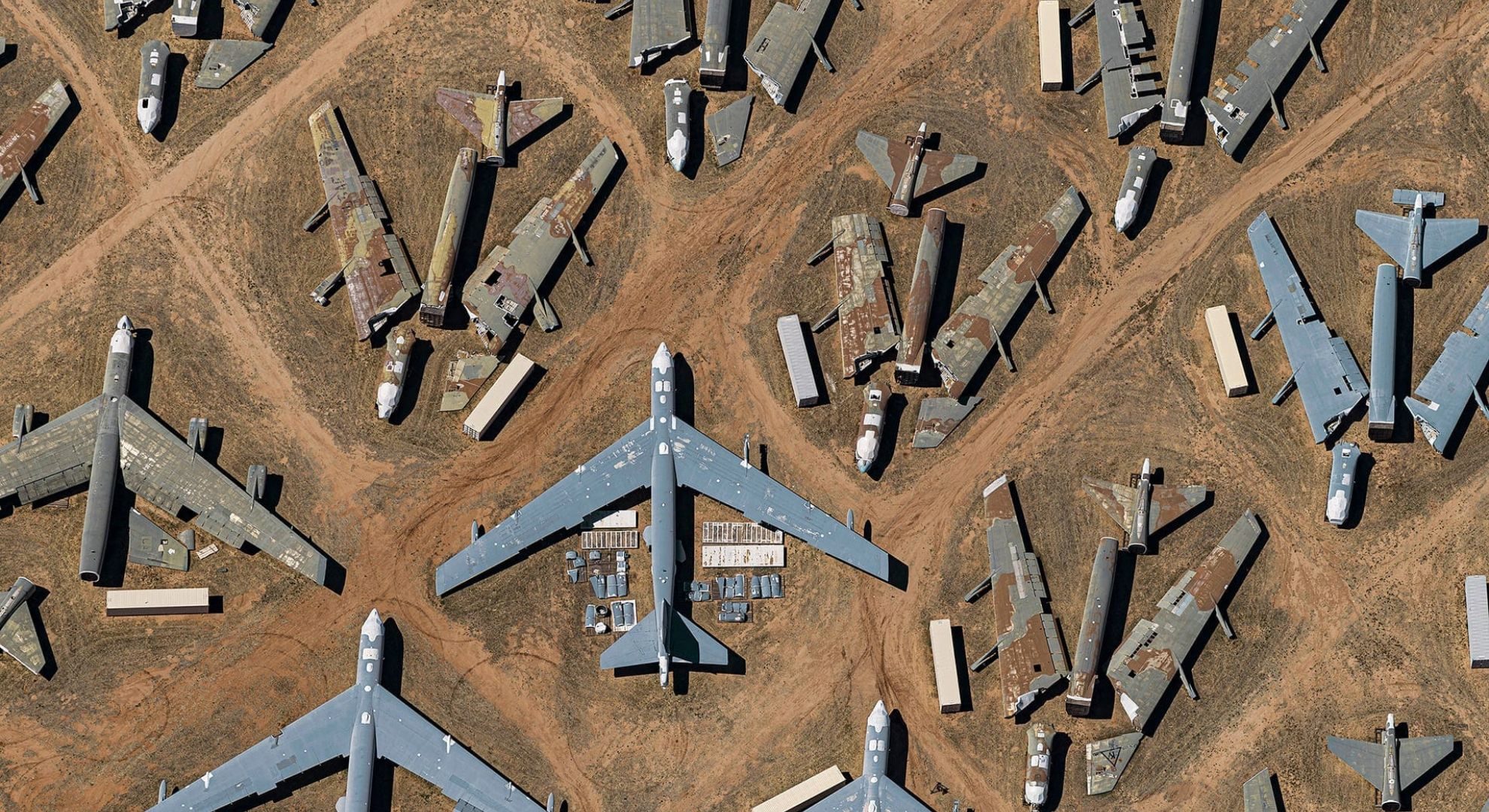
Spread out over 2,600 acres close to Tucson, Arizona, is the 309th Aerospace Maintenance and Regeneration Group (AMARG), fondly called “The Boneyard” by its members. Here’s what makes it so famous:
- Nearly 4,400 Aircraft: Imagine row upon row of retired military planes B-52 bombers, F-16 fighters, C-130 transports, and more. The Boneyard houses them all, waiting patiently for their next chapter.
- Dry Desert Conditions: The Southwestern United States provides the perfect environment for preserving aircraft. Dry air minimizes corrosion, and the hard desert ground doesn’t require paving.
- Unexpected Comebacks: Sometimes, planes destined for scrap return to service. Changing aviation markets or military needs can resurrect these dormant giants. The Boneyard becomes a temporary resting place, awaiting their return to the skies.
Commercial Aircraft and the Pandemic Effect
COVID-19’s Impact
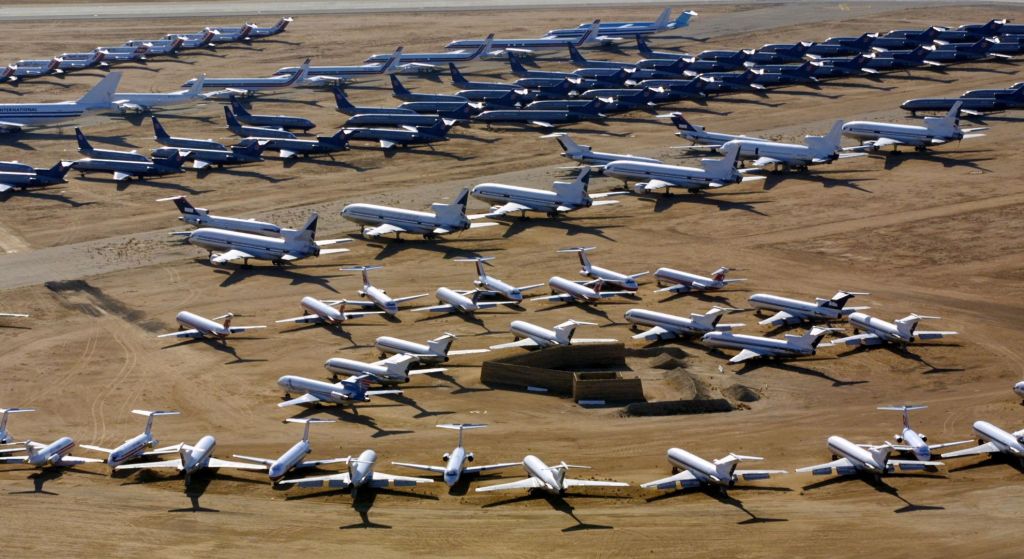
The pandemic shook the aviation industry, leaving airlines with surplus planes and nowhere to park them. Commercial aircraft storage needs skyrocketed in 2020. Some key points:
- Long-Term Storage: Initially planned for short-term storage, many planes were parked indefinitely. The pandemic’s unpredictable recovery curve caught airlines off guard.
- Preparation Challenges: Bringing stored planes back to service is more complex than flipping a switch. The longer they rest, the more maintenance hours they require. Narrowbody planes need about 40 worker hours, while widebodies demand around 100 hours.
Economic Impact of Aircraft Boneyards
This section could explore the economic benefits and implications of aircraft boneyards. It would discuss how these facilities contribute to local economies through job creation in maintenance, security, and parts recycling. Additionally, it can touch on the financial aspects of parts salvaging and resale, which provide cost-effective solutions for airlines and aircraft operators. To make the aviation sector more sustainable, this topic might also look at the more significant economic effects of increasing the longevity of aircraft components and materials.
Educational and Research Opportunities
Focusing on the educational aspect, this section could detail how aircraft boneyards are valuable resources for academic institutions and research organizations. Students and researchers can study engineering, aviation history, and even environmental science through direct access to various aircraft models and their components. It also covers collaborations between boneyards and universities for specialized projects or training programs, emphasizing how these partnerships foster innovation and learning in the aerospace sector.
Notable Boneyards Around the World
Let’s explore some global aircraft resting places:
- Alice Springs, Australia: The first large-scale Boneyard outside the United States.
- Saskatoon, Canada: Home to 23 old Fokker F-28 Fellowships.
- Teruel, Spain: A growing European boneyard.
- Cotswold Airport, UK: Air Salvage International decommissions European aircraft here.
- Davis-Monthan AFB, Arizona, USA: The Boneyard’s grand stage, where thousands of planes await their fate.
Salvaging Memories: The Art of Aircraft Restoration
Preserving Aviation Heritage

Aircraft boneyards aren’t just about storage and salvage but also hubs for restoration and preservation. Let’s explore:
- Historical Gems: Some retired planes have historical significance—war heroes, record-setters, or iconic models. Restoring these gems involves meticulous research, skilled craftsmanship, and passion.
- Reassembly Puzzles: Imagine assembling a jigsaw puzzle with thousands of pieces, each weighing tons. Restorers work tirelessly to reassemble planes, ensuring every bolt, rivet, and wire aligns perfectly.
- Functional Museums: Once restored, these planes become living museums. Visitors can touch history, sit in cockpits, and imagine the roar of engines during their glory days.
The Ghost Fleet: Secrets of Abandoned Ships and Planes
Beyond the Runway: Abandoned Aircraft
While aircraft boneyards are well-known, there’s another hidden world—the ghost fleet of abandoned planes. Here’s what you need to know:
- Forgotten Airframes: Some aircraft never make it to official boneyards. Instead, they languish in forgotten corners of airfields, remote airstrips, or dense forests. These silent sentinels bear witness to changing times.
- Nature’s Takeover: Abandoned planes become canvases for nature. Moss creeps up wings, vines entwine fuselages, and rust eats away at metal. It’s a poignant reminder of impermanence.
- Urban Exploration: Adventurous photographers and explorers seek out these relics. They capture haunting images of cockpits, faded logos, and broken windows, revealing the beauty in decay.
FAQ’s
1. What is an aircraft boneyard?
An aircraft boneyard is a storage facility for out-of-service aircraft. These locations are typically vast areas where retired or decommissioned airplanes are parked, preserved, and often dismantled for spare parts or recycling.
2. Why are aircraft stored in boneyards?
Aircraft are stored in boneyards for various reasons, including fleet downsizing, airline bankruptcies, or retirement due to age or obsolescence. Boneyards provide a space to preserve aircraft temporarily or permanently until they are either scrapped, sold for parts, or potentially returned to service.
Aircraft boneyards are more than graveyards; they’re archives of aviation history. Each plane carries stories of daring missions, cross-continental flights, and the dreams of those who once soared through the skies. So next time you see a retired plane resting in the desert sun, remember—it’s not the end; it’s a new beginning.