

The Vision Behind the NASA X-59
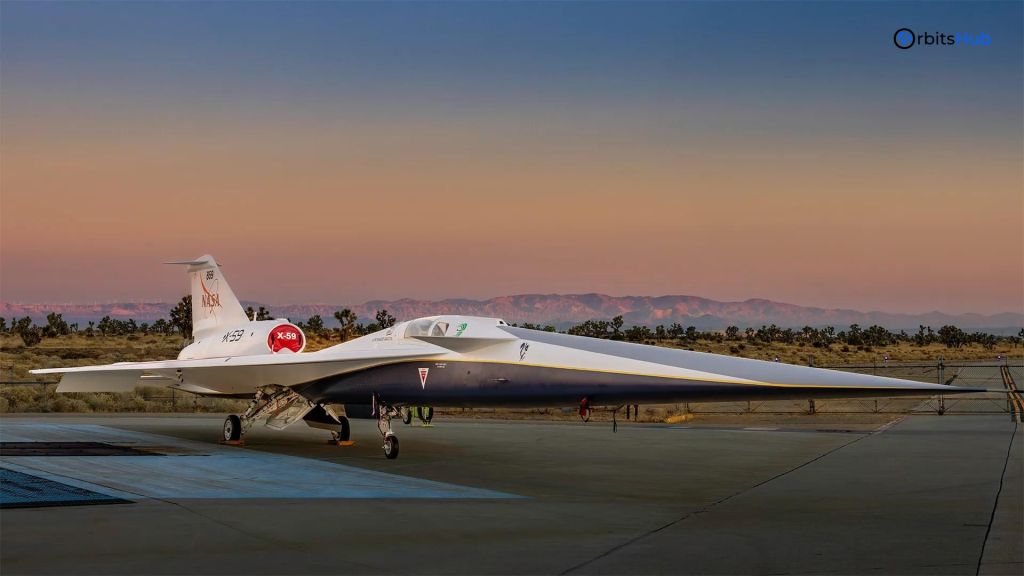
The X-59 aircraft, also known as the X-59 QueSST (Quiet Supersonic Transport), is a revolutionary project led by NASA to overcome one of the biggest challenges in supersonic flight: the sonic boom. This innovative aircraft aims to make supersonic travel over land a reality by drastically reducing the disruptive noise that has historically accompanied such high-speed travel.
The Vision Behind the NASA X-59
Revolutionizing Supersonic Travel
People wanted to find a way to get around the problems caused by the sonic boom, a loud noise like an explosion that happens when an aeroplane flies faster than sound. Concerns about noise pollution and how it affects people and animals have limited supersonic flying over land. NASA’s goal for the X-59 is to make an aeroplane that can fly faster than sound and make as little noise as a faraway thunderclap.
NASA’s Role and Partnerships
NASA is spearheading the X-59 project as part of its broader mission to advance aeronautics and revolutionize air travel. The agency has partnered with Lockheed Martin, a leader in aerospace technology, to design and build the X-59 aircraft. This collaboration combines NASA’s research capabilities with Lockheed Martin’s engineering expertise to create a groundbreaking aircraft that could redefine the future of aviation.
The NASA X-59 Design and Technology
Innovative Aerodynamic Design
One of the critical elements of the X-59’s design is its sleek, elongated shape, which helps minimize the formation of shock waves that cause the sonic boom. The aircraft’s long, narrow nose and carefully contoured surfaces are designed to shape the shock waves so they do not merge into a single, loud boom. Instead, the shock waves are spread out, resulting in a much quieter noise signature.
Advanced Materials and Construction
The X-59 incorporates advanced materials and construction techniques to achieve its aerodynamic goals. Lightweight composite materials are used extensively in the aircraft’s structure, reducing its weight and improving fuel efficiency. Additionally, these materials allow for greater flexibility in shaping the aircraft’s surfaces, which is crucial for optimizing its supersonic performance.
Cutting-Edge Avionics and Systems
The NASA X-59 has state-of-the-art avionics and control systems that ensure precise handling and stability at supersonic speeds. These systems include advanced flight controls, navigation systems, and sensors that provide real-time aircraft performance data. This information is crucial for maintaining the aircraft’s stability and ensuring a smooth, quiet flight experience.
Potential Impacts on the Aviation Industry
Opening New Markets for Supersonic Travel
As long as the X-59 project goes well, it could lead to a new age of commercial travel faster than sound. By demonstrating that supersonic flight can be achieved without the disruptive sonic boom, NASA and its partners hope to lift the current restrictions on supersonic travel over land. This would open up new markets for airlines, allowing passengers to travel faster and more efficiently between destinations.
Environmental Considerations
While the X-59 aims to reduce noise pollution, environmental considerations must be addressed. Supersonic aircraft typically consume more fuel than subsonic planes, leading to higher emissions of greenhouse gases. However, the advancements in aerodynamic design and materials used in the X-59 could mitigate some of these environmental impacts. Additionally, ongoing research into sustainable aviation fuels and other green technologies could further enhance the ecological sustainability of supersonic travel.
Economic and Social Benefits
Developing and deploying supersonic aircraft like the X-59 could have significant economic and social benefits. Faster travel times would boost productivity and economic growth by enabling more efficient business travel and trade. Additionally, the ability to travel quickly over long distances could enhance cultural exchange and tourism, bringing people and communities closer together.
The Future of NASA X-59 Supersonic Travel
Regulatory Changes and Public Acceptance
Regulatory changes will be necessary for the X-59 and other supersonic aircraft to become a common sight in the skies. Current regulations that restrict supersonic flight over land are based on concerns about noise pollution. NASA’s research with the X-59 aims to provide data that will inform new rules, allowing for quieter supersonic travel. A big part of public acceptance will also be reassuring people that the noise from future supersonic planes won’t bother them.
Technological Advancements and Innovation
The X-59 project is just the beginning of what could be a wave of innovation in supersonic travel. Supersonic planes will become quieter and more efficient as technology advances and new materials and designs are developed. A new generation of commercial airliners could fly supersonic without the limitations that have prevented such travel.
Expanding Horizons
The vision behind the X-59 is not just about reducing noise; it’s about expanding the horizons of what is possible in aviation. The X-59 project aims to inspire further innovation and exploration in aeronautics by pushing the boundaries of technology and design. This spirit of innovation could lead to breakthroughs that will shape the future of air travel for generations to come.
A visionary vision for aviation, the X-59 aircraft aims to overcome supersonic flight difficulties and enable quicker, quieter, and more efficient air travel. NASA and its partners are developing supersonic land flight using inventive design, superior materials, and cutting-edge technology. The aviation industry, environment, and society could be significantly affected, promising a more connected world.
The X-59 project highlights the potential of innovative ideas and the need to push future feasibility. We can make supersonic flight a reality for everyone by adopting new technologies and daring ideas.
Explore the fascinating world of aviation and maritime advancements by visiting the OrbitsHub. Keep up with the latest changes in the field and find out how OrbitsHub can help you with your marine and flight consulting needs.