The Indian Air Force (IAF) intervenes at these crucial times, its transport fleet serving as the country’s aerial lifeline. The unsung heroes of the military, these workhorse aircraft ensure the safe and efficient transport of personnel, supplies, and equipment across great distances. However, the IAF’s future in airborne logistics is flexible. We’ll also look at how these developments support India’s strategic mobility and help to protect its interests. So grab a seat, and get ready to plunge deep into the world of Indian Air Force transport aircraft—the core of the country’s aerial power!
The Backbone of Military Mobility: IAF’s Transport Fleet
The IAF’s transport fleet comprises diverse fixed-wing aircraft, each catering to specific needs. Here’s a breakdown of the key categories:
- Heavy Lifters: These giants, like the C-17 Globemaster III, boast exceptional payload capacities and long ranges. They are ideal for transporting large combat vehicles, humanitarian aid during disaster relief operations, and deploying troops for overseas missions.
- Medium Lifters: Workhorses like the Il-76 and C-130J Super Hercules provide a balance between payload and range. They excel at transporting troops, equipment, and supplies over significant distances within India and neighbouring regions.
- Light Transport Aircraft: The agile Dornier Do 228 is ideal for connecting outlying outposts, casualty evacuations, and special operations missions across the country.
Looking Ahead: The Evolving Landscape of IAF Transport
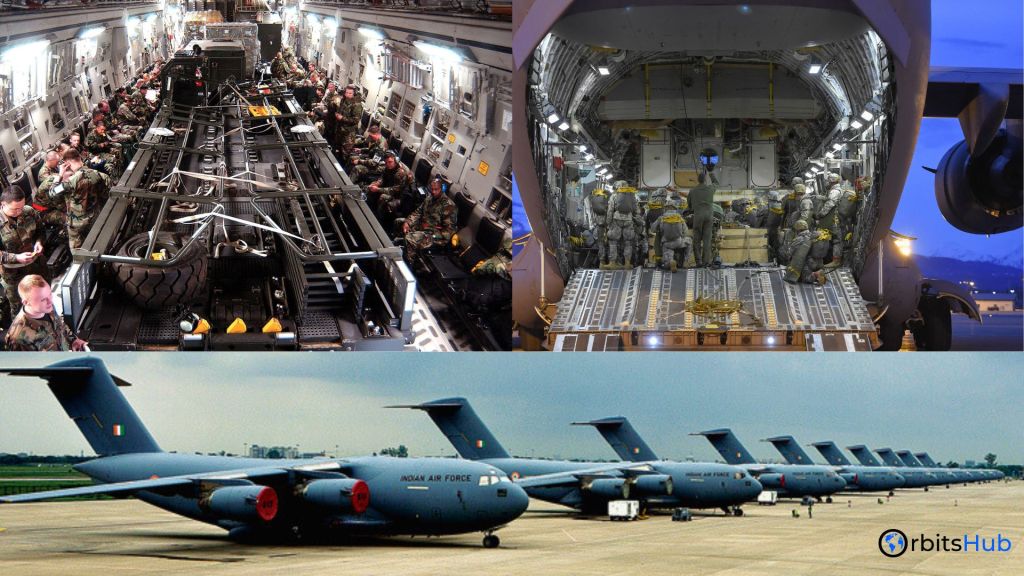
The future of airborne logistics for the IAF is taking shape through several key trends:
- Modernization and Indigenization: Modernizing its fleet is a priority for the IAF. Operational efficiency and strategic reach will improve by obtaining modern platforms like the Airbus C-295MW and indigenous alternatives like the MTA.
- Technological Integration: New-age technologies like Artificial Intelligence (AI) and automation promise to revolutionize IAF logistics. AI-powered route optimization can streamline cargo movement, while automated loading and unloading systems can expedite turnaround times.
- Enhanced Connectivity: The IAF is actively exploring improving its connectivity with remote areas and strategic locations. This could involve developing new airfields in strategically important regions and adopting technologies that enable landings on unprepared surfaces.
The Road to a Self-Reliant Future
The IAF aspires to achieve self-reliance in the domain of military transport aircraft. This ambition is reflected in its push for developing the MTA, a medium-lift transport aircraft designed and manufactured indigenously by Hindustan Aeronautics Limited (HAL). The successful induction of the MTA will bolster India’s airlift capabilities and strengthen the domestic aerospace industry.
The Geopolitical Landscape and its Impact on IAF Transport
This section will explore how the evolving geopolitical situation in India’s neighbourhood influences the IAF’s transport needs. You could discuss:
- Border disputes and regional tensions: How potential conflicts with neighbouring countries could necessitate rapid troop deployments and increased reliance on airlift capabilities.
- Humanitarian missions and disaster relief: The IAF’s role in providing critical support during natural disasters in the region and how its transport fleet is crucial for delivering aid effectively.
- Strategic partnerships and international cooperation: Collaboration with other countries for joint military exercises and peacekeeping missions requires robust airlift capabilities.
The Economic Impact of IAF Transport Aircraft

This section will explore the economic implications of the IAF transport aircraft. You could explore:
- Boosting domestic aerospace industry: Indigenous aircraft development like the MTA boosts India’s aviation self-reliance, provides jobs, and advances technology.
- Disaster response and economic recovery: The IAF’s swift relief supply deployment during natural catastrophes reduces economic losses and speeds recovery.
- Trade and commerce: Military transport aircraft can facilitate the movement of critical goods and materials, supporting economic activity and trade within the country.
The IAF transport fleet is the backbone of India’s military mobility. By embracing modernization, technological advancements, and self-reliance, the IAF is well-positioned to ensure the swift and secure delivery of troops and supplies, safeguarding India’s interests within its borders and on the global stage.
Are you considering exploring how OrbitsHub.com can empower your organization’s maritime and aviation logistics strategies? OrbitsHub is a premier consulting firm with a history of helping clients reach their strategic goals and streamline their business processes. Get in touch with OrbitsHub today and unlock the potential of next-generation airborne logistics!