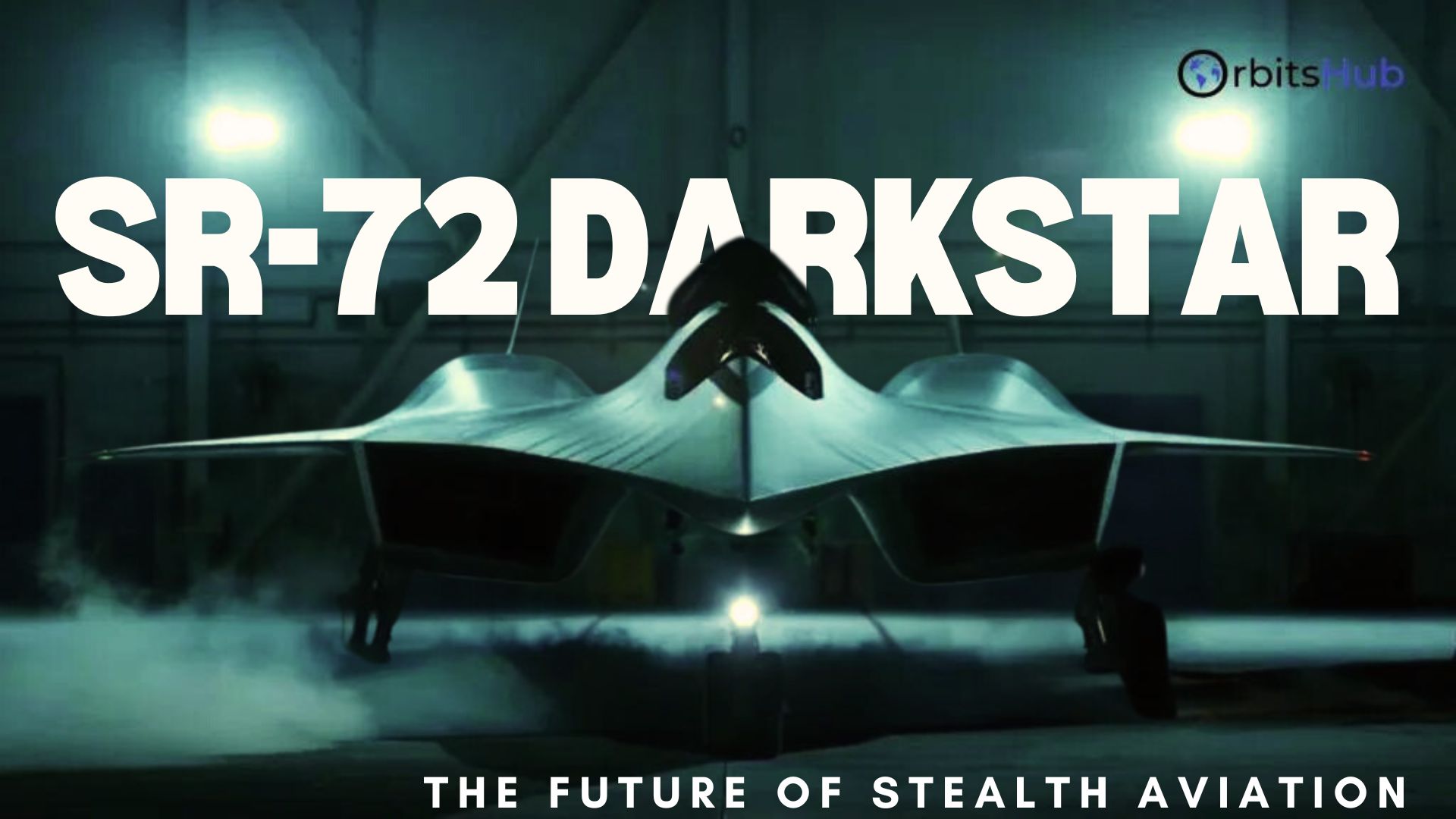
Soaring to New Heights: The Fascinating World of the SR-72 Darkstar
Imagine flying from Delhi to London in hours, cutting through the skies at unimaginable speeds. This might sound like science fiction, but the SR-72 Darkstar, the rumored successor to the legendary SR-71 Blackbird, could make this a reality. But what exactly is the SR-72? Is it just a product of imagination, or is there some truth behind this hypersonic marvel?
The Enigmatic SR-72 Darkstar: Myth or Reality?

The SR-72 Darkstar first grabbed attention in the 2022 blockbuster “Top Gun: Maverick,” where Tom Cruise’s character pilots a fictional hypersonic aircraft. The Darkstar in the movie was purely a creation for cinematic excitement. Yet, real-life rumors about the SR-72 project inspired it. Lockheed Martin, the aerospace giant behind the iconic SR-71, has been tight-lipped about the SR-72. Still, the ongoing speculation hints that this aircraft might not be a Hollywood fantasy.
Reports about the SR-72 have been circulating since the late 2000s. It’s a hypersonic aircraft capable of flying at Mach 6, which is over 4,000 mph. To put this into perspective, that’s nearly double the speed of the SR-71, which already flew at an impressive Mach 3.2. The secrecy surrounding the SR-72 makes it challenging to confirm its existence. Still, considering Lockheed Martin’s history of pushing aviation boundaries, the SR-72 is on the horizon.
The Power of Hypersonic Speed
Hypersonic speed, which is faster than Mach 5, has a lot of uses, especially in the military. Think about an airplane that could fly anywhere on Earth in just a few hours. This is what supersonic technology holds out for us.
For military operations, the advantages are evident:
- Unmatched Response Times: With the ability to travel at Mach 6, the SR-72 could quickly deploy to hotspots around the globe, providing a rapid response to emerging threats.
- Advanced Intelligence Gathering: The speed of the SR-72 would allow it to reach swiftly and survey areas of interest, providing real-time intelligence crucial for military decision-making.
- Evasion of Defenses: The SR-72 could outrun and outmaneuver existing air defense systems at hypersonic speeds, making it nearly invincible.
The Technological Hurdles
While the potential of the SR-72 is undoubtedly exciting, there are significant technological challenges that must be overcome:
- Engine Technology: Achieving hypersonic speeds requires advanced engines like scramjets capable of handling the immense heat generated at these velocities. Developing such engines for sustained flight is a formidable challenge.
- Material Science: The SR-72 must be constructed from materials that can withstand hypersonic flight’s extreme heat and stress.
- Thermal Management: Managing the enormous heat generated at hypersonic speeds is crucial for the performance and safety of any onboard systems or personnel.
- Cost and Development Time: Building such a revolutionary aircraft requires significant financial investment and time, which are manageable hurdles.
The SR-72 Darkstar: Changing the Game
Imagine a new kind of aircraft that could change how military operations are done—the SR-72 Darkstar is that kind of aircraft. It’s not just fast; it’s incredibly fast. With hypersonic speed, it can strike a target before the enemy even knows what’s happening. But that’s not all—it’s also designed to be nearly invisible to radar, making it a stealthy and powerful tool for gathering information in dangerous areas.
The SR-72 can collect real-time data from the most risky places without putting pilots or other personnel in harm’s way. This capability makes it much harder for adversaries to keep up.
The Global Hypersonic Race: What It Means
- The SR-72 is part of a global race for hypersonic technology.
- Countries like China and Russia are also developing their own advanced aircraft.
- This has sparked a new kind of arms race focused on speed, stealth, and innovation.
- The SR-72 could give the United States a significant advantage, but it also raises concerns.
- International agreements are needed to regulate and control hypersonic technologies as more countries create them.
Looking Beyond: The Future of Hypersonic Technology

While the SR-72 is primarily envisioned as a military reconnaissance aircraft, its potential applications could extend far beyond the battlefield:
- High-Speed Civilian Travel: Hypersonic technology could revolutionize commercial air travel, reducing travel times between continents to just a few hours.
- Space Exploration: The technology could pave the way for more efficient and reusable launch vehicles, making space exploration more accessible and less costly.
- Scientific Research: Hypersonic platforms could be used for high-speed scientific research, opening up new possibilities in atmospheric and aerospace studies.
The SR-71 Legacy and the Path Forward
The SR-71 Blackbird was an engineering marvel of its time, setting speed records and conducting vital reconnaissance missions during the Cold War. Its technological advancements, such as titanium construction and revolutionary engine design, laid the groundwork for what could be the next giant leap in aviation—the SR-72 Darkstar.
The Future of Flight
As we stand on the brink of a new era in aviation, the SR-72 Darkstar represents the possibility of reaching unprecedented speeds and capabilities. Many concerns remain, but hypersonic flight pushes the limits of what’s conceivable, bringing us closer to a future where the skies are a domain to conquer.