The F-16 Fighting Falcon has captivated audiences and frightened opponents for nearly four decades. This iconic American fighter jet has become synonymous with aerial dominance. But what exactly makes the F-16 so unique? In this comprehensive guide, we’ll dissect the F-16’s anatomy, exploring its speed, agility, and weaponry in an easy-to-understand way. So, buckle up and prepare to be amazed by the engineering marvel of the F-16 Fighting Falcon.
Maneuvering Marvel: The Aerodynamics of the F16 Fighter Jet
The F-16’s agility is what truly sets it apart. Unlike its heavyweight counterparts, the F-16 is lightweight, prioritizing manoeuvrability over raw power. This skill comes from a combination of factors:
- Small size: Compared to larger fighter jets, the F-16’s compact design reduces weight and drag, allowing quicker turns and sharper climbs.
- Advanced aerodynamics: The F-16 incorporates a delta wing design, which provides exceptional lift at high speeds and angles of attack. This means the F16 Fighter Jet can perform tight manoeuvres without losing stability.
- Fly-by-wire flight control system: This innovative technology replaces traditional mechanical controls with electronic ones. This allows for smoother and more precise aircraft control, maximizing the pilot’s effectiveness during aerial combat.
The result? A fighter jet that can outmanoeuvre most opponents, giving pilots the edge in a dogfight.
March 2 Machine: The F16 Fighter Jet Engine and Performance
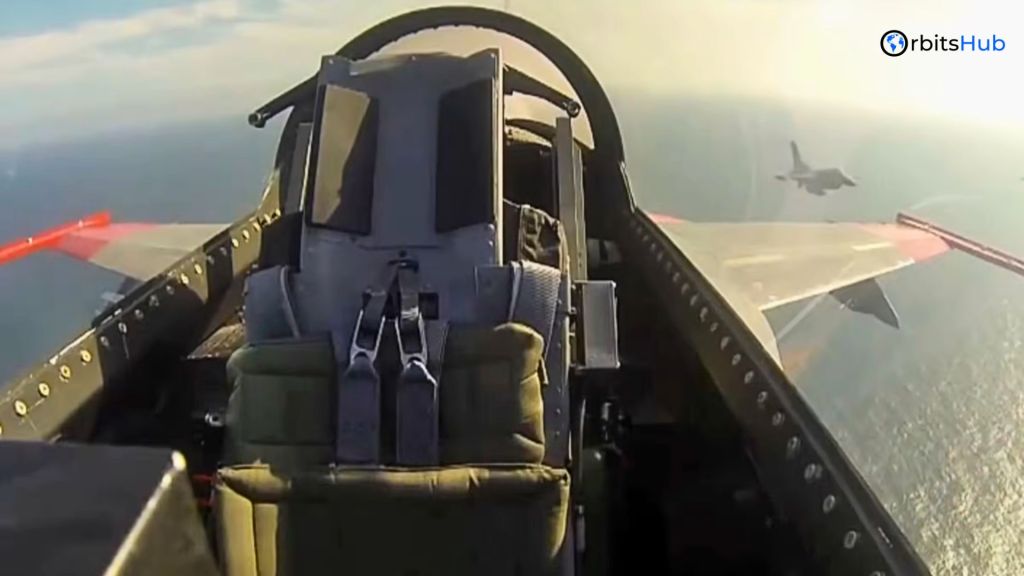
Sure, agility is essential, but what about raw power? The F-16 isn’t a slouch in this department, either. Here’s what makes the F-16 an actual speed demon:
- Powerful engine: The F-16 has a single, powerful turbofan engine. Depending on the variant, the engine can generate up to 29,000 pounds of thrust, propelling the aircraft to supersonic speeds exceeding Mach 2 (twice the speed of sound).
- The high thrust-to-weight ratio compares the engine’s thrust to the aircraft’s weight. A high ratio, like the one in the F-16, translates to excellent acceleration and a quick climb rate. This allows the F-16 to reach high altitudes quickly, giving pilots a tactical advantage.
The combination of a powerful engine and a lightweight design makes the F-16 a force to be reckoned with.
Arsenal in the Sky: The F16 Fighter Jet Weaponry
The F-16 isn’t just about fancy flying. It’s a multirole fighter, meaning it can handle various combat situations. Here’s a look at its offensive capabilities:
- Internal M61 Vulcan Cannon: A six-barreled cannon mounted in the left wing root, providing a rapid stream of fire for close-quarters combat.
- Multiple hardpoints: These are external mounting points on the wings and fuselage where the F-16 can carry a diverse array of weaponry, including:
- Air-to-air missiles for taking down enemy aircraft.
- Air-to-surface missiles for engaging ground targets.
- Laser-guided bombs for precision strikes.
- Reconnaissance pods for gathering intelligence.
This versatility makes the F-16 adaptable to various missions, from air superiority battles to ground attack operations.
From Falcon to Future: The Legacy of the F16 Fighter Jet
The F-16 has been a mainstay of the US Air Force and numerous allied air forces for over 40 years. It’s seen combat in multiple conflicts and has consistently proven its effectiveness. Here’s why the F-16 remains relevant:
- Continuous upgrades: The F-16 has undergone numerous upgrades throughout its service life, incorporating new avionics, radar systems, and weaponry. This ensures it stays competitive against evolving threats.
- Cost-effectiveness: Compared to other fighter jets, the F-16 offers a good balance of capability and affordability, making it an attractive option for many air forces.
- Global presence: With over 4,600 units built, the F-16 is the world’s most widely used fighter jet. This extensive network facilitates spare parts availability, training, and maintenance support.
The F-16’s legacy includes innovation, adaptability, and unwavering performance.
F-16 in Action: A Look at Notable Missions and Combat History

This section will delve into the F-16’s practical application. You could discuss specific conflicts where the F-16 played a pivotal role, highlighting its strengths and how it impacted the outcome.
Here are some potential sub-topics to explore:
- Desert Storm and the F-16’s role in air superiority.
- The F16 Fighter Jet is used in close air support missions in Afghanistan and Iraq.
- The challenges and adaptations of the F-16 in different terrains and scenarios.
Beyond the Fighter Pilot: The Team Behind the F-16
This section would shift focus from the aircraft to the human element that keeps it operational. Here, you could explore the various personnel crucial for the F-16’s success, including:
- Ground Crew: Discuss the maintenance teams that ensure the F-16 is mission-ready.
- Weapons Officers: Explain these specialists’ role in selecting and deploying the F-16’s weaponry.
- Air Traffic Controllers: Highlight the importance of communication and coordination between pilots and ground personnel.
The F-16 Fighting Falcon‘s impact on aviation is undeniable. Its agility, power, and adaptability have made it a mainstay in air forces worldwide. With continuous upgrades ensuring its relevance, the F-16 looks to remain a dominant force for years. Whether you’re an aviation enthusiast or simply curious about the marvels of modern technology, the F-16’s story inspires awe and admiration.
OrbitsHub, a leading consultancy firm in the maritime and aviation sectors, can help you navigate the complexities of these ever-evolving industries. Visit Orbitshub to learn more about how OrbitsHub’s expertise can propel your business forward.