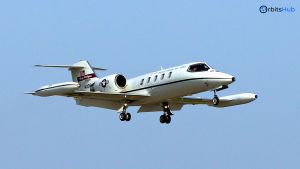
The M 346 aircraft, developed by the Italian aerospace company Leonardo, is a state-of-the-art military training aircraft. Designed to prepare pilots for advanced combat aircraft, the M 346 is recognized for its versatility, cutting-edge technology, and superior performance. The M 346 aircraft will be the focus of this blog post as we examine its design, performance, avionics, and operational capabilities in great depth. This in-depth analysis will illuminate this extraordinary plane for everyone interested in flying or working in the industry.
Overview of the M 346 Aircraft
Design and Development
The M 346 aircraft, initially a joint venture between Aermacchi and Yakovlev, evolved into a purely Italian project following the split between the two companies. Its development aimed to create a training aircraft that closely mimics the handling characteristics of modern fighter jets, providing an effective transition platform for pilots moving to frontline combat aircraft.
Key Features
- Advanced Aerodynamics: The M 346 features a swept wing design with leading-edge extensions, offering excellent manoeuvrability and high-angle-of-attack performance.
- Twin-Engine Configuration: Equipped with two Honeywell F124-GA-200 engines, the M 346 provides redundancy and enhanced safety.
- Modern Avionics Suite: Incorporates state-of-the-art avionics, including a glass cockpit with multi-function displays, head-up display (HUD), and advanced flight control systems.
Detailed Specifications M 346 Trainer Aircraft
Airframe and Dimensions
Airframe
- Material: Primarily composed of lightweight composite materials and aluminium alloys.
- Structure: High-strength airframe designed for both durability and ease of maintenance.
- Landing Gear: Retractable tricycle landing gear with twin wheels on the main landing gear.
Dimensions
- Length: 37.07 ft (11.30 m)
- Wingspan: 31.73 ft (9.67 m)
- Height: 15.52 ft (4.73 m)
- Wing Area: 253.5 sq ft (23.5 sq m)
Performance
Speed and Altitude
- Maximum Speed: Mach 1.15 (870 mph, 1,400 km/h) at altitude
- Service Ceiling: 45,000 ft (13,716 m)
- Rate of Climb: 22,000 ft/min (112 m/s)
Range and Endurance
- Ferry Range: 1,058 nm (1,960 km) with external fuel tanks
- Combat Radius: 450 nm (833 km)
- Endurance: Approximately 2 hours 30 minutes without external tanks
Propulsion
Engines
- Type: Two Honeywell F124-GA-200 turbofan engines
- Thrust: Each engine produces 6,280 lbs (27.9 kN) of thrust
- Afterburner: Not equipped with afterburners, providing better fuel efficiency for training missions

Avionics and Systems
Cockpit
- Configuration: Tandem seating for instructor and trainee
- Displays: Three large multi-function displays (MFDs) and a head-up display (HUD)
- Controls: Hands-on-throttle-and-stick (HOTAS) control system
Avionics
- Navigation: Integrated GPS/INS navigation system
- Communication: Secure UHF/VHF communication radios
- Sensors: Radar warning receiver (RWR) and laser warning system (LWS)
Armament and Payload
Hardpoints
- Total: 9 hardpoints (6 underwing, 2 wingtip, and 1 centerline)
- Payload Capacity: Up to 6,614 lb (3,000 kg)
Weapons
- Air-to-Air Missiles: AIM-9 Sidewinder, AIM-120 AMRAAM
- Air-to-Ground Weapons: AGM-65 Maverick, guided bombs
- Gun Pod: Optional 12.7 mm or 20 mm gun pod
Operational Capabilities
Training Roles
- Advanced Pilot Training: Mimics the performance and avionics of fourth and fifth-generation fighters.
- Lead-In Fighter Training (LIFT): Prepares pilots to transition to advanced fighter aircraft.
- Tactical Training: Capable of simulating combat scenarios with various weapons and systems.
Secondary Roles
- Light Attack: Can be armed for close air support and counter-insurgency missions.
- Reconnaissance: Equipped with sensor pods for surveillance and reconnaissance operations.
Maintenance and Support
Maintainability
- Design: Modular design allows for easy access to components and systems.
- Diagnostics: Built-in test equipment (BITE) for real-time diagnostics and troubleshooting.
- Support: Leonardo provided an extensive support network for spares, training, and technical assistance.
Reliability
- Engine Reliability: The reliability of Honeywell F124 engines is proven, and they have low maintenance requirements.
- Airframe Durability: Designed for a long service life with minimal structural fatigue issues.
Comprehensive Capabilities of the M 346 Aircraft
The M 346 aircraft is a premier training platform, offering advanced capabilities that resemble modern combat aircraft. Its impressive specifications, superior aerodynamics, cutting-edge avionics, and versatile operational roles make it an invaluable asset for air forces worldwide. For those interested in learning more about the M 346 aircraft and other aviation advancements, explore the comprehensive resources available on the OrbitsHub website.
For more in-depth information and professional consultancy on maritime and aviation topics, visit OrbitsHub.