The Russian Navy, known as the Военно-морской флот Российской Федерации (VMF), is one of the world’s largest and most powerful naval forces. With a rich history dating back to the 17th century, the Russian Navy has evolved to meet the demands of modern warfare. Today, Russian Navy ships have advanced technology and can execute various missions, from protecting national interests to projecting power globally. In this blog, we will delve into these ships’ roles in modern warfare, examining their capabilities, strategic objectives, and the geopolitical implications of their operations.
The Structure of the Russian Navy
Overview of the Fleet
The Russian Navy comprises several fleets, each responsible for different regions and strategic objectives. The main fleets include:
- Northern Fleet: Operating in the Arctic and North Atlantic, this fleet protects Russia’s northern borders and ensures access to the Arctic’s resources.
- Pacific Fleet: Covering the vast Pacific Ocean, this fleet focuses on countering threats from the East and securing Russia’s maritime interests in Asia.
- Black Sea Fleet: With a strategic position in the Black Sea, this fleet plays a significant role in projecting power in the Mediterranean and supporting operations in the Middle East.
- Baltic Fleet: Operating in the Baltic Sea, this fleet is essential for defending Russia’s western borders and maintaining a presence in Northern Europe.
- Caspian Flotilla: Based in the landlocked Caspian Sea, this flotilla is vital for regional security and safeguarding energy routes.
Types of Ships
Russian Navy ships can be broadly categorized into several types, each designed for specific roles and missions:
- Aircraft Carriers: As the fleet’s flagship, aircraft carriers provide air support and power projection capabilities.
- Submarines: These vessels are critical for nuclear deterrence and covert operations, including ballistic missile submarines (SSBNs) and attack submarines (SSNs).
- Destroyers and Frigates: Equipped with advanced weaponry and sensors, these ships are versatile platforms for anti-air, anti-surface, and anti-submarine warfare.
- Corvettes and Patrol Boats: Smaller and more agile, these vessels are ideal for coastal defence and littoral operations.
- Amphibious Ships: These ships are designed to transport and deploy ground forces, enable amphibious assaults, and support expeditionary missions.
Strategic Roles of Russian Navy Ships
Power Projection and Deterrence
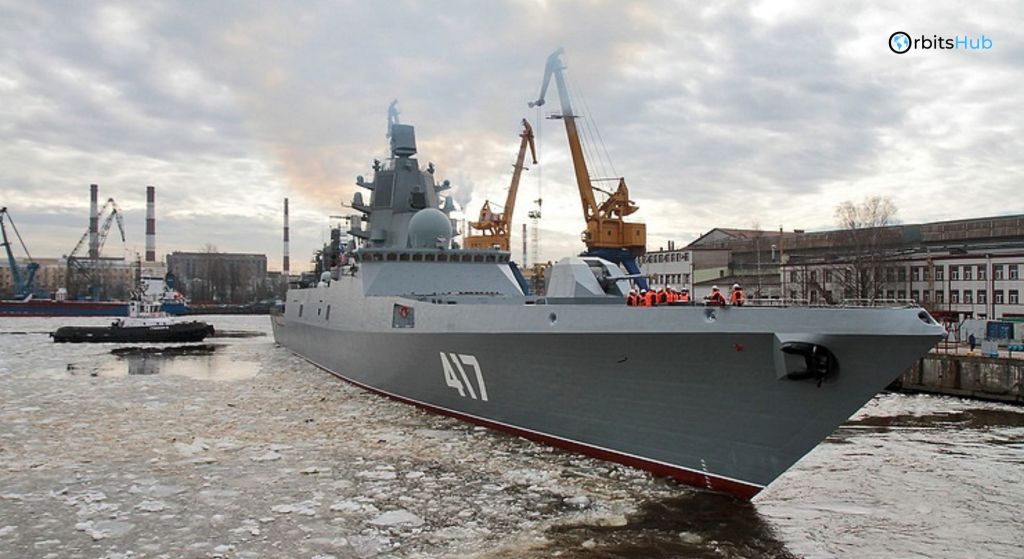
One of the primary roles of Russian Navy ships is to project power and deter potential adversaries. This is achieved by deploying advanced warships and submarines to critical strategic areas. For instance, the presence of Russian submarines armed with nuclear missiles serves as a powerful deterrent against any potential nuclear threat. Additionally, Russian Navy ships regularly conduct naval exercises and patrols in international waters, showcasing their capabilities and asserting Russia’s maritime presence.
Protecting National Interests
Russian Navy ships play a crucial role in protecting the nation’s maritime interests, including securing naval trade routes, safeguarding offshore resources, and defending territorial waters. The Northern Fleet, for example, is tasked with ensuring the security of the Arctic region, where Russia has significant economic and strategic interests. Similarly, the Pacific Fleet protects Russia’s interests in the resource-rich Asia-Pacific region.
Supporting Ground Operations
Integrating naval and ground forces is essential for achieving strategic objectives in modern warfare. Russian Navy ships provide crucial support to ground operations through amphibious assaults, logistics, and fire support. Amphibious ships, equipped with landing craft and helicopters, enable the rapid deployment of ground forces to contested areas. Destroyers and frigates, with their advanced artillery and missile systems, provide fire support to ground troops during operations.
Intelligence, Surveillance, and Reconnaissance (ISR)
The ability to gather and process intelligence is critical in modern warfare. Russian Navy ships are equipped with advanced sensors and communication systems, enabling them to conduct Intelligence, Surveillance, and Reconnaissance (ISR) missions effectively. These capabilities allow the Russian Navy to monitor potential threats, track enemy movements, and gather critical information for decision-making. Submarines, in particular, play a vital role in covert surveillance and intelligence gathering.
Technological Advancements in Russian Navy Ships
Advanced Weaponry
Modern Russian Navy ships are equipped with state-of-the-art weaponry, enhancing their combat capabilities. Some of the notable advancements include:
- Kalibr Cruise Missiles: These long-range missiles can be launched from various platforms, including submarines, surface ships, and aircraft. They can strike targets with high precision, making them a formidable weapon in Russia’s arsenal.
- Hypersonic Missiles: Russia has been developing hypersonic missiles like the Zircon, which can travel at speeds exceeding Mach 5. These missiles are designed to penetrate advanced missile defence systems, providing a significant strategic advantage.
- Anti-Ship Missiles: Russian Navy ships have advanced anti-ship missiles, such as the P-800 Oniks and the Kh-35, which can accurately target and destroy enemy vessels.
Stealth Technology
Modern Russian Navy ships incorporate stealth technology to enhance survivability and operational effectiveness. These technologies reduce the vessels’ radar, infrared, and acoustic signatures, making them harder to detect and track. Stealth features are essential for submarines and surface combatants operating in contested environments.
Cyber Warfare Capabilities
Cyber warfare has become integral to modern military operations in the digital age. Russian Navy ships have advanced cyber warfare capabilities, enabling them to conduct offensive and defensive cyber operations. These capabilities allow the Russian Navy to disrupt enemy communications, gather intelligence, and protect its networks from cyber threats.
Geopolitical Implications: Navy Russia
Influence in the Arctic
The Arctic region is strategically vital to Russia, as it has vast natural resources and critical shipping routes. The Russian Navy’s Northern Fleet plays a crucial role in asserting Russia’s presence in the Arctic, conducting regular patrols, and participating in joint exercises with other Arctic nations. This presence protects Russia’s economic interests and strengthens its regional geopolitical influence.
Mediterranean and Middle East
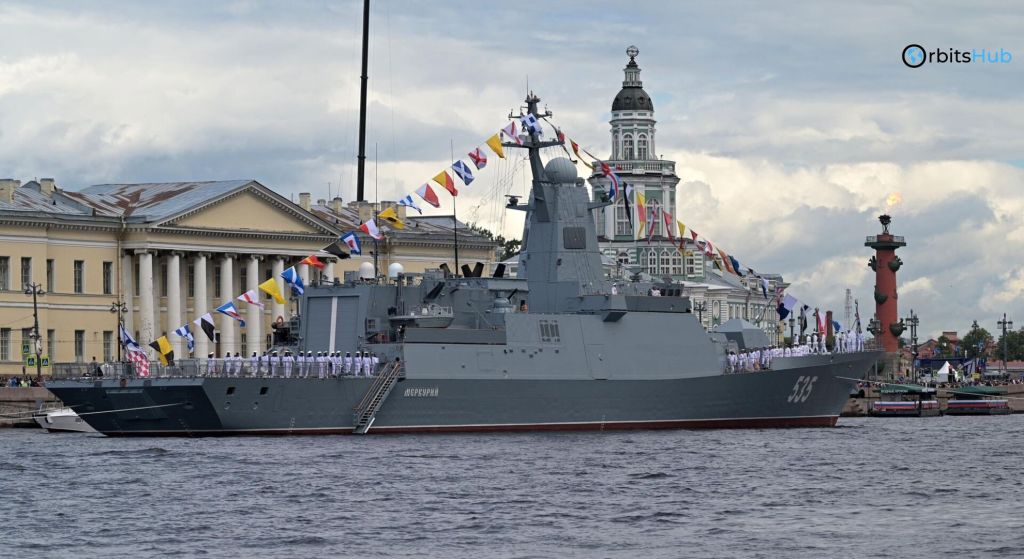
The Black Sea Fleet and other Russian Navy ships are vital in projecting Mediterranean power and supporting Middle East operations. Russia’s naval base in Tartus, Syria, serves as a strategic foothold, enabling it to conduct operations and influence the region. The presence of Russian Navy ships in the Mediterranean also provides a counterbalance to NATO’s naval forces.
Asia-Pacific Presence
With China’s rise and increasing tensions in the Asia-Pacific region, the Russian Navy’s Pacific Fleet is essential for maintaining stability and protecting Russia’s interests. Regular naval exercises and patrols in the area demonstrate Russia’s commitment to security and cooperation with its regional partners.
Challenges and Future Developments: Ships in Russian Navy
Budget Constraints
Despite its formidable capabilities, the Russian Navy faces budget constraints and resource allocation challenges. Maintaining and modernizing a large fleet requires significant investment, and economic challenges can impact the pace of development and acquisition of new ships and technologies.
Technological Gaps
While the Russian Navy has made significant advancements, it still faces technological gaps compared to some Western navies. Continued investment in research and development is crucial to bridge these gaps and ensure the Russian Navy remains competitive in modern warfare.
International Relations
Geopolitical tensions and international relations significantly shape the Russian Navy’s operations and strategies. Navigating these complexities requires careful diplomacy and strategic planning to avoid conflicts and maintain global stability.
Russian Navy ships play a multifaceted role in modern warfare, from projecting power and deterring adversaries to protecting national interests and supporting ground operations. Equipped with advanced technology and weaponry, these ships can execute various missions in various world regions. As geopolitical dynamics continue to evolve, the Russian Navy will remain a critical instrument of national power, ensuring Russia’s maritime security and influence on the global stage.
Explore the OrbitsHub website to understand better the strategic importance of naval forces and other maritime and aviation consultancy aspects. Discover how OrbitsHub can provide expert insights and solutions for marine and aviation needs.