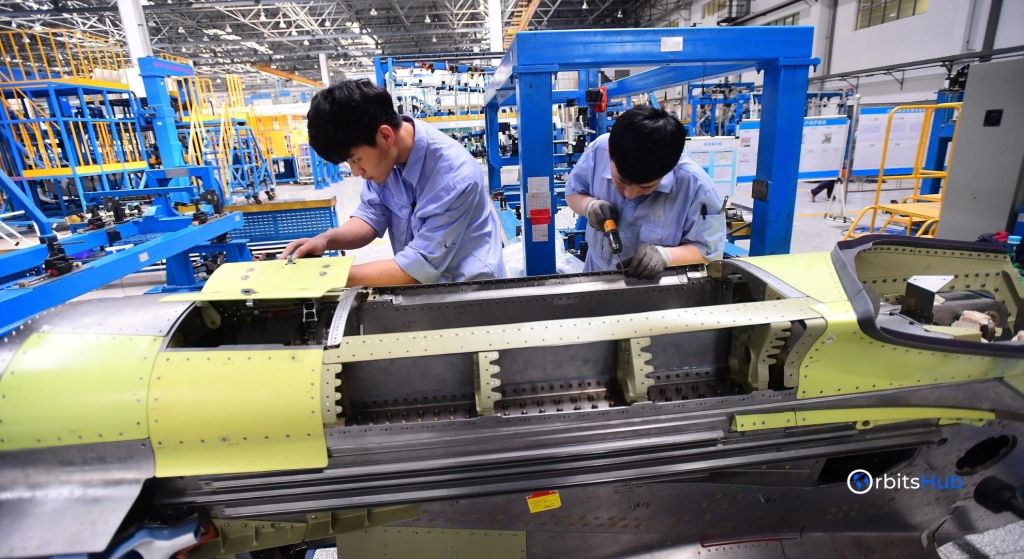
China has unveiled a new set of export control measures in a strategic move aimed at fortifying national security interests and upholding international non-proliferation commitments. Slated to take effect on July 1st, these regulations will govern the export of specific aviation and aerospace equipment and technologies, requiring exporters to obtain licenses for designated items.
Safeguarding National Interests
The Ministry of Commerce, General Administration of Customs, and Central Military Commission’s equipment development department published the announcement demonstrating China’s dedication to national security and interests. The nation implements export controls to balance legitimate trade and risk from sensitive technology proliferation.
Scope of Controlled Items
The export control regime will encompass a broad range of aviation and aerospace products, including:
- Aircraft and aerospace engines and structural components
- Engine manufacturing-related equipment, software, and technologies
- Tools, moulds, fixtures, and other processing equipment utilized in the production of specialized materials like “superplastic” alloys bonded with titanium, aluminium, and their respective alloys

Additionally, the regulations will extend to technologies involved in developing, manufacturing, and utilizing such equipment, encompassing design drawings, process specifications, processing procedures, simulation data, and related technical documentation.
Reciprocal Trade Restrictions
China tightened aerospace export regulations amid rising tensions and retaliatory trade restrictions with Washington. Both governments have restricted the export of national security-critical goods, technologies, and equipment.
Beijing has sanctioned American aerospace and defence companies for selling arms to Taiwan, which China claims as its territory. The US also oversees exports of aviation gas turbine engines, some aircraft and instrumentation, navigation equipment, and related systems.
Balancing Trade and Security: Aerospace Equipment
While the overall impact of these new export controls remains uncertain, China’s aerospace industry finds itself navigating a delicate balance. On one hand, the nation exports engine parts and aerospace components and has developed indigenous jet engine technologies. However, it still relies on foreign suppliers for critical elements essential to producing aircraft utilizing domestic technologies and manufacturing capabilities.
Compliance Challenges
Compliance with the new export control regime will likely present challenges for Chinese aerospace companies and their global supply chains. Ensuring adherence to licensing requirements, conducting comprehensive export control assessments, and implementing robust internal compliance programs will be paramount to mitigating potential risks and avoiding penalties.
Implications for the Global Aerospace Equipment Industry
Introducing these export controls has far-reaching implications for the global aerospace industry, particularly for companies with operations or supply chain networks in China. Multinational corporations must navigate the new regulations’ complexities, assess their exposure, and adapt their compliance strategies accordingly.
Potential Impact on Innovation
Some industry analysts have expressed concerns that the tightened export controls could hinder innovation and technological advancement within China’s aerospace sector. Restricted access to foreign technologies and components may hamper the nation’s ability to develop cutting-edge aviation and space systems, potentially widening the gap with leading global players.
Diplomatic Repercussions
Beyond the economic and technological implications, China’s export control measures could also have diplomatic repercussions. Certain nations may perceive these actions as escalating tensions or a potential threat to their aerospace industries, potentially straining international relations and complicating multilateral negotiations.
Monitoring and Adapting: Aerospace
As the new export control regime is implemented, domestic and international stakeholders will closely monitor its impact and the evolving regulatory landscape. Aerospace equipment firms must adapt and comply to mitigate risks and seize opportunities.
Geopolitical Considerations
Increasing aircraft export limits in China has geopolitical ramifications beyond trade policy. Critical technology control has become a key global bargaining chip as governments face shifting power dynamics and rising strategic competition.
Fostering International Cooperation
Some experts believe that international collaboration and multilateral frameworks for ethical aeronautical technology transfer could benefit both nations. By promoting transparency, setting clear guidelines, and facilitating knowledge-sharing, nations could balance security concerns and technological progress.
Emerging Trends and Future Outlook: Aerospace Equipment
As the global aerospace industry continues to evolve, several emerging trends are shaping its future trajectory. Integrating advanced materials, additive manufacturing techniques, and cutting-edge propulsion systems is poised to revolutionize aircraft design and performance. However, the proliferation of these technologies may also heighten export control concerns, necessitating proactive regulatory frameworks.
China’s decision to implement new export controls on aviation and aerospace equipment underscores its commitment to national security and adherence to international non-proliferation obligations. Adaptation and strategic realignment are inevitable for the global aerospace industry as these policies take effect. For all stakeholders, balancing legitimate trade, innovation, and risk mitigation will be crucial.
Ready to explore new horizons in maritime and aviation consultancy? Visit OrbitsHub now and discover how we can elevate your ventures. Get in touch with us today to start your path to greatness!