In the annals of aviation history, specific aircraft stand out as true engineering marvels, pushing the boundaries of what was once thought possible. The Dornier X occupies a unique place, showcasing innovation, foresight, and technical prowess. Immerse yourself in the fascinating tale of the Dornier X as we examine its design, historical relevance, influence, and unique selling points.
The Birth of a Vision
Early 1930s: The Need for Transatlantic Travel
In the early 1930s, as the world underwent rapid technological advancements, the aviation industry faced the challenge of transatlantic travel. The demand for more efficient and capable aircraft that could traverse the vast expanse of the Atlantic Ocean was growing. Against this backdrop, Dr. Claude Dornier, a pioneering German aeronautical engineer, conceived the idea of the Dornier X.
Claude Dornier: A Visionary Engineer
Dr. Claude Dornier, renowned for his innovative contributions to aviation, envisioned a colossal flying boat that could conquer the challenges of transatlantic flight and serve as a versatile, long-range aircraft. His visionary approach to aviation engineering laid the foundation for the Dornier X, a behemoth that would soon captivate the world.
The Dornier X Unveiled
Design and Dimensions

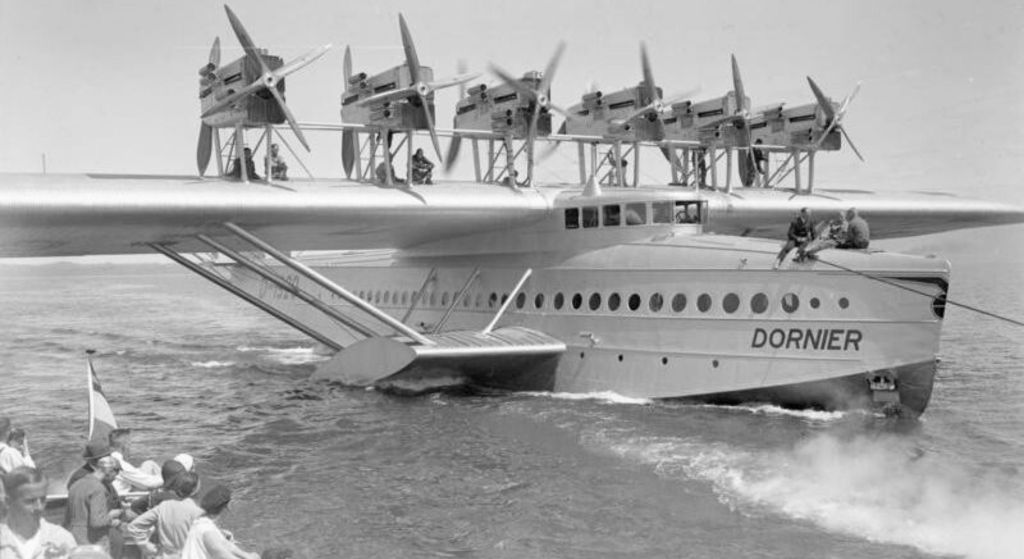
The Dornier X, with its unconventional design, was an awe-inspiring spectacle. The aircraft boasted a massive wingspan of over 160 feet, making it the largest flying boat of its time. Its unique configuration featured twelve engines distributed across six tandem wing-mounted nacelles, showcasing Dornier’s commitment to redundancy and safety.
Luxurious Interiors
Beyond its technical prowess, the Dornier X symbolized luxury and comfort. The spacious interior accommodated passengers and a dedicated crew and amenities that elevated the travel experience. The era of transatlantic flight was about to be revolutionized, and the Dornier X was at the forefront of this transformation.
Advantages of the Dornier X
Long-Range Capability
The Dornier X was designed with transatlantic travel in mind, and its long-range capability was a distinct advantage. The plane was perfect for transcontinental flights since it could fly long distances without stopping for aircraft fuel.
Redundancy for Safety
With twelve engines distributed across six nacelles, the Dornier X was engineered with redundancy in mind. This enhanced safety during flights and showcased the meticulous planning and commitment to reliability that went into the aircraft’s design.
Versatility in Operations
The versatility of the Dornier X extended beyond its transatlantic capabilities. Its ability to land on water made it suitable for operations in regions with extensive water bodies, providing a flexible and adaptable solution for various transportation needs.
The Maiden Voyage
1931: From Lake Constance to New York

In October 1931, the Dornier X embarked on its historic maiden voyage from Lake Constance in Germany to New York. The journey captured the world’s imagination, marking a pivotal moment in aviation history. The successful transatlantic flight showcased the aircraft’s capabilities and solidified its place as an engineering marvel.
Technical Challenges Overcome
The journey was not without its challenges. The Dornier X faced adverse weather conditions and navigational complexities, but its design and engineering triumphed over these obstacles. The twelve engines worked together, providing the necessary power and redundancy to ensure a safe and successful crossing.
Legacy and Impact
A Pioneer in Transatlantic Travel
The Dornier X ushered in a new era of transatlantic travel. Its successful voyage demonstrated the feasibility of long-distance flights, paving the way for future developments in aviation. The aircraft became a symbol of progress and a testament to human ingenuity.
Influence on Future Aircraft
The technological innovations introduced in the Dornier X had a lasting impact on the design and construction of subsequent aircraft. Lessons learned from its engineering contributed to advancements in aerodynamics, materials, and propulsion systems, influencing the evolution of aviation in the decades to come.
The Dornier X in Popular Culture
Iconic Status in Aviation
The Dornier X achieved iconic status not only in aviation circles but also in popular culture. Its distinct silhouette and pioneering spirit made it a subject of fascination in literature, art, and cinema. The aircraft’s influence extended beyond its practical applications, capturing the imagination of people around the world.
Preservation Efforts and Museums
Ensuring the Legacy Lives On
Despite its operational retirement, efforts have been made to preserve the legacy of the Dornier X. Museums dedicated to aviation history showcase this marvel of engineering, allowing future generations to marvel at the technological prowess of a bygone era. Preservation efforts ensure that the story of the Dornier X continues to inspire and educate.
FAQ’s
1. What is the Dornier X?
The Dornier X is a historic flying boat, also known as the Do X, developed by the German company Dornier Flugzeugwerke in the 1920s. It was one of the largest, heaviest, and most potent flying boats ever built at the time.
2. When was the Dornier X first flown?
The Dornier X made its maiden flight on July 12, 1929, at Lake Constance in Friedrichshafen, Germany.
The Dornier X remains a timeless testament to human achievement in aviation engineering. Dr. Claude Dornier’s vision, coupled with groundbreaking engineering, produced an aircraft that conquered the skies and inspired generations of aviators and engineers. The Dornier X is a lasting testament to the limitless potential that may be achieved when creativity and foresight come together in the quest for flight.
In a world where progress is often measured by the distance we can traverse, the Dornier X stands as an enduring symbol of how far we’ve come and the limitless horizons that continue to beckon us forward.